
From the 1975 BMW-Römer to System Helmet 4: BMW’s modular helmet evolution
BMW Motorrad’s helmet history moves from a 1975 full-face design to the modular System Helmet introduced in 1981, followed by successive improvements in ventilation, visor control and protection features through 1997.

3 min read
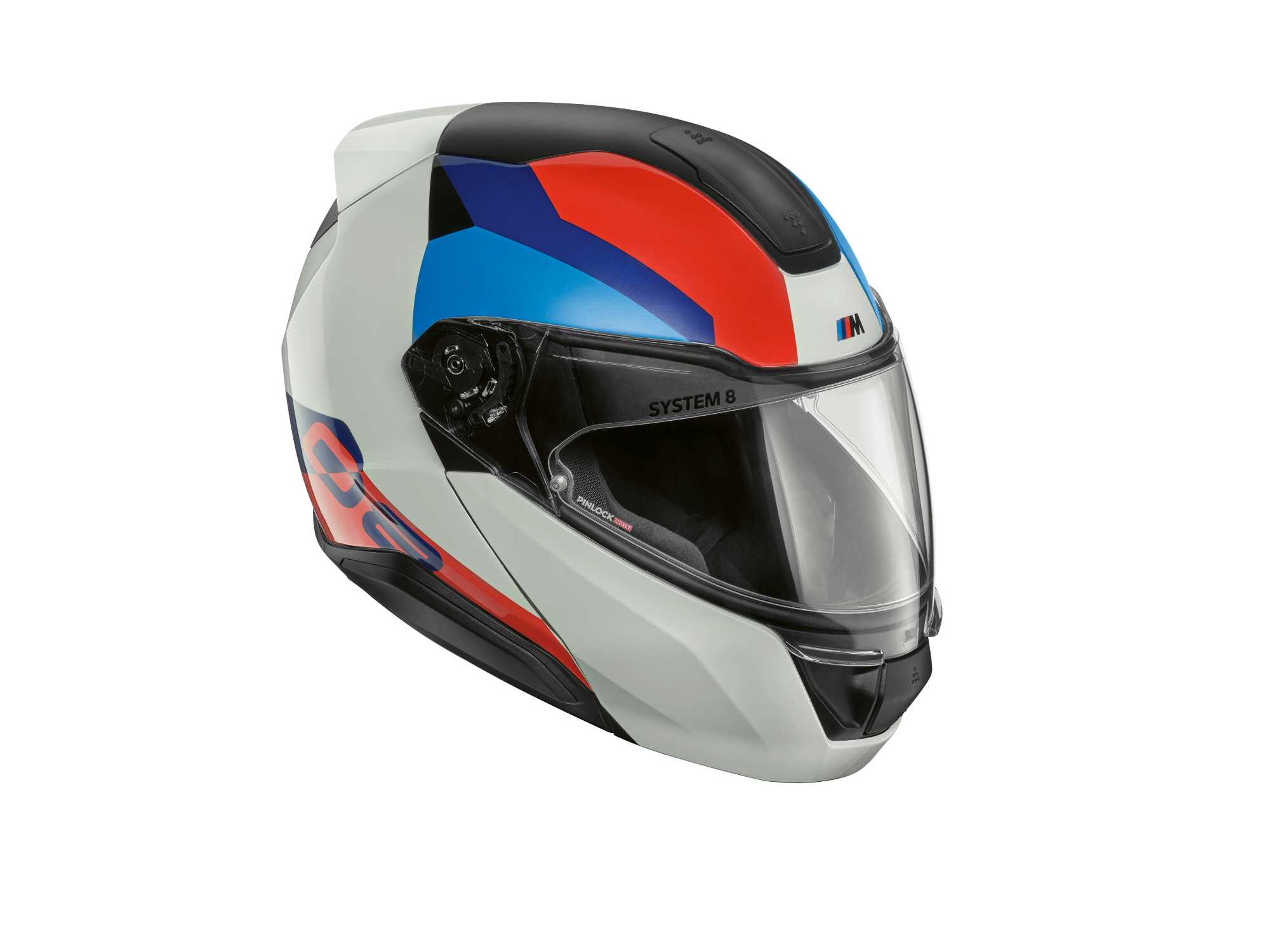
BMW Motorrad’s helmet story began in 1975 with a full-face helmet developed with Römer. Six years later, the first BMW System Helmet introduced a flip-up, removable chin section, establishing the modular concept that BMW says has reached its eighth generation with the System 8 and System 8 Carbon. The documented timeline below follows that development through the presentation of the System Helmet 4 in 1997.
1975: a full-face starting point
In May 1975, BMW and Römer presented a full-face helmet made from glass-fibre-reinforced plastic. It weighed 1,400 grams and combined a double-secured fastening system with a leather interior. Its equipment included clear and sun visors, a large field of vision, reflective elements and a removable chin guard intended to deflect draughts. The visor technology was comparatively simple by the standards of the time.
1981: the System Helmet changes the format
BMW introduced its first System Helmet in 1981. It used a glass-fibre shell and an impact-absorbing structure, while its aerodynamic design, one-hand-operated visor and wide field of vision addressed several practical demands of everyday riding.
The defining feature was the flip-up, removable chin section. Removing it allowed the helmet to be converted into different off-road configurations, making modularity a central part of the design rather than simply an alternative way to operate the visor.
1985: System Helmet II focuses on airflow and control
The System Helmet II arrived in 1985 with its shell, chin section and visor mechanism optimised in a wind tunnel. Its glass-fibre-reinforced plastic shell was paired with an energy-absorbing inner liner. The visor was operated with one hand, was scratch-resistant and wind-tight, and could be locked in multiple positions.
Ventilation also became more explicitly engineered. An air-channel system was designed to supply fresh air, reduce draughts, limit visor fogging and support ventilation at low speeds. Optional equipment included tinted and self-healing Sekurit visors as well as a sun visor.
1989: System Helmet III adds finer adjustment
BMW introduced the System Helmet III in 1989, with compliance with ECE 22-03. It featured a redesigned chin section, adjustable ventilation with the visor closed, and a scratch-resistant visor with an anti-fog coating.
The visor could be locked in six positions, while the chin bar opened via a push-button and could tilt upwards by 100 degrees. These details show the direction of the development: more control over airflow and visibility, alongside a mechanism intended to make the modular format easier to use.
1997: the next chapter begins
BMW presented the System Helmet 4 in 1997. The available documentation ends at that point, so it does not provide further technical details for that model or the later generations. BMW Motorrad currently describes the System helmet concept as being in its eighth generation, represented by the System 8 and System 8 Carbon.
THE EVIDENCE BEHIND THE STORY
Sources
Spotted something that needs correcting? Contact the editorial team ↗