
London’s 20 mph network is expanding as MPs weigh a national default
More than half of London’s roads now carry a 20 mph limit. TfL reports lower casualty figures on studied roads, while motorcycle-specific evidence remains limited.

5 min read
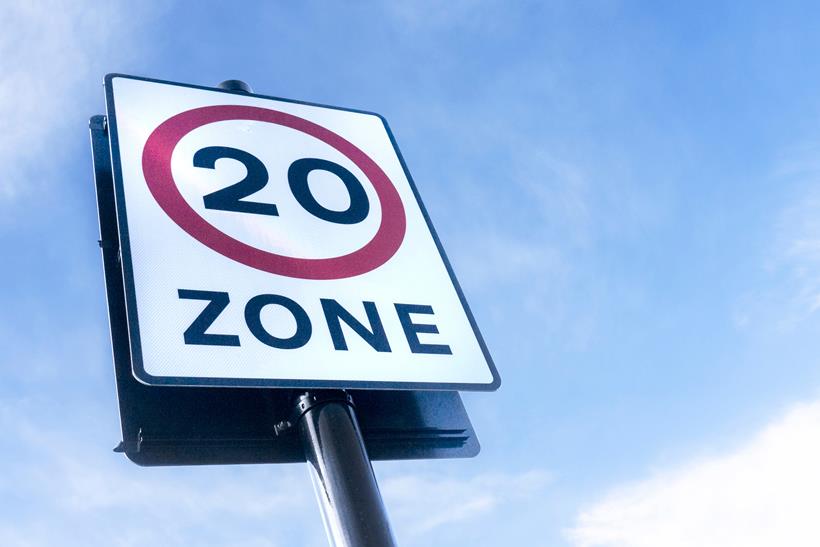
More than half of London’s roads now have a 20 mph speed limit, according to Transport for London (TfL). TfL says deaths on borough roads covered by its studied 20 mph schemes fell by 40%, from 15 to nine. The figures arrive as MPs consider whether England should adopt 20 mph as the default speed limit in urban areas—a proposal that remains under discussion, not an agreed national change.
TfL’s Safe Speeds policy says speed is a factor in approximately half of fatal collisions in London. It also states that a person hit at 30 mph is five times more likely to die than someone hit at 20 mph. Those findings support the Mayor’s Vision Zero policy, whose stated aim is for nobody to be killed or seriously injured on London’s roads by 2041. Vision Zero has contributed to the expansion of 20 mph limits across the capital over the past two decades.
A substantial and growing network
TfL’s own road network currently includes 166 miles covered by a 20 mph limit. Two-thirds of London’s boroughs apply 20 mph as policy across most of their roads, and TfL plans to add at least another 40 miles by 2030. If that expansion is completed, more than 80% of roads in central and inner London would have a 20 mph limit.
TfL’s safety analysis examined more than 150 20 mph schemes introduced on borough roads between 1989 and 2013. On the roads included in those schemes, the number of people killed fell by 40%, from 15 to nine, compared with a 7% fall in fatalities elsewhere across the borough road network over the same period.
The wider set of figures reported by TfL shows a similar difference between the studied roads and the comparison network: people killed or seriously injured fell by 34%, from 395 to 260, compared with a 15% reduction elsewhere. Collisions fell by 35% on the studied roads and 12% elsewhere, while casualties fell by 36% and 12% respectively. The number of children killed on the studied roads fell by 75%, from four deaths to one; there was no change in child fatalities on the other roads used for comparison. These figures describe TfL’s analysis and its comparisons, rather than proving that speed limits alone caused every change.
Air quality and enforcement
TfL rejects the suggestion that lower limits harm air quality. Research from Imperial College London cited by TfL found no net negative effect of 20 mph zones on exhaust emissions. TfL says the smoother driving style associated with the zones involves fewer sharp accelerations and decelerations, and that this can reduce particulate emissions from tyre and brake wear compared with 30 mph zones. The evidence does not amount to a universal claim that every 20 mph area improves air quality.
The Metropolitan Police issued 779,440 speeding offences in 2024/25—approximately five times the number recorded when Vision Zero launched in 2018.
The national debate—and the motorcycle gap
A House of Commons Transport Committee evidence panel heard arguments in favour of a national default 20 mph limit. TfL Chief Safety Officer Lilli Matson told MPs that making 20 mph the clear default policy in urban areas would probably be the most important issue for the Government to lead on. Transport planner Phil Jones, a former head of the Welsh Government’s 20 mph task force, said opposition to Wales’s default limit had been overstated. He compared more than 400,000 signatures on a petition opposing the Welsh change when it was introduced with 2,378 signatures on an identical petition two years later.
IAM RoadSmart Director of Policy and External Communications Nicholas Lyes said early evidence from Wales appeared positive, but argued that authorities should use 20 mph limits where they expect the greatest effect on serious collisions rather than applying a blanket approach everywhere. He suggested a targeted policy might be more acceptable to the public than a blanket national limit.
The evidence sessions also included calls for mandatory, non-overridable speed-limiting technology in all vehicles, alongside a proposal for new drivers to fit dashcams and monitoring equipment during their first five years on the road. Motorcycles and scooters were not mentioned by the panels giving evidence in either of the cited sessions.
That omission matters when considering how the policy feels on two wheels. Ben Clarke, the article’s writer, says he rode through central London during the week of publication and found the 20 mph limits more awkward and uncomfortable for motorcycling than 30 mph limits. In his account, modest acceleration in first gear can be enough to exceed 20 mph, making frequent speedometer checks necessary rather than allowing full concentration on the road ahead. He also says e-bicycles and conventional bicycles can keep pace with or overtake motorcycles in this environment, creating potentially dangerous interactions during lane changes or movement between lanes.
Clarke accepts that the reported statistics show fewer deaths and regards that reduction as beneficial, but says motorcycle-specific research would be desirable before decisions are made. That is a significant qualification: the available evidence presented here concerns London’s broader road network, while the cited national evidence sessions did not address motorcycles or scooters directly.
The Transport Committee’s inquiry cannot directly change the law. Its eventual findings and recommendations may, however, influence future Government policy on national speed limits. For riders, the central question is therefore still open: whether a broader 20 mph framework should be blanket, targeted, or accompanied by evidence designed specifically around powered two-wheelers.
THE EVIDENCE BEHIND THE STORY
Sources
Spotted something that needs correcting? Contact the editorial team ↗