
Benda’s second-generation Chinchilla 500 adds automated clutch and more power
Type-approval documents point to a 54-hp, 500cc V-twin cruiser with an electronically operated clutch and revised styling.

3 min read
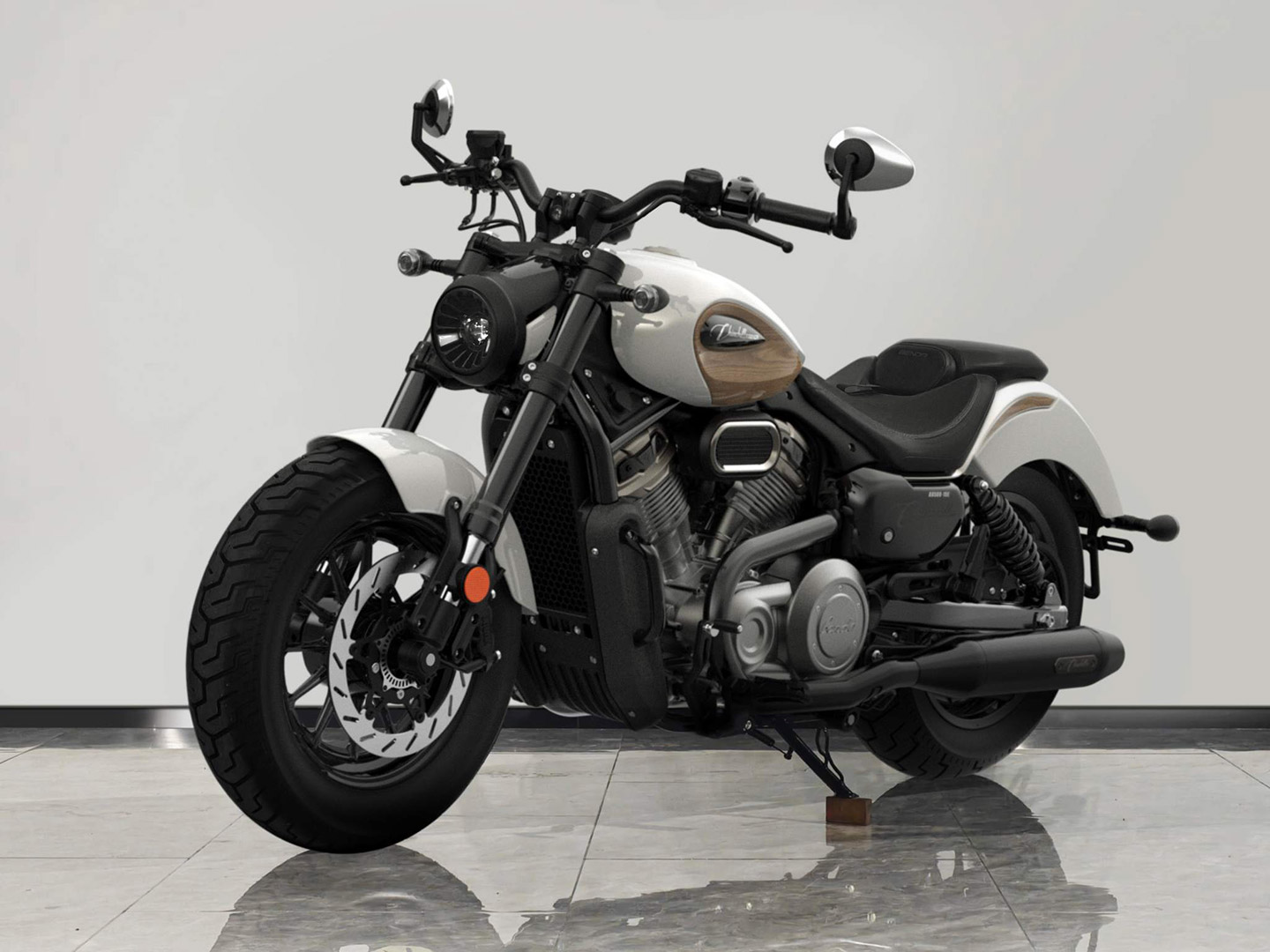
Benda is preparing a second-generation Chinchilla 500, and Chinese type-approval documents point to two significant changes for the mid-sized V-twin cruiser: an electronically operated clutch system and a power increase from 47 hp to 54 hp. The updated motorcycle also adopts more conventional cruiser proportions while retaining the distinctive wood-effect detailing associated with the model.
Benda is a Chinese manufacturer that already offers some motorcycles in the United States. The current Chinchilla 500 is positioned there as a rival to Honda’s Rebel 500, with a listed price of $6,149 and a claimed 47-hp V-twin. It is presented as less expensive than the Honda while offering a higher stated power figure, helping address the unfamiliarity of the Benda name. No final price, launch date or sales-market information is provided for the updated version.
An automated clutch without losing manual control
The new system is described as similar in design and operation to Honda’s E-Clutch, but it is not identified as the same technology. It retains a conventional clutch mechanism, the clutch lever on the left handlebar and a foot-operated gear shifter. An electromechanical servo, controlled by a clutch ECU, operates the clutch whenever the rider chooses not to do so manually.
In practice, once the motorcycle is in gear, the system can manage take-off without the rider using the lever. It can also handle upshifts and downshifts while the motorcycle is moving, then disengage the clutch before the engine stalls during a stop. Pulling the lever overrides the automated function and returns full clutch control to the rider. The updated Chinchilla 500 will also be available with a conventional clutch.
Benda has previously used this automated clutch outside the United States on the Rock 707 V-twin. The Chinchilla 500 would bring the concept to a smaller-displacement cruiser. The material notes that Honda already offers an E-Clutch option for the Rebel 300 and speculates that the Rebel 500 could receive one too; that possibility is not confirmed. Within the 500cc comparison described here, the Benda would arrive first with this type of clutch.
More capacity, familiar bore
The revised V-twin is rated at 54 hp, up from 47 hp. Its capacity rises to precisely 500cc through a 24cc increase in displacement. The 69mm bore remains unchanged—the “2V69” engine code reflects that dimension—while the stroke grows from 63.6mm to 66.9mm. In other words, the extra capacity comes from the longer stroke rather than a larger bore.
A calmer silhouette, but still unmistakably Benda
The second-generation motorcycle has a longer rear fender, giving it a more conventional cruiser profile. It replaces the current model’s stacked exhaust arrangement with one exhaust on each side. The twin-shock frame and inverted front forks remain, while the headlight is carried over from Benda’s LFC700 four-cylinder muscle cruiser, with its jet-turbine-inspired appearance.
The boldest visual feature is the wood-effect treatment on the concave sections of the fuel tank and on the rear fender, styled after wood-panelled station wagons. The supplied material compares this idea with the wooden dashboard of the Bimota Mantra and the wood inlays used in the battery pack of Maeving’s RM1. Its author says they cannot recall another motorcycle displaying wood-effect treatment so prominently, while also expressing the view that it suits this small-displacement twin. That remains an attributed opinion, not a tested or objective assessment.
THE EVIDENCE BEHIND THE STORY
Sources
Spotted something that needs correcting? Contact the editorial team ↗