
MV Agusta confirms financial pressure as ownership talks continue
The Italian manufacturer confirms operational and financial difficulties and entry into the CNC recovery process, but does not confirm reports of a production halt or a CFMoto deal.

5 min read
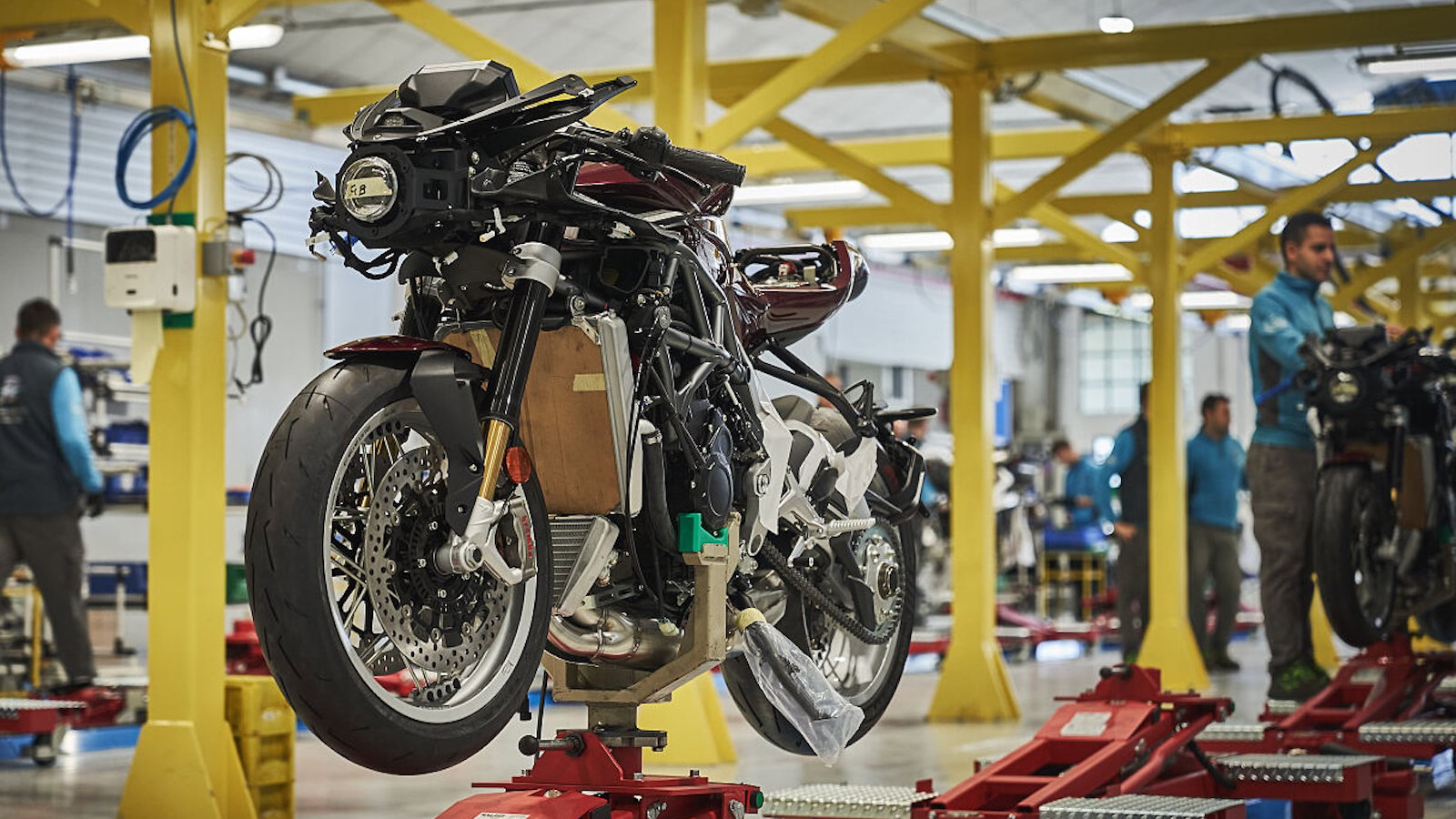
MV Agusta has acknowledged a period of financial and operational difficulty while rejecting the idea that speculation around its future can be treated as confirmation of specific events. In a statement dated September 11, 2026, the Varese-based manufacturer confirmed that it had entered Italy’s Composizione Negoziata della Crisi (CNC) process, but it did not directly confirm reports that production at its factory had been halted.
Those reports had emerged earlier in the week after a proposed agreement with CFMoto was said to have collapsed. According to the reports, CFMoto would have taken a 49% stake in MV Agusta and provided investment as part of a wider restructuring plan. MV Agusta did not confirm either the reported production pause or the details of that proposed agreement. The company has also not clarified what happened between the two sides, or whether CFMoto remains involved now or could play a role in the future.
What the CNC process means
The CNC is an Italian legal framework intended for companies facing a temporary financial imbalance. It allows a business to assess its position and work with creditors and other stakeholders while developing a recovery plan. MV Agusta said that entering the procedure requires concrete prospects for recovery, presenting the CNC as one instrument in a recovery path that had already begun rather than as a standalone solution.
In practical terms, the procedure gives MV Agusta a formal setting in which it can engage the parties affected by its financial position, identify measures to rebalance the business and examine how operations can be relaunched. The company described continuity, progressive operational consolidation and preparation for a secure future as management priorities. It also said the process was being conducted with support from external advisers and professionals, with the interests of employees, partners, creditors, dealers and other stakeholders in mind.
A difficult separation from KTM
MV Agusta said it had been working for several months to restore its financial position after separating from KTM. The separation was described as a significant transition because the two organisations had reached a high level of integration. Following the split, management worked to restore MV Agusta’s autonomy, internal processes and ability to conduct regular operations, while also trying to create the conditions for the company’s future development.
The company’s shareholder, Art of Mobility, is meanwhile assessing possible changes to MV Agusta’s ownership structure. The statement said that multiple discussions had been initiated and examined. Some potential ownership opportunities were studied in depth and later judged not viable; other parties or scenarios failed to meet the required standards of substance and reliability. Further possibilities remained under evaluation when the statement was issued.
After the separation from the KTM Group, Art of Mobility reacquired 100% of MV Agusta. Art of Mobility is controlled by the Sardarov family. That ownership position is therefore not, by itself, evidence of an imminent transaction. What it does show is that the company’s future capital and ownership structure remains an active issue, especially in light of the reports concerning CFMoto.
Demand has not disappeared
MV Agusta is using its commercial performance to argue that the brand retains strength and customer interest in key international markets. The company reported 2,166 global retail registrations in the first half of 2026, compared with 2,094 units in the same period of 2025 on a like-for-like basis. That represents an increase of 3.4%. These are reported retail registrations, not an independently established figure for motorcycles sold by the manufacturer.
Italy, identified by MV Agusta as its largest market, accounted for 644 motorcycles in the first half of 2026, up from 500 in the corresponding period of 2025. The company reported year-on-year growth of 28.8% in Italy. It also reported growth of 42.3% in France and 24.2% in the United States during the relevant comparison period.
Those numbers indicate that demand for MV Agusta products remains present, and the company attributed the results partly to customer demand, the work of its dealer network and its industrial and commercial value. They do not, however, erase the problems acknowledged by the manufacturer. A total of 2,166 global retail registrations over six months is evidence of a functioning market presence, but it is also a relatively small volume for a standalone manufacturer carrying the costs and infrastructure associated with that position.
The company draws a line under speculation
MV Agusta criticised what it described as a spread of rumours, interpretations and reports lacking objective evidence. It said some appeared to originate from, or be encouraged by, parties involved in or interested in the ownership discussions. In the company’s view, such reports risk creating unnecessary confusion at a time when it needs to operate responsibly, confidentially and rigorously.
The manufacturer said it would not comment on individual rumours or participate in debates based on speculation or partial information. It added that significant changes to its corporate structure would be announced through official channels once concrete and definitive conditions existed.
The immediate picture is therefore deliberately incomplete. MV Agusta has confirmed financial and operational pressure, entry into the CNC process and continuing work on recovery after its separation from KTM. It has also confirmed that Art of Mobility is examining ownership-related possibilities. But the reported production halt at Varese remains unconfirmed, as do the terms or outcome of the reported CFMoto proposal. The company’s ownership future was still unclear when the September 11 statement was issued.
THE EVIDENCE BEHIND THE STORY
Sources
Spotted something that needs correcting? Contact the editorial team ↗