
Yamaha’s Proto HEV patents reveal a two-motor hybrid scooter layout
New patent details explain how Yamaha’s Proto HEV could combine electric drive, engine-generated charge and conventional CVT propulsion.

4 min read
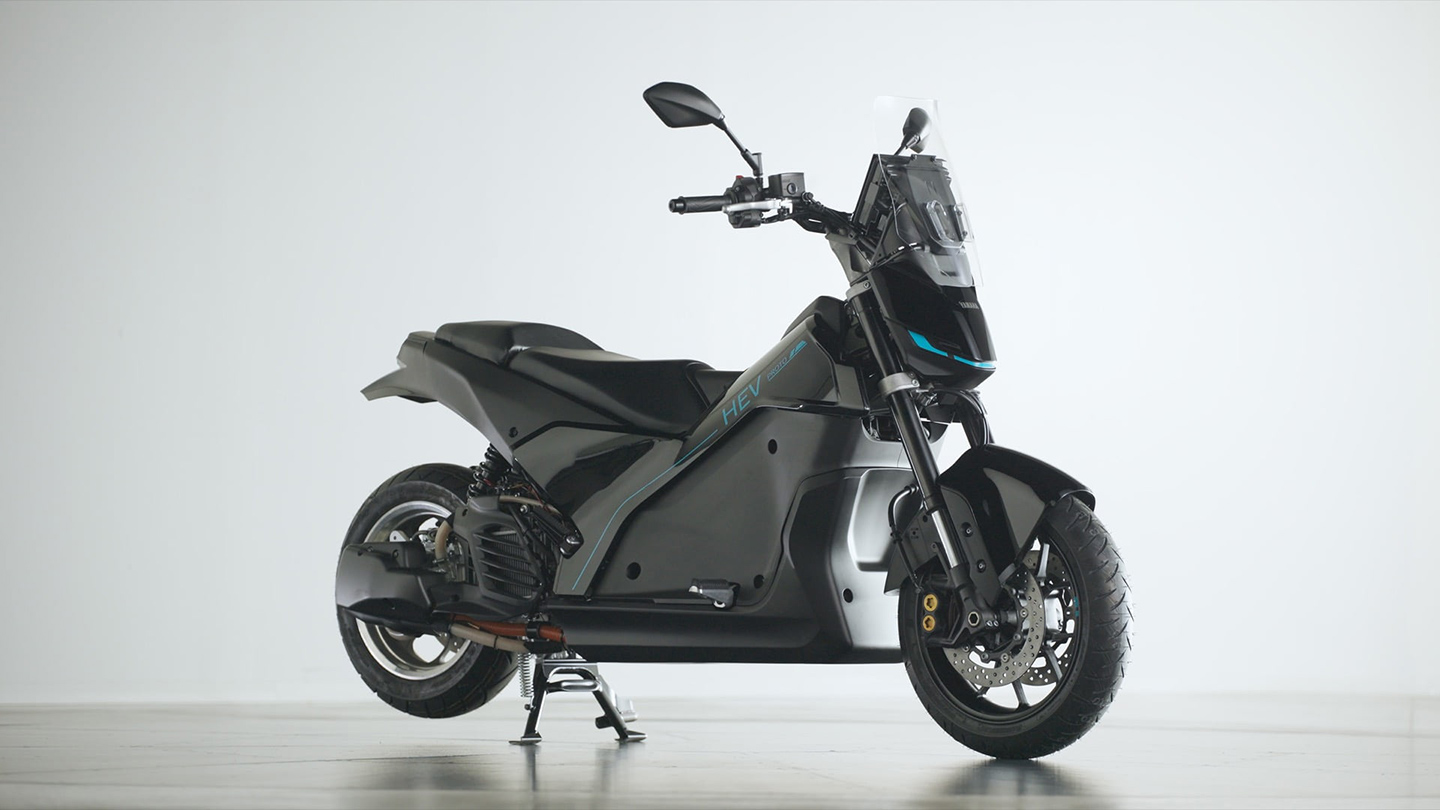
Yamaha is again exploring hybrid power, although it does not have a hybrid motorcycle in its production range in 2026. New patent applications describe how the Proto HEV’s powertrain operates and show a possible installation in a conventional-looking maxi-scooter. The system combines a single-cylinder combustion engine with two electric motor-generator units and a belt-driven, twist-and-go continuously variable transmission (CVT). It is classified as a series-parallel hybrid.
The work continues a long-running Yamaha interest in combining combustion engines with electric powertrains. The company revealed the Gen-Ryu concept in 2005. Described as an art-deco cruiser-tourer, it paired an electric motor with the 599cc inline-four engine from the Yamaha YZF-R6. A planetary transmission was intended to balance the engine and electric motor, in a layout compared with the system used by the Toyota Prius. The Gen-Ryu did not lead to a production model.
Yamaha followed with the HV-X in 2007 and 2008. This concept used the parallel-twin engine from the TMax 500 and a planetary transmission to couple combustion power with an electric motor. Yamaha and Toyota had collaborated on projects for decades, and the company’s hybrid work at the time was connected with the Prius and its strong global sales. The HV-X was demonstrated in operation but later disappeared from development. The article attributes that change to the reduction of research-and-development spending and withdrawal from riskier projects after the 2008 global economic crisis.
From prototype motorcycles to a scooter system
Yamaha has since revived its move toward hybrid power. In the preceding year, it showed two prototype motorcycles: the Proto PHEV and Proto HEV. The Proto PHEV is based on the MT-09 and uses a three-cylinder engine. Its plug-in hybrid system is intended to improve performance and reduce emissions.
The Proto HEV takes a different technical route. It can operate using only electric power, only the combustion engine, or both sources together. One motor-generator is located at the rear of the scooter-style swingarm and transmission assembly and acts directly on the rear wheel. A battery pack between the rider’s legs supplies that motor, which can also recover energy during deceleration and return it to the battery.
In electric-only operation, the combustion powertrain is switched off and an electromagnetic clutch disconnects it from the CVT. If the battery falls below a preset state, the crankshaft-mounted motor-generator can start the combustion engine automatically. With the clutch disengaged from the CVT, the engine can run at a constant efficient speed to drive the generator and recharge the battery while the scooter continues operating electrically.
When the rider asks for more performance than the rear electric motor can provide alone, the clutch engages and connects the combustion engine to the conventional CVT. The engine then drives the rear wheel. In this engine-assisted operation, the crankshaft-mounted motor-generator continues to recharge the battery, according to the patent description, while the rear motor can assist the engine in parallel-hybrid operation. A separate boost mode uses both electric motors to assist the combustion engine and maximise torque and power at the rear wheel.
Automatic control is central to the design
One focus of the patent is automatic transition between operating modes without rider intervention. The drivetrain computer must coordinate the two motors’ drive and regenerative functions, the combustion engine’s throttle position and engagement or disengagement of the electromagnetic clutch. The stated aim is smooth, predictable power delivery whether propulsion comes from one motor, the engine or a combination of both.
A second patent places the same powertrain in a conventional-looking scooter rather than the more motorcycle-like Proto HEV displayed previously. Its outline is simplistic, but it depicts footboards and cowl-like bodywork in front of the rider’s legs. Such a layout could be relevant as more cities introduce zero-emissions zones: electric operation could be combined with the range and refuelling capability of a combustion engine. That remains a potential use case, not confirmation of a production model or a future launch.
There is also an unresolved terminology issue in the description. The wheel-driving unit is identified earlier as the rear motor, while a later passage calls the motor that continues charging the battery during engine-assisted operation the “front motor/generator”. The available evidence does not establish whether this is a labelling error or a different component designation.
THE EVIDENCE BEHIND THE STORY
Sources
Spotted something that needs correcting? Contact the editorial team ↗