
Yamaha moves DiASil cylinders to recycled aluminium
The switch is expected to be complete by 2030, with Yamaha projecting an annual CO2 reduction of around 47,000 tonnes.

2 min read
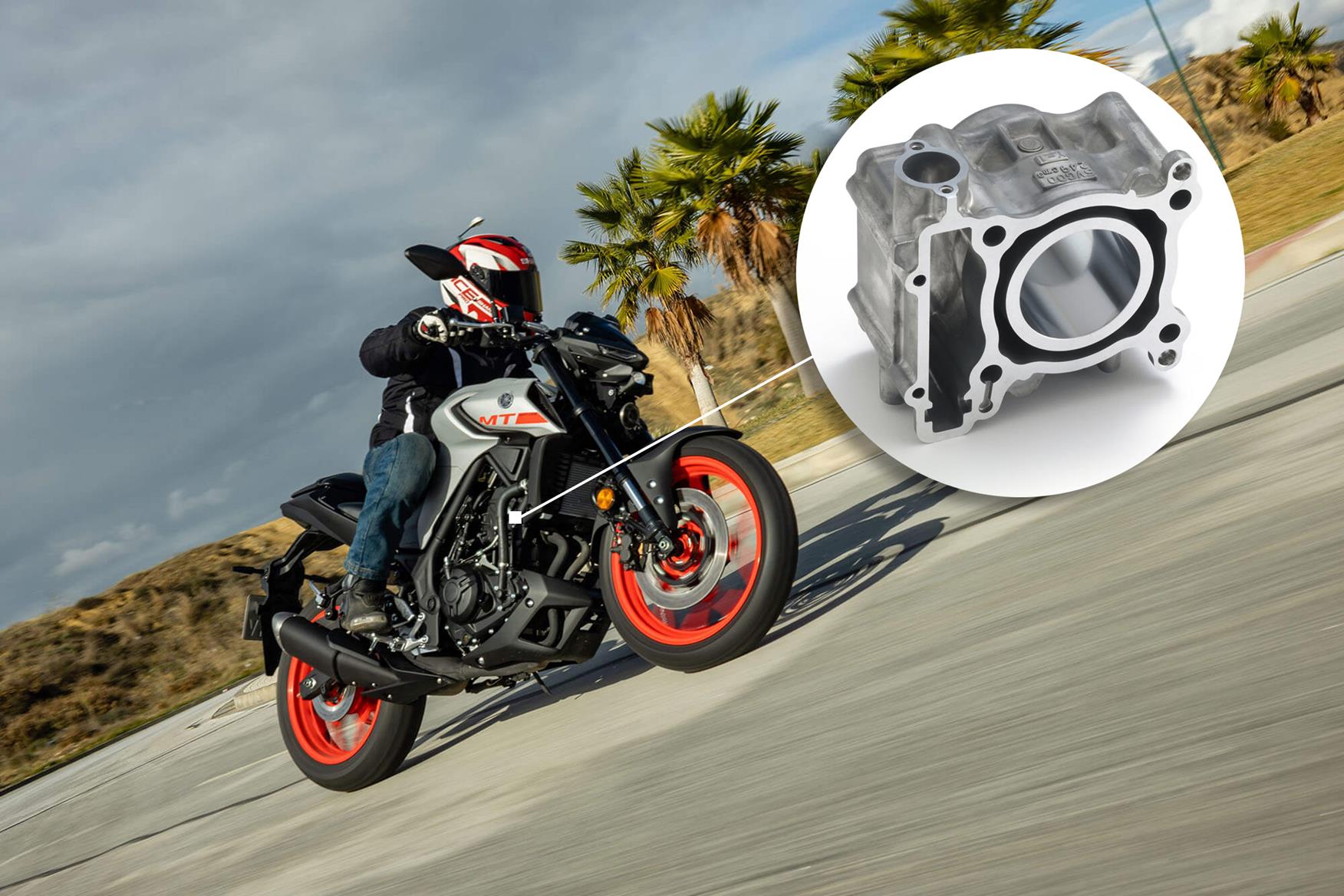
Yamaha is changing the material at the heart of its DiASil cylinder technology, replacing virgin aluminium with a specially developed recycled alloy. The company expects the conversion to cover every DiASil-equipped product by 2030. Once the change is complete, Yamaha projects an annual reduction of around 47,000 tonnes of CO2.
In the UK, the YZF-R3 and MT-03 are among the motorcycles using DiASil, with their engines built in Indonesia. The design uses an aluminium cylinder without an iron liner or plating. Yamaha developed and introduced it in 2002, associating the construction with resistance to wear and seizure, effective heat transfer, lower weight, improved recyclability and lower manufacturing cost than conventional cylinder designs.
Why the alloy needed to change
Moving to recycled aluminium was not simply a matter of substituting one feedstock for another. Yamaha says standard recycled grades can contain trace impurities that alter the metal’s microstructure, surface characteristics and corrosion resistance. Its answer was a new alloy intended to come close enough to virgin aluminium’s properties for use in the existing manufacturing processes. Thermodynamic calculations guided the design, followed by repeated bench work and vehicle evaluations. Yamaha says those checks showed that the recycled material met the required functional standards.
Indonesian-built commuter models are expected to lead the rollout, with broader global adoption to follow. Yamaha’s forecast of 47,000 fewer tonnes of CO2 per year is presented as roughly equivalent to the emissions from 10,000 petrol cars.
The project sits within Yamaha’s Environmental Plan 2050, which includes a target of carbon neutrality throughout the supply chain by 2050. The company also aims to switch to sustainable alternatives for all aluminium raw materials used at its major production bases in Japan and overseas by 2030. Yamaha has already used “green aluminium” in selected cast wheels and fork brackets; the material is refined using renewable energy and is said to produce around 60% less CO2 during manufacturing. In 2023, Yamaha said recycled aluminium represented roughly 80% of its total aluminium use. Recycled polypropylene has also been used for plastic parts on some Asian-market commuter models, extending the same effort beyond the engine.
THE EVIDENCE BEHIND THE STORY
Sources
Spotted something that needs correcting? Contact the editorial team ↗