
Marini outlines Honda’s next MotoGP steps as development accelerates
Luca Marini says Honda has made broad gains since 2024, but rear grip and corner exits remain the central technical targets as the project pursues a podium.

6 min read
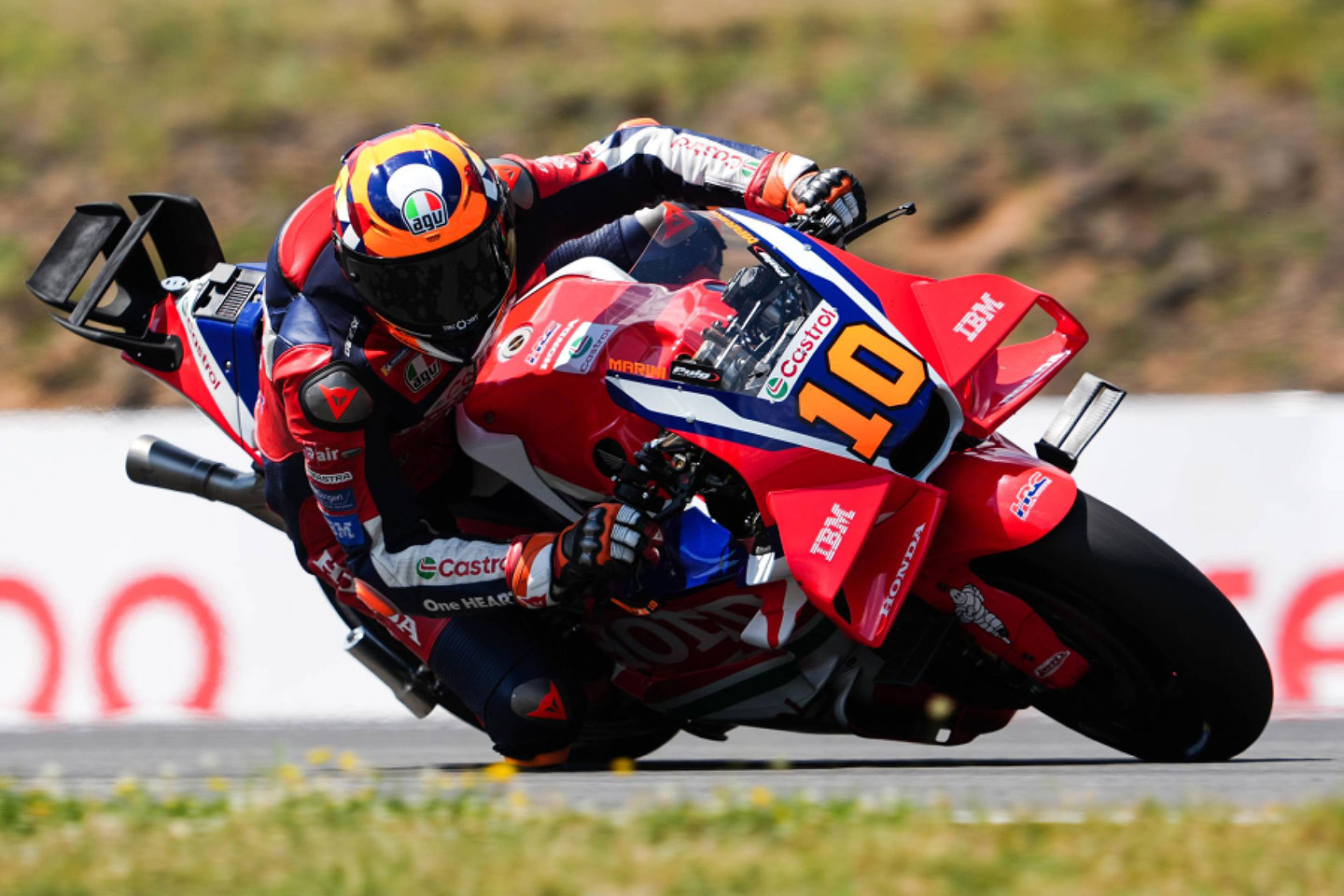
Honda’s MotoGP recovery is moving into a more continuous phase of development, according to Luca Marini. In an interview with Cycle World, the Honda HRC Castrol rider said the motorcycle has improved in braking, engine performance, aerodynamics and electronics since he joined the project in 2024. The main weakness, however, remains rear grip, particularly when the bike has to turn and drive out of a corner.
Honda finished last in the constructors’ championship for three consecutive seasons from 2022 through 2024. The project is now beginning to show the first results of a broad internal reorganisation and development effort, but the current competitive picture remains demanding. Honda sits fourth among five manufacturers, a position Marini believes accurately reflects the present order.
A different development rhythm
Marini said Honda’s working methods have changed dramatically since his arrival. The manufacturer no longer waits for the end of a season to carry out a complete overhaul before starting again. Instead, it is developing the package continuously, with updates arriving approximately every three or four races.
That process is not instant. Marini said the team is doing a good job, but producing new parts takes time. He also noted that Honda’s many procedures can sometimes slow decision-making and progress. Even so, the project is no longer built around a single winter reset. Romano Albesiano, the Italian engineer who moved from Aprilia to HRC as technical director, has described Honda’s mechanical and electronic package as very good, while identifying aerodynamics and bike setup as areas that still require work. Albesiano also believes the motorcycle can consistently fight for top-five finishes.
The immediate technical priority is traction. Marini said the Honda does not rotate sufficiently during the first phase of corner entry. To compensate, he has to use the throttle to help the motorcycle turn. That approach breaks traction, leaving the rear wheel spinning by the time he picks the bike up. Honda had two updates planned specifically to improve traction and corner exits, while Marini said the machine has probably reached more or less the development limit of the current period as manufacturers increasingly concentrate on the 2027 rules.
He also said Honda needs to be inside the top 10 on Friday afternoon, particularly at Assen, where overtaking is difficult. At some circuits, including Hungary, the lack of rear grip has been especially apparent.
Progress measured over a weekend
Marini characterised the Brno weekend as another recovery event. The Honda team improved the motorcycle between Friday, Saturday and the race, effectively assembling the package by Sunday. Marini described his race as solid and said he was satisfied with his pace, effort and the number of positions recovered.
The supplied account contains two result references that require checking before publication: one identifies Marini as eighth in Brno, while another records him finishing fifth in Hungary. These results should not be merged or treated as interchangeable, and the timing of the interview is not established by the available evidence.
A long return to the front
Honda’s stated target for the current year is a podium, not an already-achieved result. Marini said the project is much bigger than its immediate results and that returning to Honda’s previous competitive level will take time. The manufacturer’s former period of dominance included six world titles for Marc Márquez between 2013 and 2019, but the current season is complicated because every manufacturer has improved substantially.
Marini said he chose Honda while viewing it as being at the lowest point in its history. Leaving a Ducati motorcycle he knew well for that challenge was a decision he was glad to accept, even though the results make the project more difficult than his previous situation. He acknowledged that the comparison can be frustrating, particularly when his results are measured against a cited previous season in which he finished 12th. His motivation, he said, comes from helping Honda return to the top.
He wants to remain with Honda now that the project is beginning to produce results and eventually fight for victories. The 2027 rider market, Marini said, moved unusually early, with perhaps only three or four seats still unresolved when he discussed it. He also argued that winning in competition reinforces a rider’s ability to win, while riders naturally want victories or at least podiums because those results bring the greatest enjoyment.
Davide Brivio could join Honda’s project the following year in a broad managerial role, but Marini offered no substantive assessment of the expected arrival. He said its value would be evaluated when Brivio arrived. The possible appointment is presented as part of Honda’s effort to recover its former results, not as a completed change or a confirmed role.
Resetting after serious incidents
The interview also addressed the mental demands of racing. Marini referred to frightening accidents involving Álex Márquez and Johann Zarco in Barcelona that had no serious consequences, as well as his own previous crash at Suzuka while discussing preparation for the Suzuka 8 Hours. He said he never considered retiring after the Suzuka accident and felt relief when he realised he had survived. He believed the other consequences could be repaired over time.
Marini’s approach is not to forget such incidents, but to learn from them and avoid repeating the same mistake. Riders must deal with crashes or injuries involving themselves and with incidents involving colleagues they witness directly. Once that has happened, he said, they must refocus immediately because that is their job and what they are trained to do. Sport helps people mature in this response over the years, although life is more complicated than sport when applying the same reset mentality.
Flat track and life at Honda
Marini also described flat-track riding as an excellent training method, while stressing that it feels very different from riding on asphalt. Its appeal lies in the feeling and technical demands: riders can push at full effort and battle directly with one another. Marco Bezzecchi has called Marini the fastest rider at the VR46 Ranch; Marini agreed, while adding that the others are getting closer.
Inside Honda, Marini said the atmosphere in the garage is always fantastic. He also feels both the pressure surrounding the company and the importance it places on racing. Honda, he said, has leaders in every area of the company and within its MotoGP project. For now, the focus is clear: keep developing the motorcycle, recover rear grip and convert gradual progress into the podium Honda is targeting.
THE EVIDENCE BEHIND THE STORY
Sources
Spotted something that needs correcting? Contact the editorial team ↗