
Triumph triples global sales as Paul Stroud prepares to retire
Triumph sold 141,683 motorcycles in its latest financial year, after expanding into smaller-capacity models, off-road racing and new markets.

3 min read
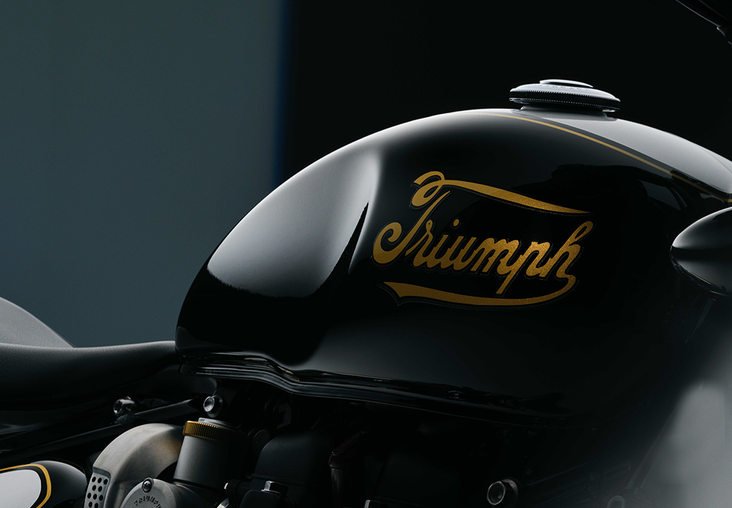
Triumph has grown from an annual motorcycle volume of roughly 45,000 units to more than 140,000 during the 18 years since Paul Stroud joined the company. The latest full-year figure was 141,683 motorcycles, sold worldwide during the financial year from July 2024 to June 2025. That volume was achieved through a network of 950 dealerships across 68 countries, while Triumph estimates that its sales were 136% higher than in 2019. Stroud, currently the company’s Chief Commercial Officer, is expected to retire at the end of 2026.
The change is bigger than a simple increase in sales. Triumph still draws much of its identity from Hinckley and its British roots, but the company now operates on a considerably broader international footing. It employs approximately 3,000 people worldwide and combines production in Hinckley and Thailand with CKD assembly facilities in Brazil and India. The result is a manufacturing structure able to support a wider range and a much larger sales operation than the one Stroud joined.
The 400cc platform widened Triumph’s reach
The company’s established families remain important parts of that range: Bonneville, Speed Triple, Street Triple, Tiger and Rocket continue to form key pillars of the brand. The more decisive change in customer reach, however, came with the move into smaller-capacity motorcycles. The single-cylinder 400cc platform began with the Speed 400 and Scrambler 400 X, then expanded with the Scrambler 400 XC, Thruxton 400 and Tracker 400.
Those models gave Triumph a route into markets where engine capacity, purchase price and running costs are especially important. They are not aimed only at European riders with an A2 licence; they also allow the company to compete in large markets where motorcycles with 900cc or 1,200cc engines represent a relatively limited proposition. The industrial partnership with Bajaj provided the scale needed for this expansion and helped make the smaller-capacity strategy viable across a broader customer base.
A faster product cycle and a new off-road challenge
Triumph’s expansion has also been visible in the pace of its product activity. The company announced 29 new or updated models over a six-month period, a rate that illustrates how much its operating scale has changed. The programme was not confined to road motorcycles: Triumph also entered motocross and enduro, categories in which it had to develop competition machinery and racing operations essentially from the ground up.
For these disciplines, Triumph developed the TF models and built racing programmes around them, using competition as part of the development and credibility-building process. The motocross effort produced a world championship after three years of work, giving the relatively new programme a significant early result. The move therefore represented more than an attempt to add off-road motorcycles to the catalogue; it extended the areas in which Triumph could compete.
Stroud’s expected departure comes as Triumph enters a more demanding phase. The company must manage a broader model range, more platforms, production distributed across several countries, newer categories and a sales network approaching 1,000 locations. Maintaining growth at that scale will be a different challenge from achieving it in the first place.
Triumph will also be operating in an increasingly competitive global market. Japanese manufacturers remain strong, European brands are seeking to restore profitability, and Chinese manufacturers are expanding rapidly into categories where they had little presence only a few years ago. Against that background, the company’s next test will be to preserve the momentum created by its international expansion while coordinating a substantially more complex business.
THE EVIDENCE BEHIND THE STORY
Sources
Spotted something that needs correcting? Contact the editorial team ↗