
Keeway Group: a multi-brand strategy with a gradual electric shift
George Wang explains the roles of Keeway, Benelli and Morbidelli, why Italy matters and why electric two-wheelers will advance first through scooters.

6 min read
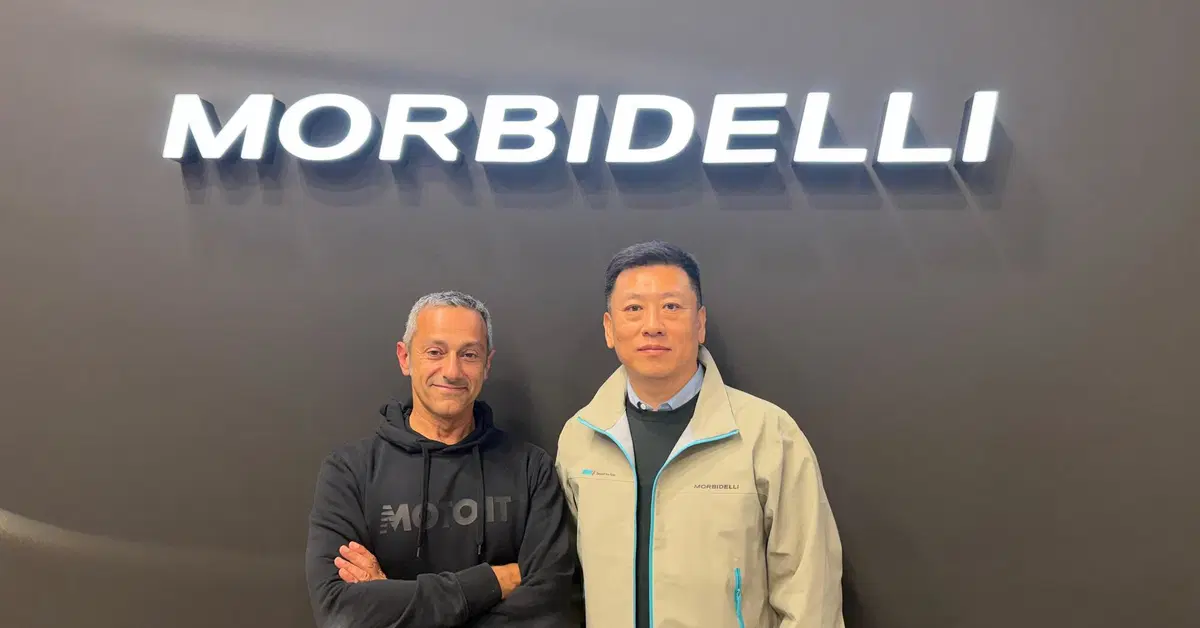
Keeway Group is using EICMA 2026 to present a strategy built around several brands rather than one universal identity. The plan is to operate as a wider ecosystem, with different names aimed at different customers and categories while sharing an international direction. George Wang describes a structure that combines ownership, participation and distribution, alongside partnerships with independent manufacturers. The reasoning is straightforward: one brand cannot easily cover every motorcycle segment and every market when income, infrastructure and customer needs vary so widely across Europe, Africa, Latin America and Southeast Asia.
Three brands with different jobs
Keeway, Morbidelli and Benelli form the core of the strategy. Keeway is intended mainly for everyday mobility, with products aimed at a broad customer base. Morbidelli sits higher in the middle-to-upper part of the market, and its relaunch is supported by an independent team responsible for development and research. Wang also leaves open the possibility of bringing Morbidelli back into competition, reflecting the brand’s historical connection with racing.
Benelli has a separate role. Wang wants it to remain dynamic and innovative, with distinctive design and a higher position within the group. The structure resembles the approach used by major automotive organisations, where different names address different needs instead of offering the same product under several badges. EZI covers the electric side of the operation. Its display at EICMA includes electric scooters using battery-swapping systems, a solution with particular relevance in markets where swapping is becoming more popular, including several African countries and Brazil.
Partnerships broaden the commercial footprint
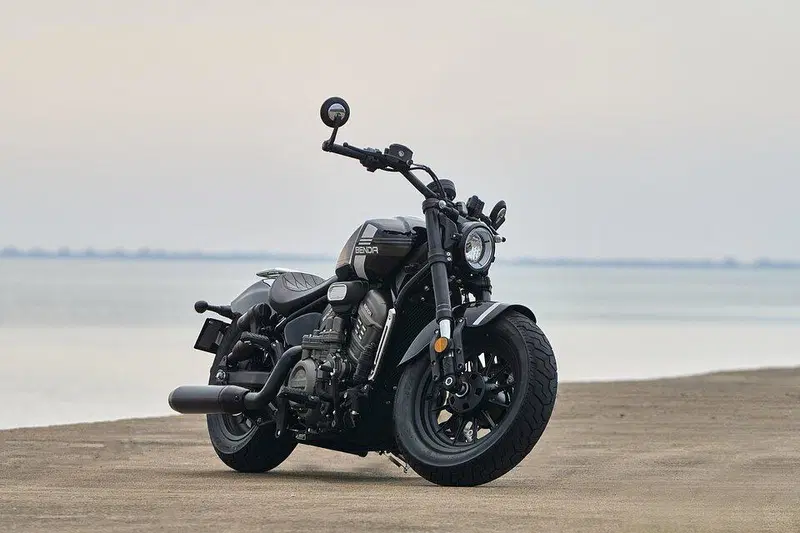
The international plan extends beyond the brands at the centre of the group. Wang says Keeway also helps other Chinese manufacturers move into overseas markets. Benda is one example: Keeway assists the company in expanding its business into more than 20 countries. In Italy, the group also collaborates with Kove and Cyclone.
A portfolio of this size can create the risk of internal competition, especially when two names approach the same category. Wang’s answer is that the brands currently retain clearly different identities. Benda, for example, is focused mainly on cruiser and custom motorcycles, while other names follow different product or racing directions. He accepts that overlaps may appear as the portfolio grows, which is why more independent teams and distribution networks could become useful in the future.
He points to a Portuguese partner that distributes, among others, Kawasaki, CFMOTO, Benelli, Keeway and Morbidelli. That company has created separate, independent teams for the different brands. Each team can concentrate on its own name instead of treating the entire portfolio as one product range. For a group planning further expansion, this organisational separation is as important as the choice of motorcycles themselves.
Italy as a source of expertise
Wang describes Italy as the number-one European market for Chinese motorcycle industry participants. His assessment is based not only on market size, but also on the importance of the brands, the country’s design culture and the expertise of Italian riders. For Keeway Group, Italy is also a source of knowledge. Italian engineers and industry professionals work within the Benelli and Morbidelli teams, contributing daily user experience and an understanding of what riders may need in the future.
The exchange works in both directions. Italian professionals contribute ideas and market knowledge, while Chinese engineering and manufacturing teams examine how those ideas can be turned into production. Wang connects this cooperation not only with the two brands’ European presence, but also with their expansion in Southeast Asia and Latin America. He says Morbidelli reached 60 countries within two years, underlining the international scale of the project.
Electric mobility will begin with scooters
Wang’s view of electrification is gradual. He expects lower-speed vehicles to become established first, with scooters in the category up to 45 km/h particularly well suited to the transition. Larger motorcycles face a more difficult route because the required range and energy consumption demand bigger and heavier batteries. For vehicles travelling above 100 or 200 km/h, energy use remains a significant obstacle.
The next major step could come from solid-state batteries. Wang estimates that the technology might become available in China around 2030, while producing it in large quantities at volumes comparable with current lithium batteries could require another five years. He describes a future target of at least 1,500 kilometres of range and charging beyond 80% in approximately 10-15 minutes. These figures describe the direction of battery development, not the specification of a motorcycle currently on sale.
Motocross motorcycles could move to electric power sooner. They are generally used for shorter periods, so they do not need the same range as a commuter expected to cover 100 or 200 kilometres. Immediate, strong electric-motor torque is another natural advantage in this application. Wang takes a different view of adventure, cruiser and naked motorcycles, expecting petrol engines to remain in use for at least the next 10 years.
The case for electric scooters is more practical than emotional. They are quieter, need no fuel and, in Wang’s estimate, may use energy costing around 10% of the equivalent petrol expense. Maintenance requirements are also described as almost non-existent. Charging access remains the decisive issue: a house with a garage makes ownership much easier, while a city rider without convenient infrastructure faces a more difficult proposition. The group is also developing larger electric scooters with more torque and power, targeting approximately 200 kilometres from a single charge.
The EICMA motorcycles Wang highlights
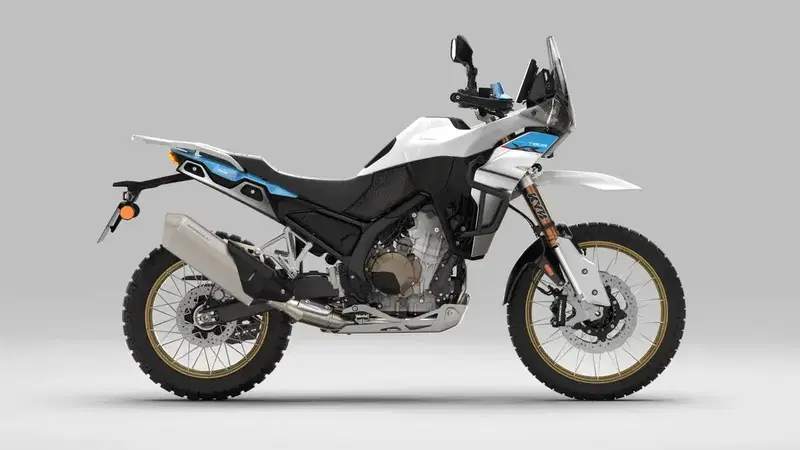
Among the motorcycles shown at EICMA 2026, Wang singles out two. One is a Benelli with a three-cylinder engine. The other is an 800-cubic-centimetre twin-cylinder motorcycle weighing less than 190 kilograms and offering high power. The second model was designed in Italy. Together, they represent the group’s two-sided approach: products with a clear technical and design identity, supported by an international development and manufacturing structure.
The wider strategy is therefore not to make every brand look alike. Keeway will focus on everyday use, Benelli and Morbidelli will retain more distinct positions, and cooperation with Benda, Kove and Cyclone will extend the group’s commercial reach. Electrification will be part of that expansion, but the immediate emphasis is on scooters, battery swapping and applications where current technology already offers a practical benefit. Larger motorcycles face a slower transition, dependent on improvements in range, charging time and battery cost.
THE STORY IN PHOTOS
3 photos
THE EVIDENCE BEHIND THE STORY
Sources
Spotted something that needs correcting? Contact the editorial team