
Honda: Why Europe remains central to its big motorcycles
Hans de Jaeger sets out Honda’s European strategy, from the V3R and safety technology to electrification and local production.

5 min read
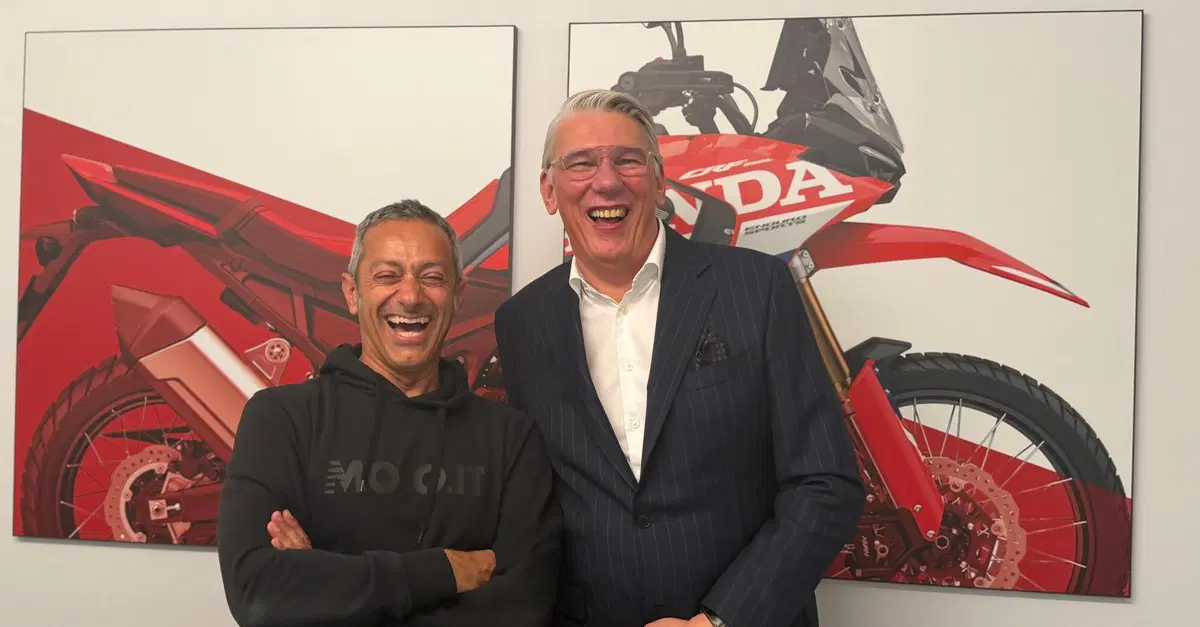
Honda sees Europe as more than an important sales region. It accounts for 60% of the company’s global volume in the larger-capacity and more emotional motorcycle segments, while European requirements influence products such as the Africa Twin, V3R and CBR Fireblade. Hans de Jaeger describes a strategy built around commercial growth, production close to customers, new technology and a deliberately measured approach to electrification.
De Jaeger is Honda’s President for Europe, the Middle East and Africa, and the first non-Japanese manager to lead a regional operation of this importance within the company. His responsibilities cover motorcycles, cars, power products and marine activities. He describes his role as bringing the needs of European markets into Honda Motor’s decision-making, with sustainable and profitable growth as the objective. In this context, sustainability concerns not only CO2 emissions but also the financial health of the business, its customers and its dealer network.
A strong position across very different markets
In motorcycles, Honda says it ranks first in 17 of the 20 European countries where it operates directly. Markets handled through distributors are excluded from that comparison. Honda also says this is not the result of a single successful year: it has maintained the position for several consecutive years, while its overall share of the European motorcycle market is above 20%.
Honda’s European business extends well beyond two wheels. In cars, the company says it increased its sales volume in Italy by more than 40%. De Jaeger presents that result as the largest increase of this scale achieved by a non-Chinese manufacturer in that market. In marine products, Honda says it has reached second place in Italian sales of marine engines. The company also points to the BF250, BF300 and BF350 as recent additions for an important segment, and has created a dedicated Italian organisation to develop its European marine business further.
That spread of activities proved valuable during a difficult period. Honda links the cancellation of the 0 Series project to a significant effect on the previous year’s financial results, while saying that it has since recovered and returned to a profitable path. The company’s argument is that a portfolio covering cars, motorcycles, work and leisure products, marine engines and after-sales can absorb disruption in one area more effectively than a business dependent on a single category.
Italy is one of Honda’s strongest European bases. The company employs around 1,500 people there and operates a motorcycle plant at Atessa. At the same time, Honda treats Italy, Germany, France and the United Kingdom as distinct markets rather than one uniform region. It is preparing specific plans to increase volumes in Germany and France. De Jaeger also describes the regulatory environment in the European Union and the UK as a broad difficulty for manufacturers, particularly while further industrial and trade measures remain under discussion.
Electrification should follow demand
Honda is not rejecting electrification, but it does not want every market and customer to move at the same speed. De Jaeger’s position is that customers should determine which products they need and how quickly the transition develops, within a clear regulatory framework. Honda says it already has 16 electric models globally. The WN7 is one example of an electric motorcycle, and the company has also presented an electric mountain bike.
For Honda, the issue is not whether rules should exist but whether the transition can be followed by customers. De Jaeger argues that the car industry in some cases moved too far towards a compulsory route before buyers were ready. In motorcycles, Honda therefore wants to understand users’ actual needs first and develop products around them. The company believes electric motorcycles have a place in the market, but that the path towards them should be built together with customers rather than imposed on them.
The V3R as a technology platform
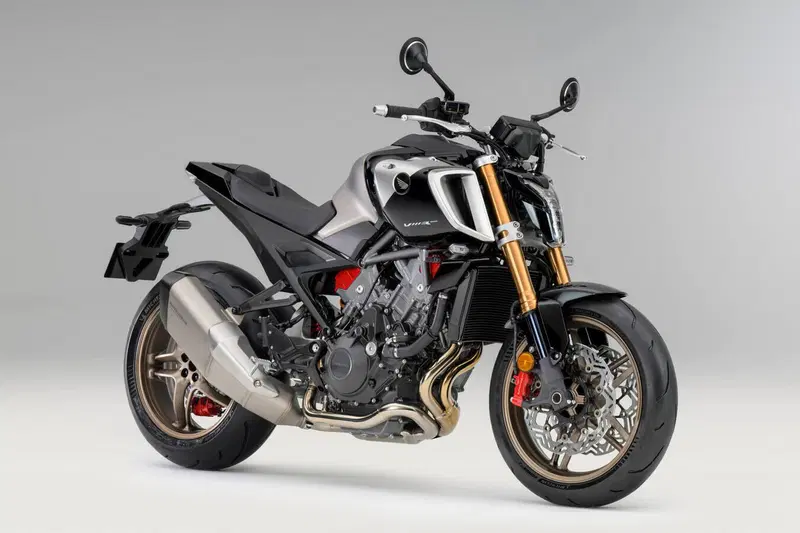
The V3R is the clearest expression of Honda’s technology direction. The motorcycle shown at EICMA 2026 is a pre-production version and, Honda says, is close to its final production form. It is presented not simply as a striking individual model but as a carrier for the company’s Dream Tech philosophy. That label covers engine technology, electronic systems and safety solutions that Honda wants to make available to more customers instead of leaving them confined to a single motorcycle.
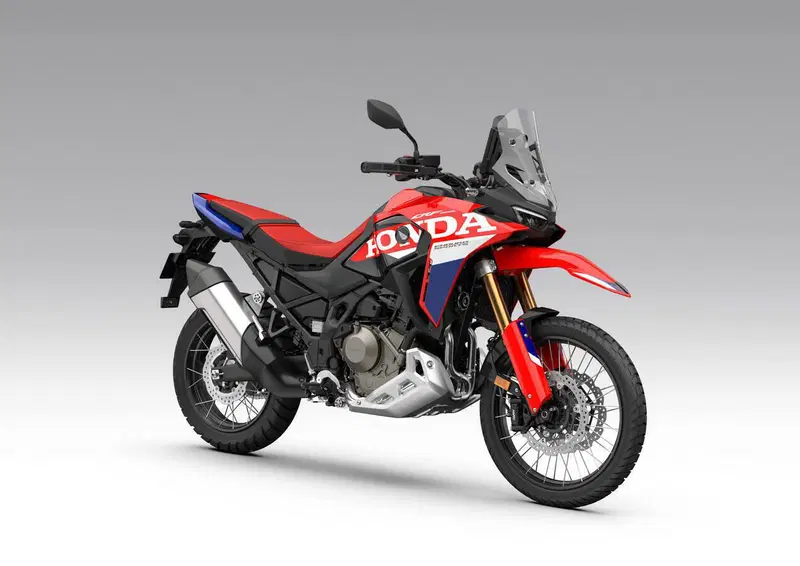
Honda places the Africa Twin’s Honda Sensing system, including features such as adaptive cruise control, within the same approach, alongside the E-Clutch. Safety is a central development priority, and Honda’s target is zero fatalities in motorcycle crashes by 2050. An expanded V3 family is not being presented as a confirmed programme: Honda says it will consider such a move if the market responds positively to the V3R. The company nevertheless describes the future of motorcycling as promising and sees room for further growth.
Atessa for Europe, Turkey for Turkey
Honda’s production strategy now includes a separate Turkish focus. Under the current direction, the new facility in Turkey is intended to serve the Turkish market. Honda links that decision to additional duties on products imported from countries outside Europe, making local production a way to protect competitiveness. The company describes Turkey as a large and growing market with a particularly young population.
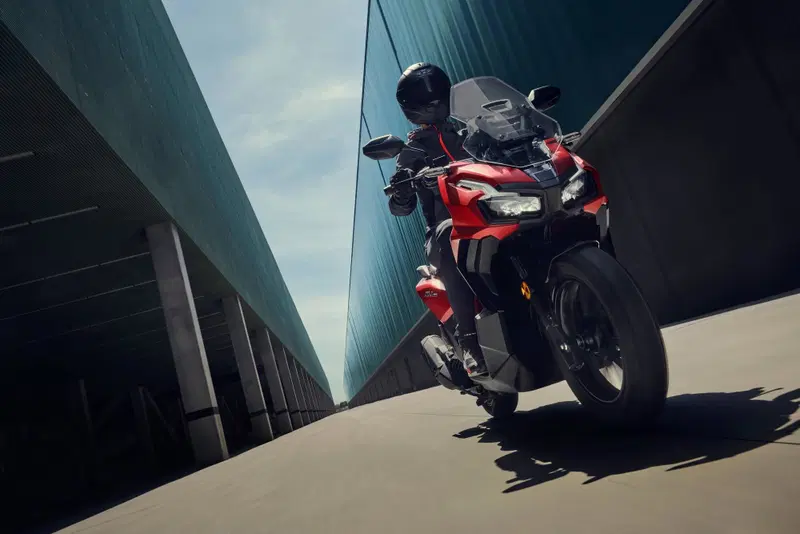
Atessa will continue serving continental Europe. Honda also wants its facilities in Turkey, Italy, Spain and France to cooperate, exchange best practices and develop synergies. Production of the ADV125 has already started at Atessa, illustrating how the company connects market demand with local manufacturing.
Europe’s strategic weight ultimately comes from the kind of motorcycles it buys. Honda says the region generates 60% of its global volume in the larger-capacity and more emotional segments. The Africa Twin, V3R and CBR Fireblade are cited as examples of products shaped in response to European riders’ requirements. Europe therefore serves Honda at once as a market, a production base and a development environment for its next generation of large motorcycles.
THE STORY IN PHOTOS
4 photos
THE EVIDENCE BEHIND THE STORY
Sources
Spotted something that needs correcting? Contact the editorial team