
Kawasaki Corleo brings hydrogen-powered quadruped mobility to EICMA
A full-scale mock-up will preview Kawasaki’s four-legged robotic vehicle, with full commercialisation targeted for around 2035.

2 min read
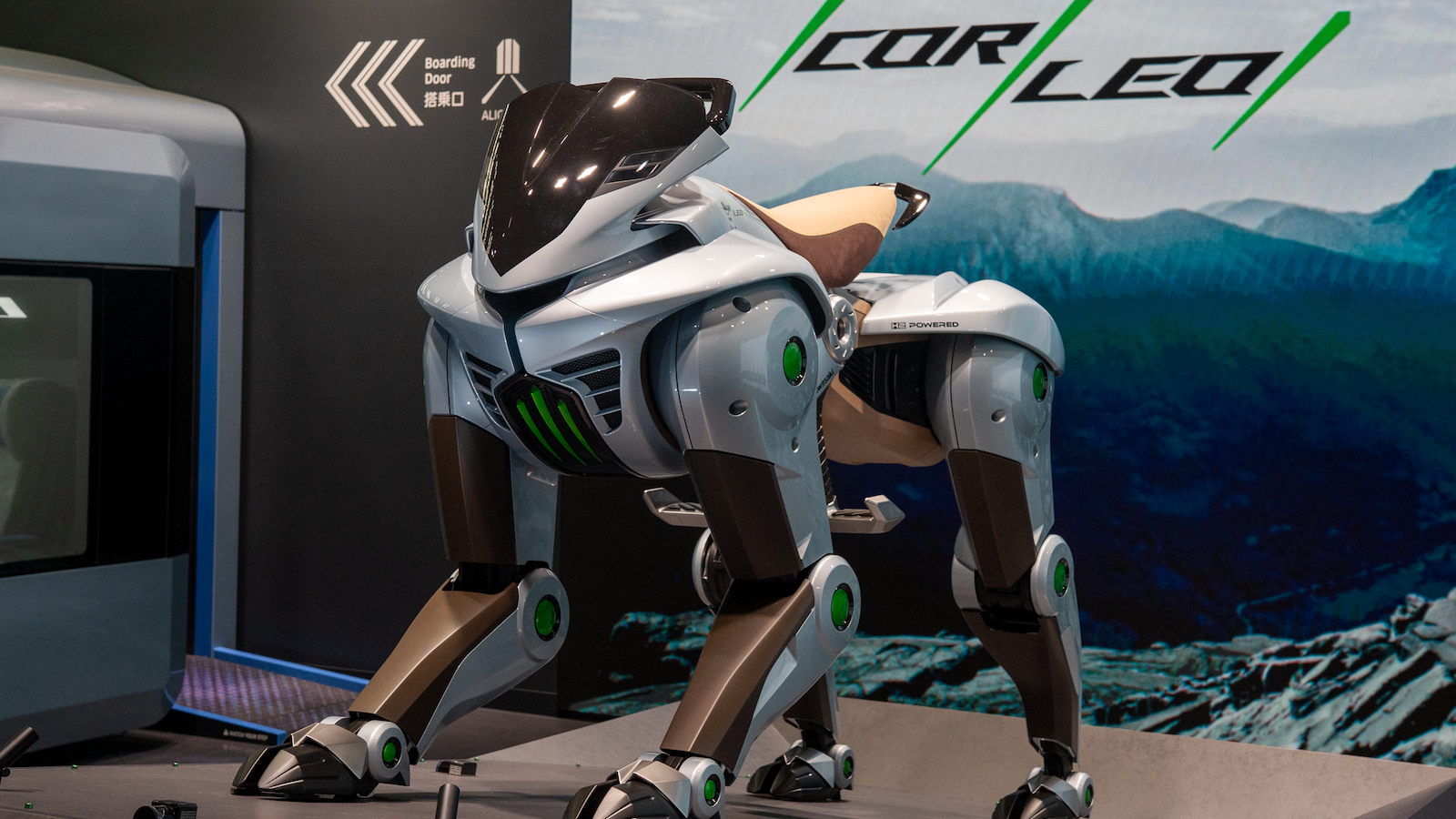
Kawasaki will put Corleo on display at EICMA, showing a hydrogen-powered quadruped vehicle built around robotic technology. The company is preparing a full-scale mock-up for the event, while the project has already been earmarked for production. Rather than extending the conventional motorcycle format, Corleo belongs to Kawasaki’s wider exploration of personal mobility beyond traditional powered two-wheelers.
Its control concept is intended to feel more like riding than operating a conventional machine. The rider sits on Corleo and changes direction by shifting body weight, an approach Kawasaki compares with the interaction involved in riding a horse or a motorcycle. The vehicle combines that rider input with a four-legged robotic platform and development principles drawn from Kawasaki’s motorcycle work.
A navigation system built around its surroundings
Kawasaki is also developing navigation software specifically for Corleo. The system is designed to detect weather, temperature, surface conditions and the presence of wildlife. Its information will be shown on the vehicle’s instrument panel and made available through various smart devices, extending the concept beyond the mechanical hardware itself.
The Corleo project is headed by Kawasaki’s Safe Adventure Business Development Team, which reports directly to the president of Kawasaki Heavy Industries. Shigemi Tanaka, Managing Director of Kawasaki Motors Europe, presents the project as an expression of Kawasaki’s technical, industrial and environmental experience, as well as its pursuit of a carbon-neutral future through the Safe Adventure philosophy. Full commercialisation is targeted for around 2035, placing Corleo firmly in the long-term development category rather than among immediate motorcycle alternatives.
THE EVIDENCE BEHIND THE STORY
Sources
Spotted something that needs correcting? Contact the editorial team ↗