
Honda treats motorcycle sound as part of the engineering
NVH specialist Takatoshi Tatsumi explains how Honda balances tone, volume and regulation—and why electric motorcycles need not imitate combustion engines.

6 min read
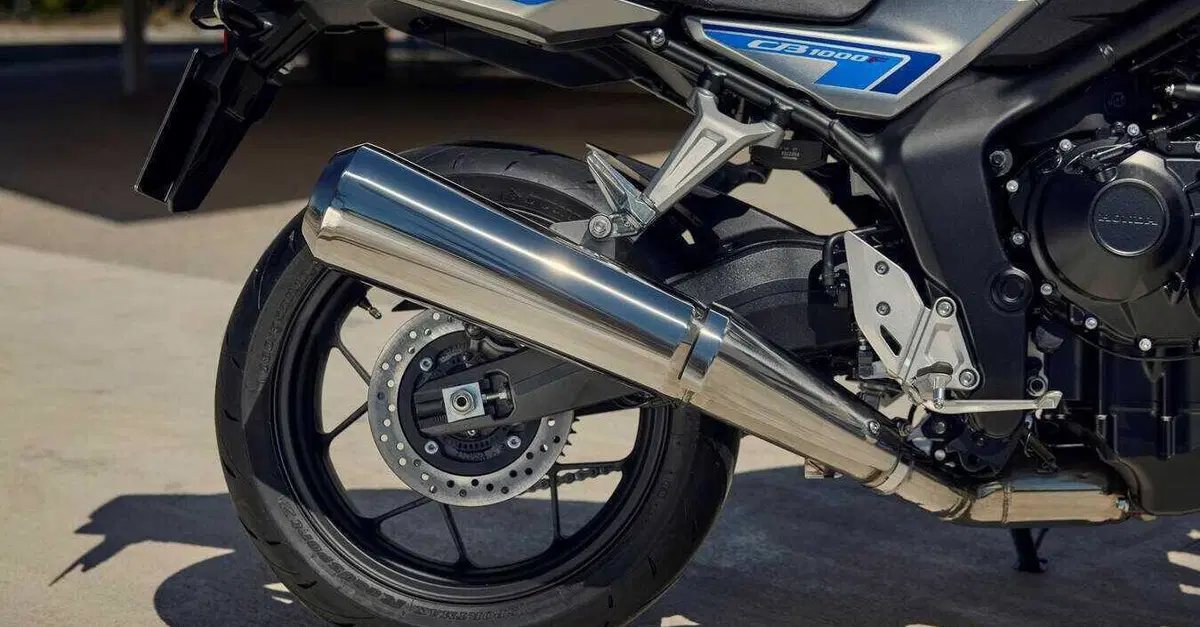
At Honda, a motorcycle’s sound is not a finishing touch added after the engine and exhaust have been settled. It is part of the vehicle’s development, linked to combustion, throttle response and the way the rider experiences the machine. Takatoshi Tatsumi, Honda’s specialist in NVH—noise, vibration and harshness—describes a process in which tone, rhythm and volume are considered alongside other engineering characteristics rather than treated as decoration.
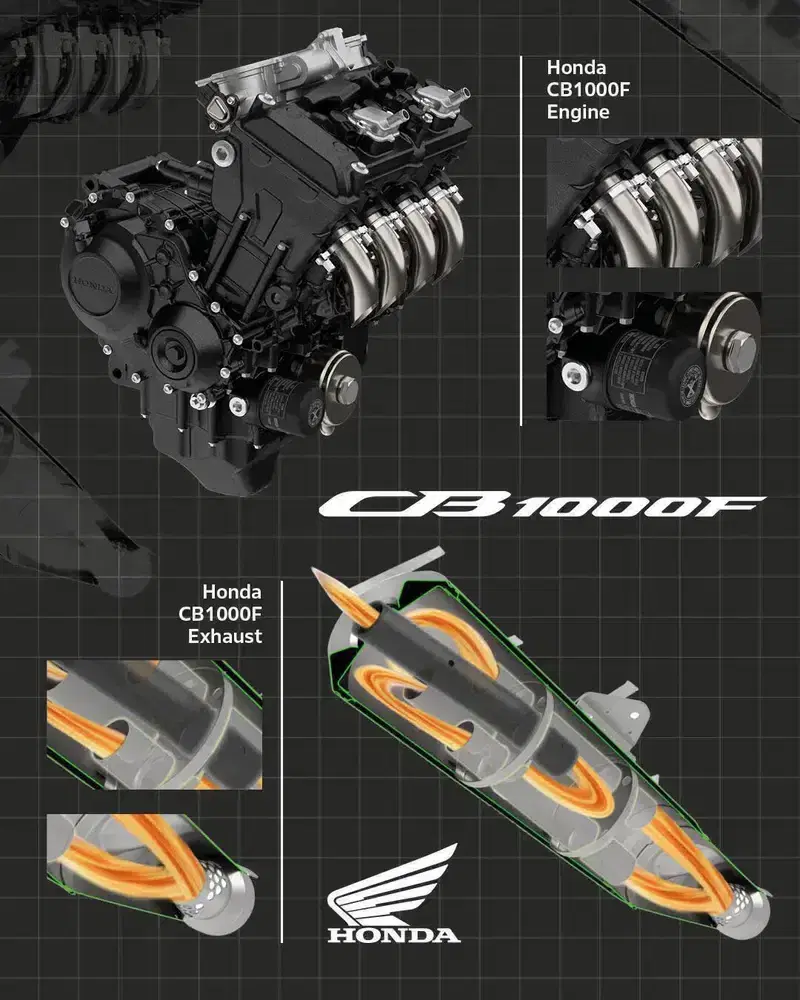
The first principle is that the exhaust does not create the motorcycle’s sound by itself. Combustion and the engine generate the initial acoustic material; the exhaust filters and shapes it. Reaching the desired result can require extensive experimentation. For the CB750 Hornet, almost one hundred different configurations were tried before the intended voice was selected. That example shows why modern motorcycle sound design is more involved than choosing a final silencer or opening up an outlet.
Noise approval covers the whole motorcycle
Noise approval applies to the finished motorcycle, not only to its exhaust. The engineer responsible for sound therefore has to understand the entire vehicle and work with several development teams. Regulations force those teams to decide which qualities should be protected and where compromises are acceptable. Tatsumi does not regard compliance solely as a restriction. Controlling unwanted noise can lead to more creative engineering, provided the goal is not reduced to achieving the lowest possible number in a test.
Honda’s practical definition of a good sound is a balance between tone and volume. A pleasing tone with no volume reaches nobody, while an excessively loud sound can become irritating. The result has to work in the real riding environment, not just during a formal assessment. Tatsumi also sees no fundamental separation between the sound experienced by the rider and the sound heard by people nearby. The surroundings, reflections and resonances alter the experience, but the underlying acoustic event remains the same.
The Hornet and Transalp’s rising pulse
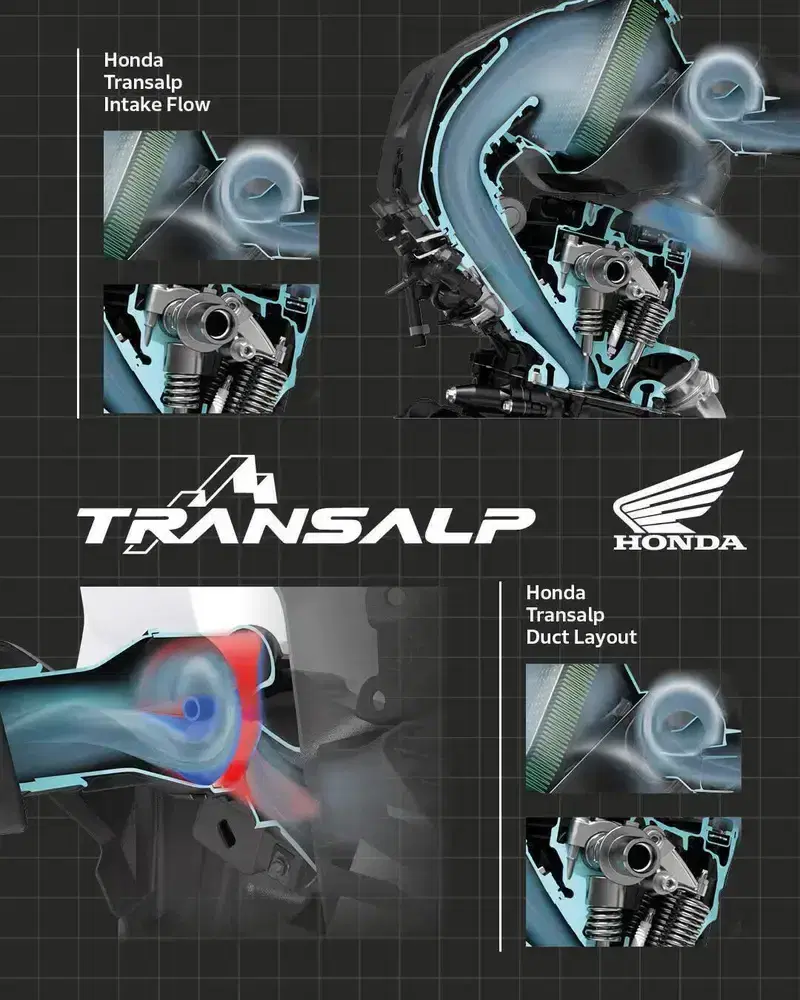
For Tatsumi, the engine start is the moment that reveals whether the work has succeeded. The first sound gathers up the development effort that came before it and gives the engine its first opportunity to establish a character. The motorcycles he names with the greatest pride are the 2023 CB750 Hornet and XL750 Transalp. They were the first large-displacement FUN bikes whose complete model changes he followed through his own development work.
The guiding idea for both motorcycles was a pulse that grows with engine speed. The challenge was that raising the volume also brought unwanted acoustic components. At the same time, the desired character could not compromise performance. Honda’s solution was to isolate the elements that genuinely contributed to the sound and reduce those that added noise without adding character. Sound design thus becomes a process of selection and balance, not a competition to make the motorcycle louder.
The engine as a musical instrument
Tatsumi thinks of the engine as a kind of musical instrument, without trying to place it in a specific category. What matters to him is how the sound responds to the rider’s throttle input. When the motorcycle answers in a satisfying way, the relationship resembles that between a musician and an instrument. The important element is not simply a note or a volume level, but the interaction that takes place while riding.
He uses three musical terms to describe the ideal result. Rhythm is the pulse created by the intervals between combustion events. Harmony concerns the way different sounds interact and whether the outcome is clear or muffled. Crescendo describes the anticipation that builds as the sound becomes more present with rising engine speed. His example is the change associated with VTEC, familiar to riders of the VFR800.
Honda has turned that descriptive vocabulary into an internal evaluation framework. Exhaust sound is assessed through pulse, depth and sportiness. Accumulated fundamental research has helped the company discuss a subjective impression with a more consistent language shared by its engineering teams. That gives development groups a way to work on sound without relying entirely on the personal taste of one specialist.
Honda does not impose one common voice
Honda is not trying to make every engine sound alike. Tatsumi says he can distinguish a Honda by ear, but that recognisability is not a universal development target. Models with a long history may preserve an established acoustic tradition, while every new motorcycle is shaped according to its concept and Honda’s quality standards.
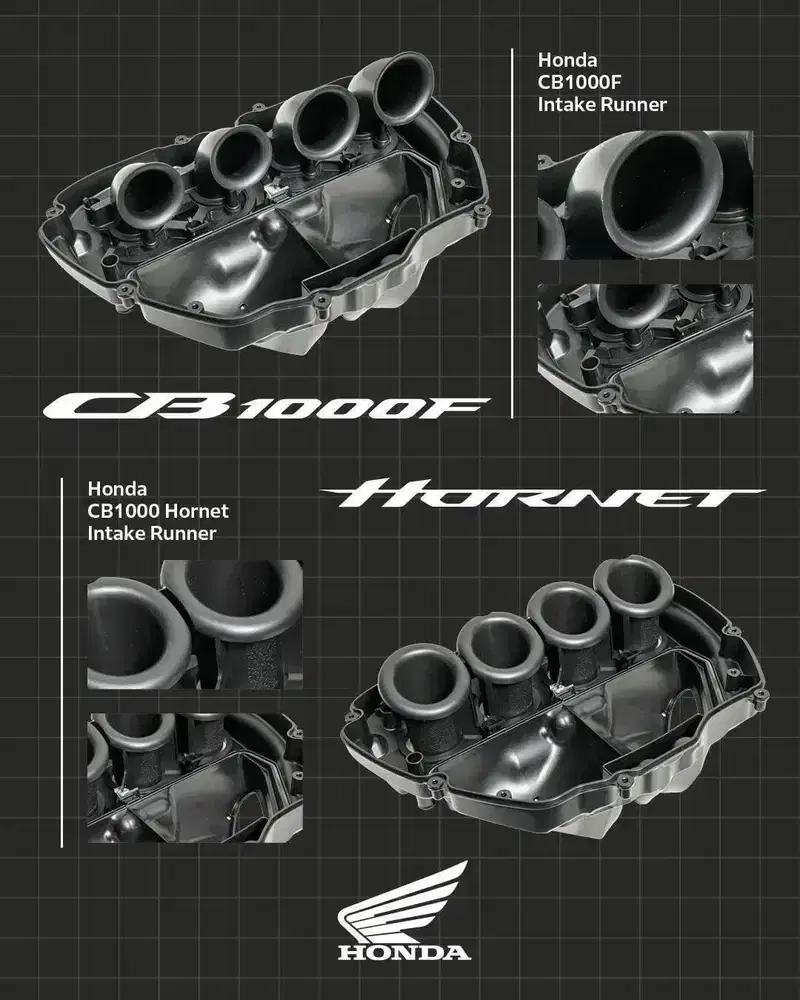
If a sensual sound is part of the brief, it can influence the combustion specification from the beginning. If power, cost or performance take priority, sound design must not become an obstacle. The CB1000 Hornet and CB1000F illustrate the principle: they can have different acoustic personalities despite using the same engine. Tatsumi’s personal view is that a sound considered good in Japan can also work in other countries. More important than local preference, he argues, is understanding the target customer and the experience the motorcycle is meant to provide.
Silence as a choice for electric motorcycles
Electrification changes the question. Honda’s WN7 has been presented as an electric motorcycle built around quietness. Its belt final drive and the removal of unnecessary noise sources leave more room for wind, asphalt and the surrounding environment. In an early press test, the impression was one of near-total silence, while the “Be the Wind” philosophy treated that quietness as a deliberate choice rather than a gap that had to be filled.
Tatsumi does not believe electric motorcycles need artificial sounds that imitate combustion engines. In his view, there is strong demand for quiet electric mobility, and the technology can develop its own musical character through that quietness. Honda does not yet have a clear answer for how that character should be designed. That uncertainty is significant: the acoustic identity of electric motorcycles may become a new language instead of a copy of the internal-combustion past.
Tatsumi’s favourite engine sound does not come from a motorcycle. It is the high-pitched note of Honda’s Formula 1 V12 associated with Ayrton Senna as it climbs towards the limiter. Reproducing that sound on a production motorcycle is not a realistic objective. It does explain, however, why sound remains important—not as a display of volume, but as a connection between mechanical operation and the rider’s emotional response.
THE STORY IN PHOTOS
5 photos

THE EVIDENCE BEHIND THE STORY
Sources
Spotted something that needs correcting? Contact the editorial team