
Chery patents an electric two-wheeler with a hubless rear wheel
The sketches show a compact electric vehicle with variable ergonomics, switching between seated and standing riding.

2 min read
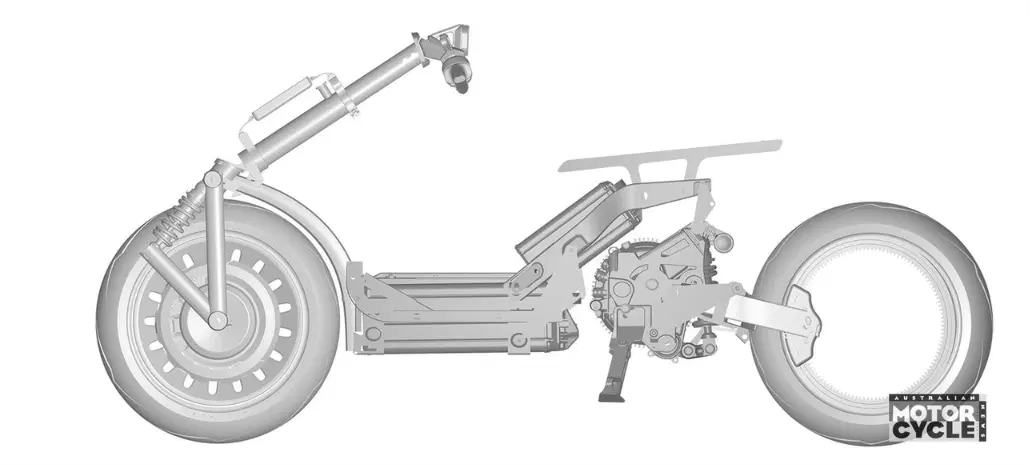
Chery has filed patents for an electric two-wheeler that moves beyond the usual motorcycle or scooter layout. The concept sits between a compact motorcycle and a futuristic scooter, combining a hubless rear wheel with a steering assembly that changes position. The Chinese company, already known in Europe through Omoda and Jaecoo, had previously shown two electric scooters and a prototype fitted with a combustion range extender.
The battery pack is mounted low and acts as a central structural element, while a large electric motor is placed at the rear. Final drive runs by chain on the right side of a short twin-sided swingarm. There is no conventional rear hub: the wheel runs on a perimeter bearing and uses internal teeth that mesh directly with the chain-driven sprocket. That layout can remove the reduction gearbox between the motor and the transmission, but it also puts greater demands on the wheel bearing.
One chassis, two riding positions
The CAD drawings’ most distinctive feature is the long, hinged steering column, pivoting low above the front wheel. In its lower position, it is intended for seated riding, with seat-mounting points visible above the motor. Raising the steering assembly creates a standing configuration using dedicated footrests. The operating logic is reminiscent of a stand-up jet ski and gives the vehicle the outline of an urban crossover rather than a conventional scooter.
The frame is shown as a minimal tubular structure, without visible bodywork and without a fitted seat. The wheels appear relatively small, reportedly around 14 inches in diameter. The front suspension is less clearly resolved: springs can be seen, but the drawings do not fully explain the relationship between their geometry and the upper frame section. These are preliminary patent illustrations, so some components may be omitted or represented schematically. The project should therefore be read as a technical proposal, not as a confirmed production model.
THE EVIDENCE BEHIND THE STORY
Sources
Spotted something that needs correcting? Contact the editorial team