
LiveWire S4 Honcho Trail: electric fun with strict limits
The Trail combines 14.6 bhp, removable batteries and serious suspension travel, but remains an off-road motorcycle for private land only.

5 min read
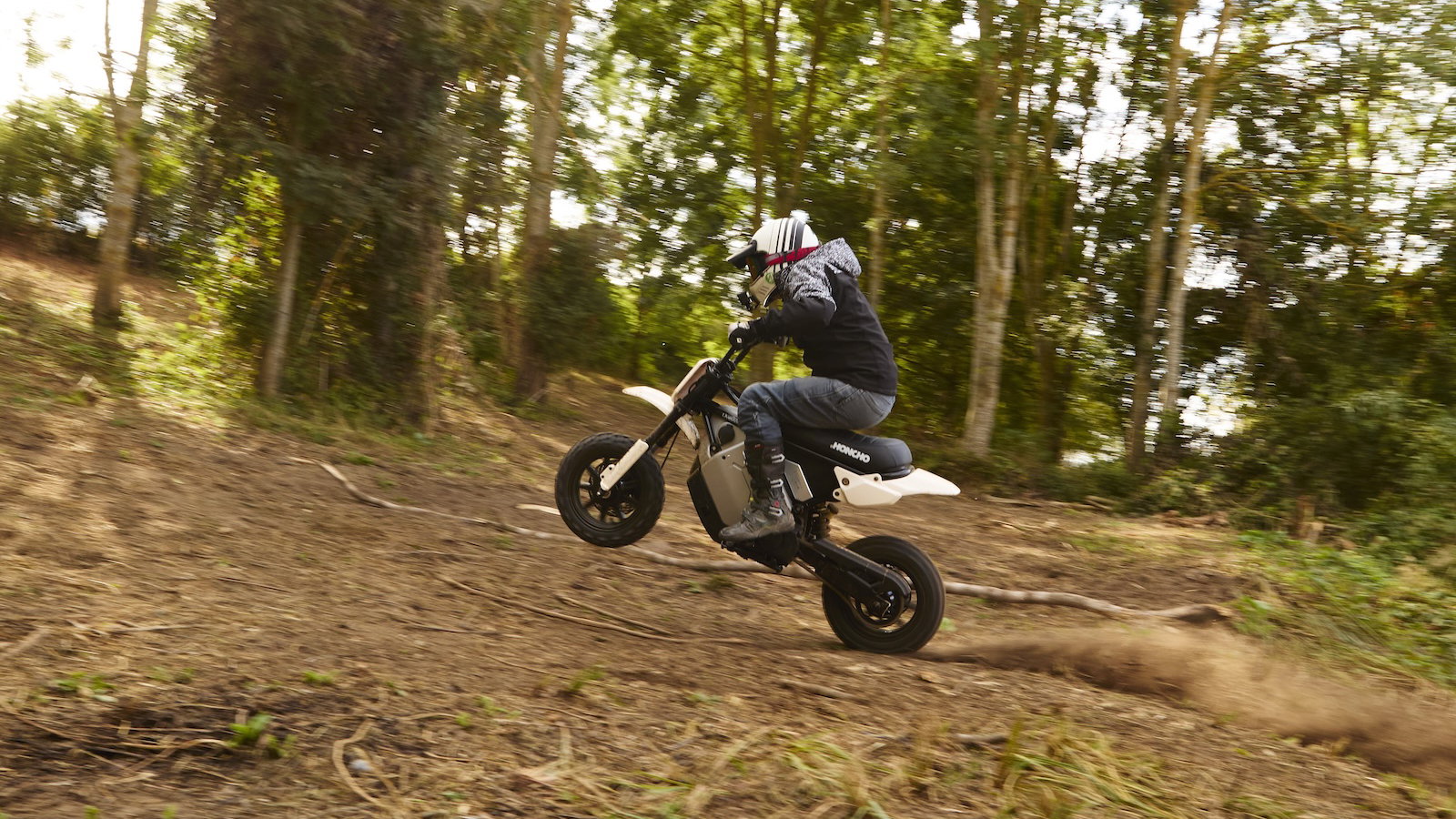
The LiveWire S4 Honcho Trail is the first member of the new S4 family to reach Europe, and the more specialised of the two versions announced so far. It is neither a small adventure motorcycle nor an electric commuter that can legally be ridden to a trailhead. The Trail is not road homologated and is intended solely for off-road use on private land, with the owner’s permission. A Street version is expected later in the year, but the Trail is the model that gives the S4 its clearest and most playful identity.
Its appearance matches that purpose. Small 12-inch wheels, knobbly tyres and compact proportions make it look closer to a lightweight machine for farms and private tracks than to a conventional motorcycle. That is more than a styling decision: it determines where the bike can be used and sharply narrows its potential audience.
A KYMCO partnership and a practical battery layout
The S4 Honcho is the first model to emerge from LiveWire’s technical partnership with KYMCO. LiveWire’s Milwaukee identity remains part of the machine’s branding, while components of the braking system carry KYMCO markings. The powder-coated frame has a well-finished appearance and, during the early press test, the bike did not develop the irritating squeaks or rattles sometimes associated with lightweight electric motorcycles.
Energy comes from two removable batteries, each weighing 10 kg, with a combined capacity of 3.48 kWh. LiveWire quotes a maximum range of 73 miles at a sustained 20 mph, while the WMTC figure is 53 miles. Those figures describe different test conditions and should not be treated as the same promise for every kind of trail riding.
Using a domestic socket, charging from 20 to 80 per cent takes around two hours. A complete 0 to 100 per cent charge requires approximately three and a half hours. Both batteries can be removed and carried to a charging point, which matters for a motorcycle likely to spend its time on farms or private ground where an electrical outlet may not be close to the riding area.
Basic equipment, with some compromises
The Trail keeps its equipment deliberately simple. There are two riding modes, High and Low, with separate throttle responses and regenerative-braking maps. Battery capacity and the selected mode are displayed by two LEDs in the upper handlebar clamp. There is no traction control, ABS or TFT display.
The brake arrangement is conventional in its positioning: the front brake is operated from the right handlebar, while the rear brake is controlled by the right footpeg. Up front, a two-piston caliper works with a 240 mm disc. In the early press test, the feel was described as wooden, with little feedback from either end. Since there is no ABS, dusty and steep descents require careful use of the front brake, where locking is a realistic possibility.
Entertaining off-road, but not precise
The riding took place on tracks near Versailles, including narrow sections, grassy ground, dusty climbs and deeply rutted surfaces. The test found that the small tyres struggle to hold a clean line once speed rises. The Trail moves nervously across the surface and demands constant small corrections. That reduces precision, but it also creates the mischievous character that sits at the centre of the bike’s appeal.
The riding position reinforces the point. Most riders will not find it natural to stand on the pegs, so the bike is mainly ridden seated, with one leg extended. The suspension, however, is clearly intended to tolerate rough treatment: travel is 260 mm at the front and 285 mm at the rear, with 194 mm of ground clearance. The Trail can bottom out over major impacts or deep holes, yet it continues without readily feeling fragile.
More than 20 journalists took part in the test, and the only reported mechanical incident was a chain pulled off the sprocket by a branch. The bike’s low weight allowed the chain to be refitted within minutes. Regenerative braking was less convincing. With the throttle closed, deceleration is very gentle. A software change or a manually adjustable level of regeneration could provide more control on descents.
A very specific market
The S4 Honcho Trail is priced at £4,599 in the UK, while the expected Street version is listed at £4,999. The Trail produces 14.6 bhp and 30 Nm and weighs 114 kg. Its position becomes clearer beside the Honda Monkey 125, quoted at £4,199, although the comparison has obvious limits: the Honda is a road motorcycle, while the LiveWire is not intended for public roads.
The S4 Honcho Trail makes sense for a rider with private land, access to off-road tracks and an appetite for a rugged electric fun bike. Its low seat, simple controls and lack of complex systems make it approachable and entertaining, but the usage restriction is decisive. This is not an everyday transport tool or a serious adventure motorcycle. It is a small, distinctive machine for a specific environment — and the early test presents it as highly successful on those terms, while making clear how limited the group of riders able to use it properly will be.
THE EVIDENCE BEHIND THE STORY
Sources
Spotted something that needs correcting? Contact the editorial team ↗