
QJMotor’s SRV 600 V4 gets paddle-shifted automated-manual transmission
Chinese type-approval documents show automated-manual versions of both V4-powered cruiser designs, while launch timing and wider availability remain unconfirmed.

3 min read
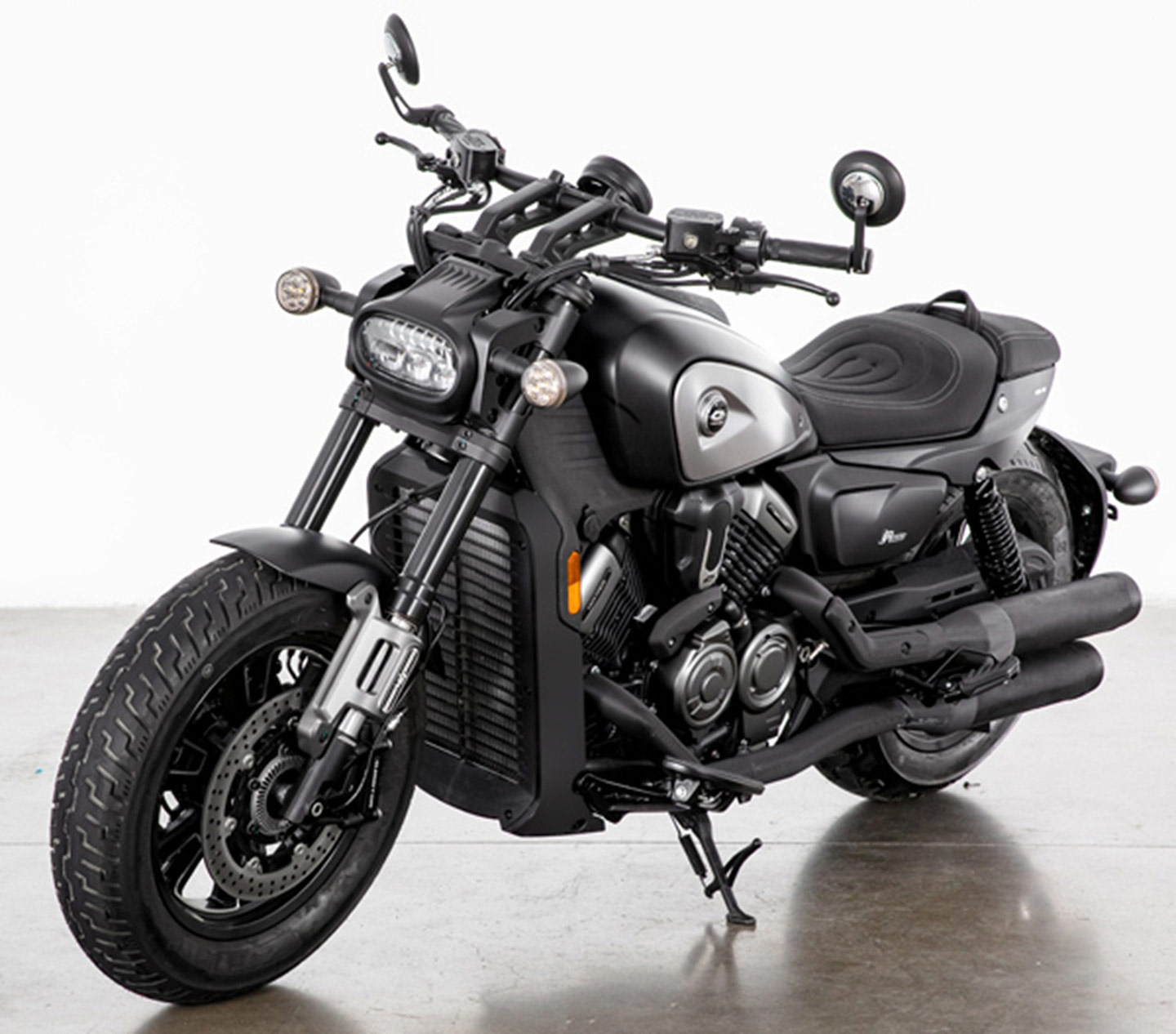
QJMotor is preparing automated-manual versions of its V4-powered SRV 600 V4 cruisers, according to new Chinese type-approval documents. The system uses paddle shifting rather than a conventional clutch lever and foot-operated gear-change arrangement. That does not confirm a fully automatic motorcycle: the documented setup retains manual gear selection through a handlebar control, while a fully automatic mode is only considered likely.
The development arrives as manufacturers increasingly explore ways to remove manual gear-changing duties from motorcycles. Shifting remains an important part of riding for many motorcyclists, but a growing minority prefers not to manage it themselves. That makes a self-shifting option increasingly relevant, particularly for motorcycles intended to attract newer riders.
Two designs, one mechanical package
The SRV 600 V4 recently joined QJMotor’s international range and entered Europe in the year before the article’s publication. It had not yet reached the United States at that time, and the supplied evidence does not establish launch timing or availability for the new automated versions.
The range includes two distinct designs under the same SRV 600 V4 name. The conventional cruiser has a circular headlight with a stylized central LED surrounded by running lights, along with a long tail and curved rear fender. The second draws styling inspiration from the Harley-Davidson Fat Bob, using a pill-shaped LED headlight, a sportbike-influenced short tail and a more angular fuel tank. The reference is limited to styling; the two QJMotor models are mechanically identical.
Both use a steel chassis, a 62.2-inch wheelbase, an inverted fork, dual rear shocks and 16-inch wheels. The wide, high-profile tires measure 130/90 at the front and 180/65 at the rear. The sportier-looking version weighs 494 pounds, while the retro-styled model weighs 498 pounds. Their 561cc V4 produces a claimed 67 horsepower at 10,500 rpm, with power reaching the rear wheel through a belt final drive.
Paddles replace the conventional shift controls
The main technical change is the transmission. Images accompanying the approval documents show footboards instead of the foot pegs used by the existing manual-transmission models, and no gear-shift lever is visible. A finger-and-thumb paddle beneath the left handlebar signals the ECU, which activates the mechanisms operating the clutch and selecting gears. The automated-manual system retains six ratios, like the manual version.
The images do not show the motorcycles’ right-hand sides. A fluid reservoir is visible beside the left-hand lever, which is treated as strong evidence that the lever operates the rear brake; that identification remains a visual inference. On that apparent layout, the front brake is on the right handlebar, the rear brake on the left, and the throttle is twist-and-go. The resulting arrangement resembles a scooter’s controls, with no confirmed foot-operated gear control.
A fully automatic mode may also be included, in a format comparable with the modes used by Yamaha’s Y-AMT automated-manual models, but this is not confirmed by the supplied evidence. For beginner-focused motorcycles such as QJMotor’s two V4 cruisers, the potential to operate without manual clutch and foot shifting could broaden the appeal of the format, regardless of individual riders’ views on automatic transmissions.
THE EVIDENCE BEHIND THE STORY
Sources
Spotted something that needs correcting? Contact the editorial team ↗