
Norton Atlas brings a 585cc adventure-touring twin and a €9,250 entry point
The road-focused 2027 Norton Atlas and Atlas GT use a new 585cc parallel twin, with Atlas and Atlas Apex versions scheduled to arrive first.

5 min read
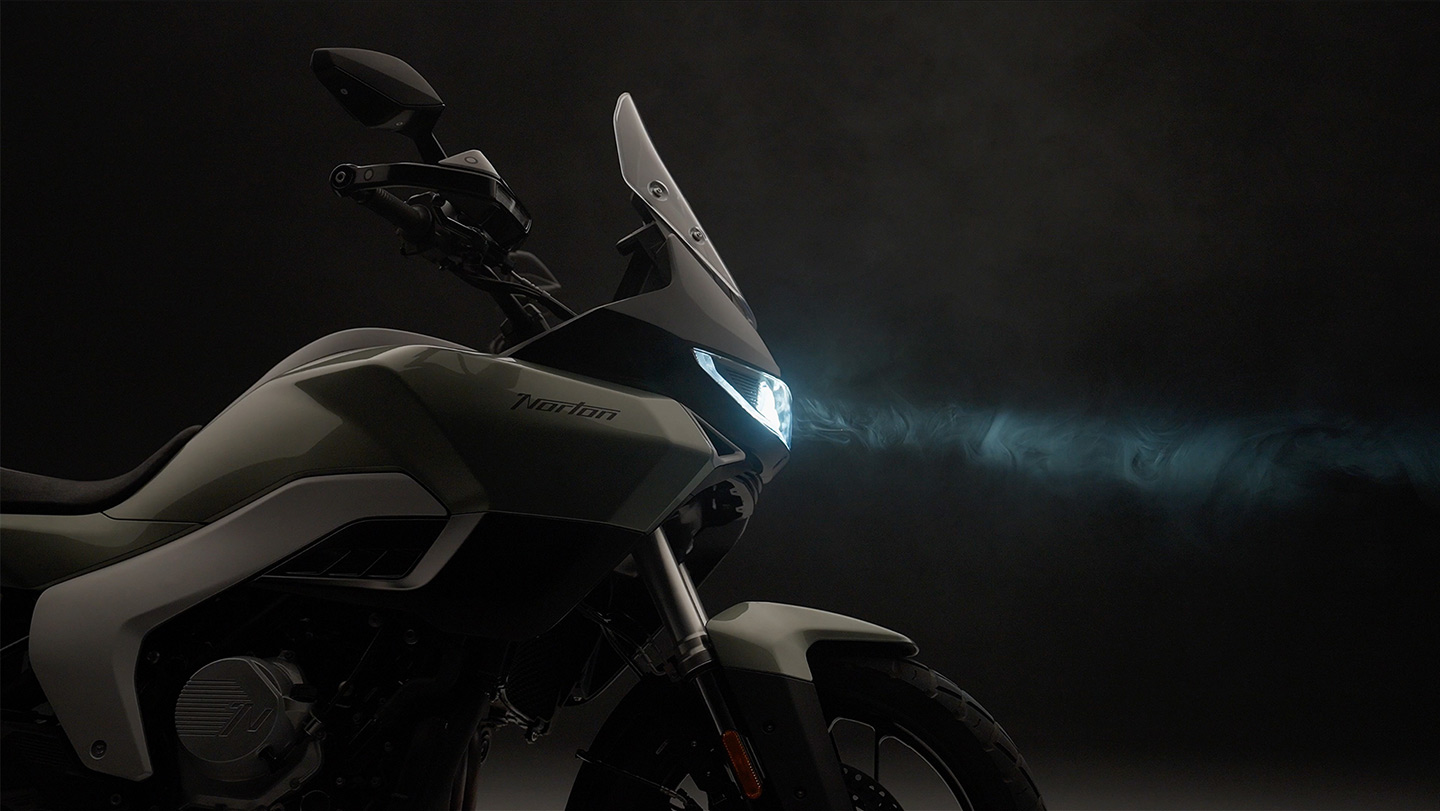
Norton is expanding its modern range with the Atlas and Atlas GT, road-focused adventure-tourers built around a new 585cc parallel-twin engine. Both models are planned in two trim levels, with the standard Atlas and Atlas Apex scheduled to be available first. However, the exact arrival date had not been confirmed, and the GT versions did not yet have complete specifications or prices.
The Atlas is described as the first affordable model from the modern Norton operation. The company, owned by India’s TVS, positions the Atlas and Atlas GT as more affordable than previous new Nortons, with pricing closer to that of a mass-produced Japanese motorcycle. The least expensive Atlas is listed at €9,250 in Europe and £8,250 in the UK. A US figure of about $9,000 has been suggested as an estimate, not as an official price. The specification table lists MSRP as TBA, while final US MSRPs had not been confirmed. Exchange rates, taxes and tariffs can also create significant differences between markets.
A new 585cc engine
The liquid-cooled DOHC parallel twin produces a claimed 69 hp at 9,300 rpm and 42 lb-ft of torque at 7,500 rpm. It uses a 270-degree crankshaft, a 78.0mm bore and a 61.2mm stroke, with a 12.2:1 compression ratio and four valves per cylinder. Power reaches the rear wheel through a six-speed gearbox and chain final drive. The wet, multiplate clutch has slip-and-assist functionality and cable actuation.
Visually, the Norton engine has similarities to BMW’s 420cc parallel twin used in the F 450 GS. The BMW unit uses a 135-degree crankshaft, while the Norton has a 270-degree crankshaft; the two engines are described as internally very different. The article also states that TVS manufactures the BMW F 450 GS for BMW.
Norton claims that the engine’s cooling system is particularly suited to hot climates and heavy traffic. Dual oil pumps are said to reduce friction and improve lubrication under load. The claimed power is close to that of Yamaha’s Ténéré 700, despite the Norton having 104cc less displacement. Claimed average fuel economy is 54 mpg.
Two chassis approaches
The standard Atlas uses a steel-trellis chassis, a 19-inch front wheel and an 8.7-inch ground clearance. Its suspension travel is 7.0 inches at both ends, with a fully adjustable 43mm KYB inverted fork at the front and a fully adjustable KYB RSU monoshock at the rear. The rear swingarm is a dual-sided aluminium design. Seat height is 33.3 inches, while the listed wheelbase is 57.7 inches—the same figure stated for the BMW F 450 GS. Steering geometry is given as 25.7 degrees of rake and 4.0 inches of trail.
The Atlas GT shares most of the Atlas’s design and specification but takes a more road-oriented, sportier approach. It uses a 17-inch front wheel to match its 17-inch rear wheel, has a 32.1-inch seat height and reduces suspension travel to 5.5 inches at both ends. Its wheelbase is shorter than the standard Atlas, although the exact measurement was not disclosed. The shorter travel is also presented as giving the GT less claimed off-road pretension. Complete GT and GT Apex specifications and prices remained unreleased.
The listed standard-Atlas wheels are cast aluminium-alloy units measuring 19 x 3.00 inches at the front and 17 x 4.50 inches at the rear. Tyres are specified as Eurogrip Explo R Plus, sized 110/80 ZR19 front and 150/70 ZR17 rear. Braking uses dual 310mm front discs with radial ByBre calipers and a single 270mm rear disc with a single-piston ByBre caliper. ABS is specified at both ends.
Electronics and Apex equipment
An IMU supports lean-sensitive traction control and ABS. Other electronic aids include rear-wheel slide control, wheelie control and hill-hold assist. Cruise control is standard and operates through electronic throttle control, while a bidirectional quickshifter is also standard. The motorcycle has keyless ignition and keyless locking for the fuel cap and seat.
The cockpit centres on an eight-inch, 720p touchscreen. The system provides turn-by-turn navigation, GoPro controls, Bluetooth and Wi-Fi smartphone connectivity, and support for over-the-air software and firmware updates. Norton also offers a Norton Rider smartphone application, with joystick-style switchgear used to move through the controls.
Apex trim adds a luggage rack, cornering lights, an adjustable windscreen, tyre-pressure monitoring and heated grips. The listed wet weight is 414 lb for the Atlas and 423 lb for the Apex version, while fuel capacity is 4.1 gallons.
Timing, warranty and a model-year discrepancy
The Atlas was first shown at EICMA in the previous year relative to the article’s capture, and the production motorcycle is described as visually identical to the version previously shown. The standard Atlas and Atlas Apex are expected first, with the GT versions implied to follow slightly later; that timing is not a confirmed date.
For US-specification motorcycles, Norton states a 36-month or 30,000-mile warranty including 24/7 roadside assistance. The company is also described as being aware of reliability and customer-support problems associated with a previous Norton operation that used the name, although that operation was largely unrelated to the current TVS-owned company.
One detail requires caution: the article concerns the 2027 Norton Atlas and Atlas GT, but the accompanying specification table is headed “2026 Norton Atlas Specs.” The available evidence therefore does not resolve the model-year discrepancy. Nor does it confirm a Greece-specific price or launch date.
THE EVIDENCE BEHIND THE STORY
Sources
Spotted something that needs correcting? Contact the editorial team ↗