
2027 KTM 1390 Super Duke GT: 187bhp and AMT for the Evo
KTM’s sports-tourer gains an automated gearbox in Evo form, with semi-active suspension, radar cruise control and a larger digital cockpit.

3 min read
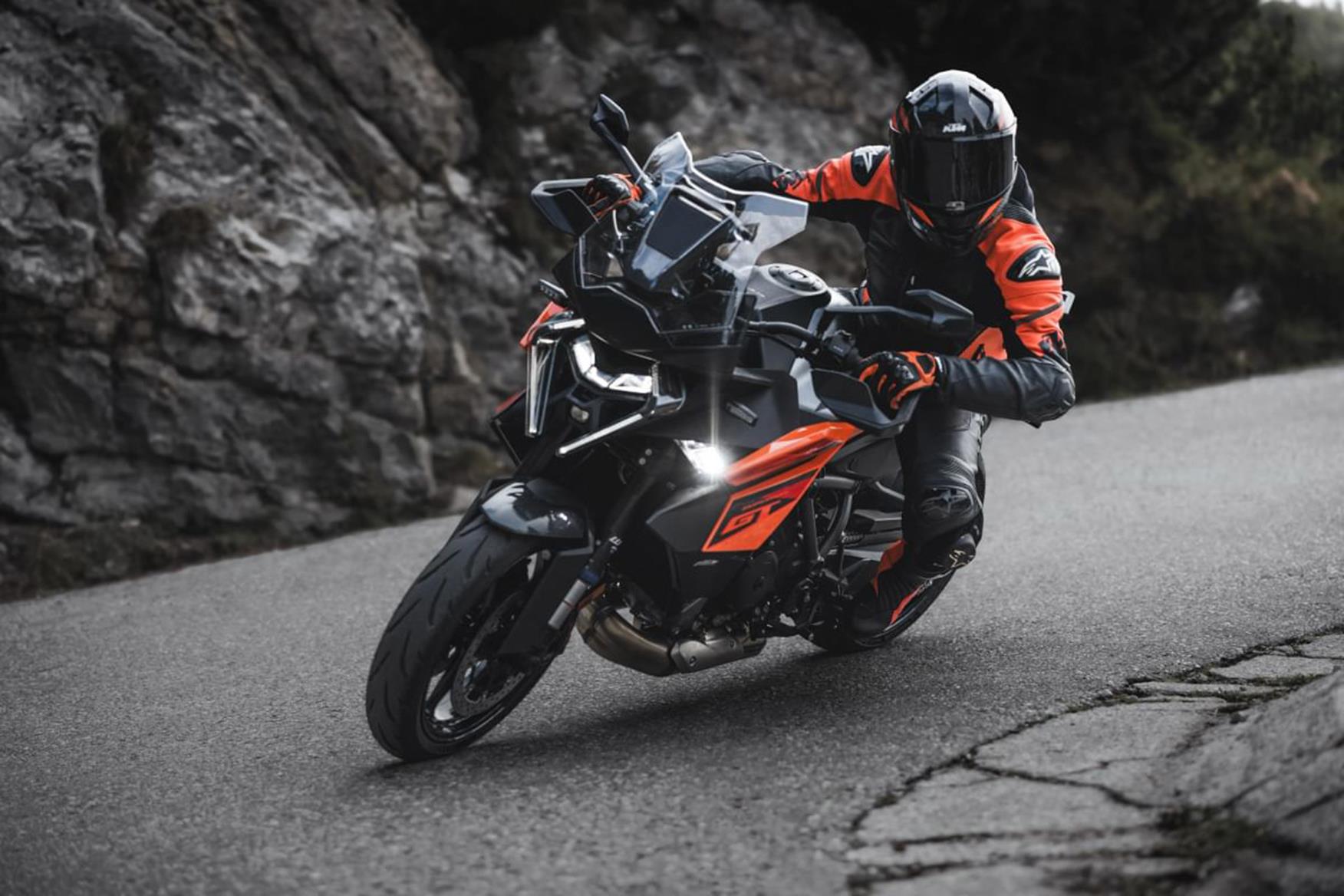
KTM is taking the 1390 Super Duke GT into the automated-transmission era for 2027, with two versions: the conventional GT and the GT Evo fitted with AMT. The formula remains that of a high-performance sports-tourer, but the Evo offers a different way to manage its power without adding to the quoted mass. Both motorcycles are listed at 213kg ready to ride.
The Evo’s automated transmission
The standard 1390 Super Duke GT uses a conventional six-speed gearbox, a hydraulic slipper clutch and a revised self-venting clutch cylinder. Its fifth and sixth ratios are shorter and no longer serve as overdrive gears. The GT Evo replaces the manual arrangement with KTM’s AMT, combining a centrifugally operated slipper clutch with an electromechanical actuator that rotates the shift drum.
The selector sequence runs P-N-1-2-3-4-5-6, with Park locking the transmission. KTM quotes a 50-millisecond shift time. The rider can leave the system in fully automatic A mode or choose M mode, then select gears with either the conventional foot lever or handlebar paddles. Park and Neutral are selected through the system’s switchgear.
Engine and chassis revisions
The engine produces 187bhp at 10,000rpm and 107lb.ft at 8,000rpm. Its specification includes CamShift variable valve lift, 60mm throttle bodies, a 110mm bore, a 13.2:1 compression ratio, a radiator widened by 40mm and a redesigned airbox with central ram air. The valve-clearance inspection interval rises from 18,000 miles to 37,000 miles. Quoted economy is 45.6mpg for the manual version and 42.8mpg for the AMT, while the tank holds 19.5 litres including a 3.0-litre reserve.
The chrome-moly trellis frame uses the engine as a stressed member. KTM claims three times the torsional stiffness of the 1290 GT, along with a lower centre of gravity. Wheelbase is 1491mm and ground clearance is 149mm. Suspension is third-generation WP Apex semi-active hardware, with a 48mm fork offering 125mm of travel and a linkage rear shock with 140mm. The shock’s electronic preload can be set to soft, standard or high.
Michelin Power 6 dual-compound tyres are fitted in 120/70 front and 190/55 rear sizes. Braking uses Brembo Stylema four-piston calipers on 320mm discs, with a two-piston Brembo caliper working on a 240mm rear disc. Cornering, Supermoto, Supermoto+ and Sport are the standard ABS modes. Supermoto+ allows rear-wheel lock and controlled sliding up to 8 degrees.
Radar assistance and touring equipment
The new 8.8in TFT touchscreen replaces the previous 7in display and adds USB-C charging and offline turn-by-turn navigation. Routes can be downloaded by town, region or country, with five languages supported. Rain, Street, Sport and one Custom mode are standard. Track, Pro and two additional Custom modes are optional, as are cornering traction control, engine-brake control, five-stage anti-wheelie, Quickshifter+ and Motor Slip Regulation.
Front radar with adaptive cruise control is standard on both versions, as is the new TPMS. The GT has a lower, more compact design, a new LED headlight, automatic low beam, an ambient-sensing high-beam projector and adaptive daytime running lights. Brake lights are integrated into the indicators, allowing a smaller tail section. Seat height is 834mm, the 796mm-wide handlebar adjusts 22mm fore and aft, and the windscreen includes a high touring position.
THE EVIDENCE BEHIND THE STORY
Sources
Spotted something that needs correcting? Contact the editorial team