
2027 Ducati Diavel V4 adds V4 S suspension and sharper detail
Ducati updates its muscle roadster with revised styling, smoother low- and mid-range throttle response, Quick Shift 2.0 and semi-active Öhlins suspension for the new V4 S.

3 min read
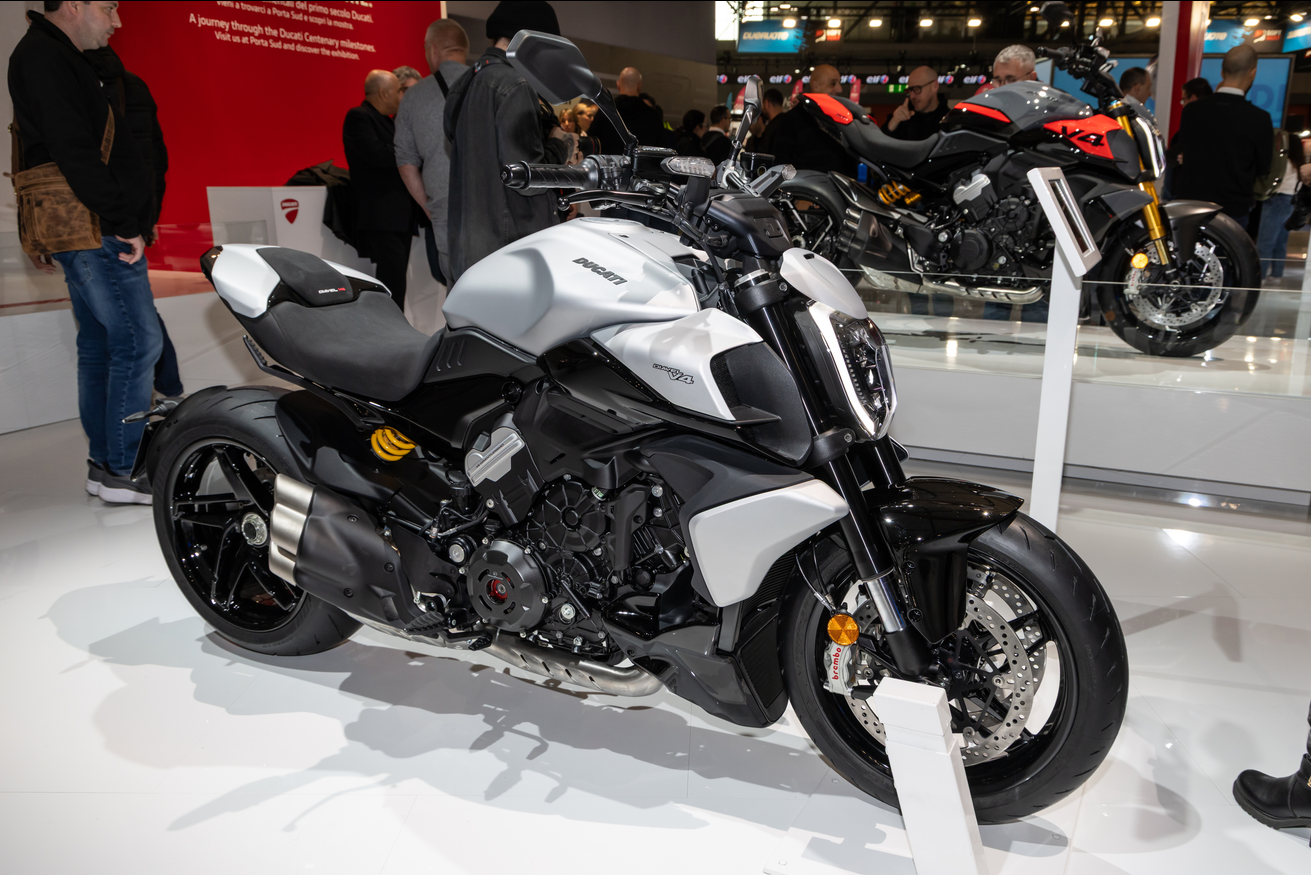
Ducati is moving the Diavel V4 into the 2027 model year with a sportier visual treatment, revised electronics and a new V4 S version. The update preserves the motorcycle’s unusual position between cruiser and performance roadster: a muscular machine with a large rear tyre, a sporting chassis and a riding position intended to remain usable beyond short blasts. Ducati is also expanding the personalisation possibilities through its Ducati Factory Made programme.
The Diavel concept dates back to 2010 and has developed through three generations. The Diavel 1260 focused on improving performance and road behaviour, while the V4 brought a new level of power, technology and dynamism without abandoning the model’s core identity. For 2027, Ducati keeps the recognisable design ingredients, including the single-sided swingarm, 240 mm rear tyre and full-LED lighting, while giving the bodywork a more aggressive edge.
The changes include new air intakes influenced by the Diavel V4 RS, a redesigned tail in a single-seat layout and new wheels. These details are intended to make the motorcycle look more dynamic without changing its fundamental visual character. Ducati continues to emphasise the combination of muscular styling, sport-oriented performance and everyday usability that defines the Diavel V4.
The V4 Granturismo gets a smoother response
Power comes from Ducati’s 1,158 cc V4 Granturismo engine, rated at 168 hp. Its stated character combines smooth power delivery at low revs with strong torque across the rev range and rapid acceleration. Ducati also highlights low vibration, thermal comfort for both rider and passenger, and particularly long service intervals as part of the engine package.
For 2027, the engine receives a revised electronic management strategy. Its purpose is to make throttle response more progressive at low and medium engine speeds, an area that matters particularly on a motorcycle combining substantial performance with road use. The new Ducati Quick Shift 2.0 complements that change with faster and more precise gear changes.
V4 S brings semi-active Öhlins hardware
The chassis uses a lightweight aluminium monocoque structure together with an aluminium single-sided swingarm. On the standard Diavel V4, suspension consists of a fully adjustable 50 mm fork and an adjustable rear shock. The new V4 S adds semi-active Öhlins SmartEC-3 suspension, making the suspension specification the main technical step above the standard motorcycle.
SmartEC-3 uses information from the inertial platform to adapt the motorcycle’s behaviour under braking, acceleration and cornering. Öhlins spool-valve technology provides a wider adjustment range than conventional systems, while Dynamic, Comfort and Low Grip modes allow the response to be tailored to the riding conditions. Ducati says the sportier strategies improve precision when entering and carrying speed through corners, while Comfort is intended to support more relaxed travel.
The system also includes Cruise Detection. On straight sections during touring, it softens the suspension to prioritise comfort; when the riding becomes more demanding, the control strategies are aimed at retaining greater precision. That gives the V4 S a broader intended operating range than a suspension setup focused solely on aggressive riding.
Braking remains based on two 330 mm front discs, Brembo Stylema calipers and Cornering ABS, with a 265 mm rear disc. Pirelli Diablo Rosso IV tyres are fitted to support agility and sharper turn-in while retaining the stability associated with the Diavel’s muscular format. Together with the revised throttle mapping, the suspension changes make the 2027 update less about a new engine headline and more about giving the Diavel V4 a wider, more controlled range of responses.
THE EVIDENCE BEHIND THE STORY
Sources
Spotted something that needs correcting? Contact the editorial team