
2026 Honda CB1000F brings CB-F nostalgia to a modern four-cylinder platform
Honda’s new CB1000F pairs late-1970s-inspired styling with a 1,000cc inline-four, modern electronics and a US MSRP of $10,599.

6 min read
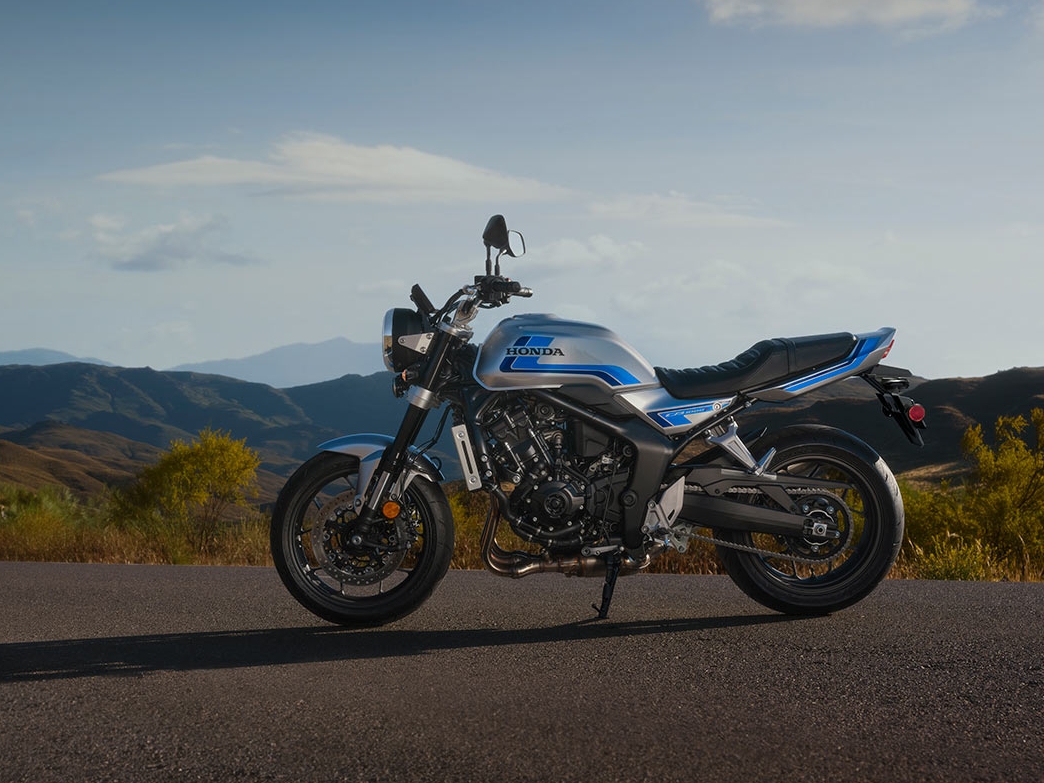
The 2026 Honda CB1000F is arriving at US dealerships, and may already be present at some of them, with a US MSRP of $10,599. That places it $2,300 below the Kawasaki Z900RS ABS and $400 below the CB1000 Hornet SP, according to the article. Rather than adopting the Hornet’s streetfighter styling, the CB1000F uses a retro design influenced by the universal Japanese motorcycles and proto-sportbikes of the late 1970s and early 1980s.
Honda’s reference point is specifically the 1979 CB750F and CB900F, follow-up models to the original CB750. The CB1000F’s graphics are also described as closely resembling those of Freddie Spencer’s bored-and-stroked 1023cc CB-F racebike. The result is a motorcycle that uses classic CB-F visual cues while sharing its underlying technical direction with the modern Hornet family.
A CB-F lineage with a complicated history
The original CB750F appeared as a response to Suzuki’s GS750, which had made the original CB750 comparatively obsolete in performance terms. The CB750F was described as a capable streetbike for its era, but the CB-F story changed as Honda moved toward more focused sportbike technology. Production of the original CB-F ceased after 1983, when Honda introduced the VF750 Interceptor, a model generally regarded as one of the first true sportbikes.
Before his Grand Prix career, Freddie Spencer rode modified CB-F racebikes. The evidence describes those machines as having a flexible chassis and other technical difficulties when converted for racing. The 2026 CB1000F contrasts with that historical context through its modern chassis, performance-oriented engine and rider aids, without implying that the older machines had the same equipment or capabilities.
A softer, midrange-focused version of the Hornet engine
The CB1000F uses a version of the Hornet’s DOHC inline-four, an engine lineage that is described as descending from the 2017 Honda CBR1000RR powerplant. Honda had not published official power and torque figures for the CB1000F at the time of the article. Ben Purvis is cited for figures of 122 hp and 76 ft.-lb. of torque at 8,000 rpm. The same account puts the Hornet SP at 155 hp, with peak power arriving at 11,000 rpm and peak torque of 77 ft.-lb. arriving 1,000 rpm higher than in the CB1000F.
Honda’s stated objective was stronger midrange performance and enjoyable, balanced performance through the rpm range. The company revised the camshafts to alter intake- and exhaust-valve timing. The intake funnel is described as 50 mm longer and 4 mm smaller in diameter than the preceding design, while two inlet diameters are used to create a pulsating intake sound as the throttle opens. A 4-2-1 exhaust is tuned, in Honda’s description, to produce a pronounced sound from low rpm through the midrange.
The six-speed transmission receives revised ratios. First and second gears are lower to improve acceleration, while third through sixth are taller to reduce engine speed and support a more relaxed ride. Final drive is by chain.
Chassis, equipment and dimensions
The CB1000F uses a diamond-style twin-spar frame based on the Hornet SP’s twin-spar design, with a more rigid subframe to support roomier passenger accommodations. The narrative describes its suspension and braking components as coming from the base Hornet, which is not sold in the United States. Compared with the Hornet SP, the CB1000F uses Nissin calipers instead of Brembo Stylema units and a Showa shock instead of an Öhlins shock. Both models use a 41 mm Showa SFF-BP fork. The supplied evidence also lists specific CB1000F components independently, so the relationship between these descriptions should be checked before publication.
The specification table lists a fully adjustable 41 mm Showa SFF-BP inverted fork with 5.1 inches of travel and a Showa Pro-Link monoshock adjustable for preload and rebound, with 5.5 inches of travel. Front braking uses radial-mount four-piston Nissin calipers and dual 310 mm discs; the rear has a single-piston caliper and a 240 mm disc. Both systems include cornering ABS. Cast-alloy wheels carry 120/70ZR17 front and 180/55ZR17 rear tires.
Rake is 25.0 degrees, trail is 3.9 inches and wheelbase is 57.2 inches. Ground clearance is 5.3 inches, seat height is 31.3 inches and fuel capacity is 4.2 gallons. Claimed weight without fuel is 472 lb.
Modern electronics beneath the classic styling
A six-axis inertial measurement unit manages the electronics. The CB1000F has three preset riding modes—Standard, Rain and Sport—plus two customizable modes. Power delivery, engine braking and traction-control intervention can be adjusted in the customizable settings. The package also includes lean-angle-sensitive ABS, a five-inch TFT display with smartphone connectivity, LED lighting and keyless ignition.
The CB1000F is therefore positioned as a retro alternative to the Hornet: a motorcycle for riders interested in the styling language of the CB750F and CB900F, but with a liquid-cooled 1,000cc four-cylinder engine, contemporary chassis equipment and electronic rider aids. The article suggests that the styling may appeal particularly to people with direct experience of the 1970s era, while also questioning whether that group is Honda’s primary target. Its broader interpretation is that the classic design is meant to support wider appeal rather than address only nostalgia-oriented riders. The revised torque delivery and engine character are likewise presented as ways to distinguish the CB1000F from the Hornet, with the riding experience intended to complement its retro appearance.
2026 Honda CB1000F specifications
- Engine: liquid-cooled, 1,000cc inline four-cylinder, four valves per cylinder
- Bore × stroke: 76.0 × 55.1 mm; compression ratio: 11.7:1
- Fuel system: electronic PGM-FI injection, 44 mm throttle bodies; ride-by-wire throttle and electronic ignition
- Clutch and transmission: multiplate wet clutch, six-speed gearbox, chain final drive
- Frame: diamond-style twin-spar
- Front suspension: fully adjustable 41 mm Showa SFF-BP inverted fork, 5.1-inch travel
- Rear suspension: Showa Pro-Link monoshock, preload and rebound adjustable, 5.5-inch travel
- Brakes: radial four-piston Nissin front calipers with dual 310 mm discs; single-piston rear caliper with 240 mm disc; cornering ABS
- Dimensions: 25.0-degree rake, 3.9-inch trail, 57.2-inch wheelbase, 5.3-inch ground clearance
- Seat height, fuel capacity and claimed weight: 31.3 inches, 4.2 gallons and 472 lb without fuel
- US MSRP: $10,599
- Contact website listed in the specification table: powersports.honda.com
The supplied evidence does not provide a riding test, acceleration or fuel-economy results, reliability assessment, or pricing and availability information for Greece or any market outside the stated US dealership announcement.
THE EVIDENCE BEHIND THE STORY
Sources
Spotted something that needs correcting? Contact the editorial team ↗