
MotoGP’s 2027 format puts rider workload and influence under pressure
Sprint qualifying on Friday and the removal of Sunday warm-up will add more competitive action, but riders have raised concerns about workload, safety and their limited influence over major decisions.

7 min read
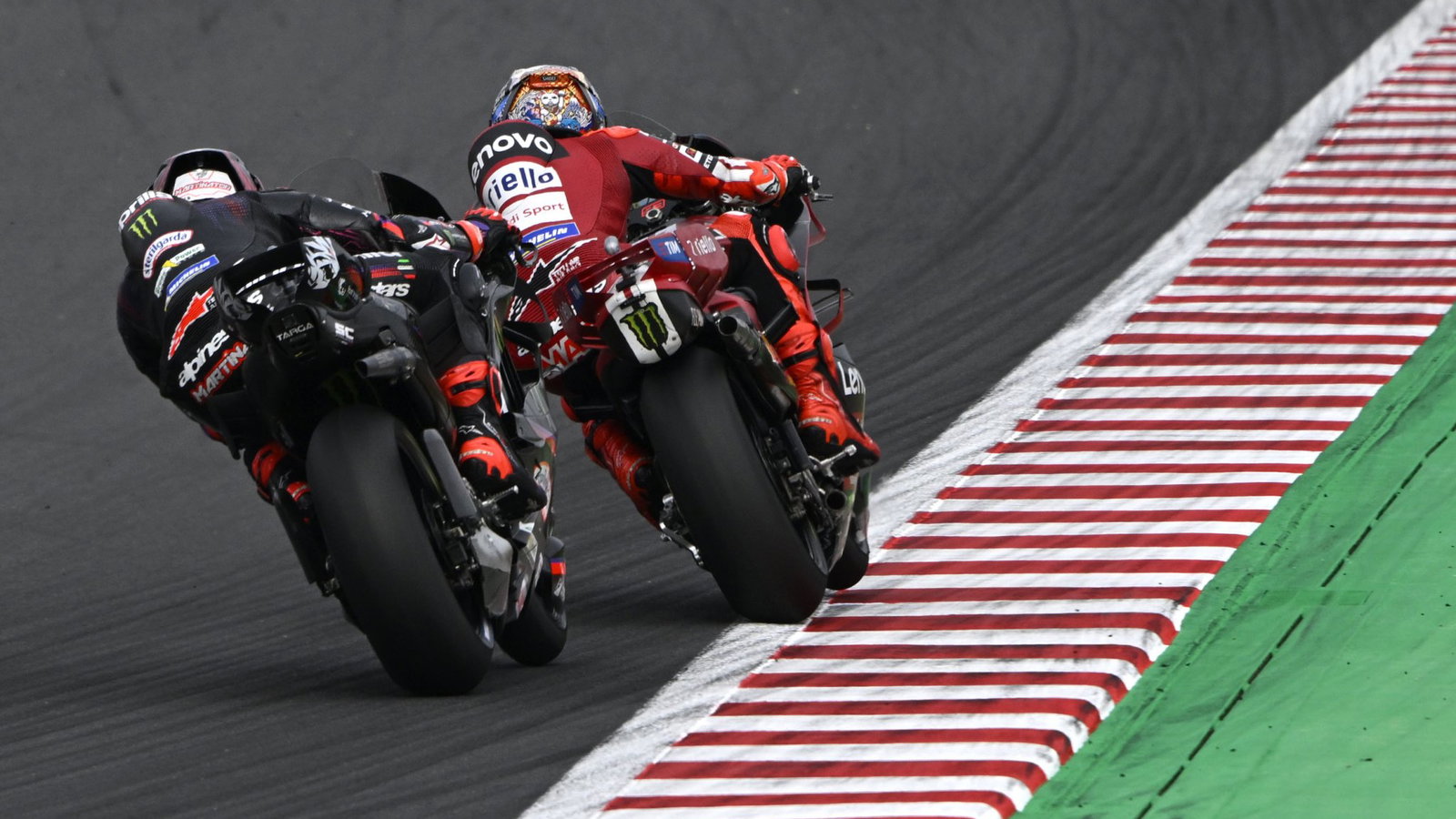
MotoGP will introduce a substantially different race-weekend format in 2027, built around a new sprint qualifying session on Friday. The change is designed to create more points of action for fans, but it also intensifies a debate that has followed the championship’s recent development: whether commercial growth is being pursued faster than riders can safely absorb the extra workload, and whether they have a meaningful voice in decisions that affect them.
The format was announced ahead of the Indonesian Grand Prix. Friday will feature two practice sessions, lasting 45 and 30 minutes, followed by a 15-minute qualifying session that will set the grid for the sprint. Saturday will begin with another 20-minute practice session and then continue with the usual Grand Prix qualifying. The sprint will close the day’s track action. The Grand Prix itself remains on Sunday, but the warm-up will be removed and replaced by a 10-minute period of sighting laps.
More action, less room to recover
The intention is clear: more competitive moments across the weekend and a stronger engagement proposition for the audience. MotoGP has broken more attendance records in recent years, suggesting that the wider growth strategy has produced some positive results. At the same time, the response to the 2027 announcement on social media was described as overwhelmingly negative, raising questions about how decisions of this kind are being judged and whose priorities carry the most weight.
The timing also reflects the championship’s closer relationship with Formula 1 since Liberty Media took ownership of MotoGP through a €4.2-billion acquisition in 2024. Sprint races, themed presentation elements and a stronger focus on influencer marketing have all become part of MotoGP’s commercial direction, while the move towards street circuits and venues close to major population centres has also been associated with Formula 1’s approach. The 2027 plan therefore looks not only like a timetable revision, but another step in the championship’s attempt to grow through a Formula 1-influenced identity.
There is a practical cost to adding another qualifying phase across all 22 rounds. Alex Marquez said the riders had argued for sprints at half of the Grands Prix rather than throughout the calendar. The concern is not limited to fatigue. More starts and more high-pressure laps create more opportunities for crashes and injuries, while the first season of sprint racing in 2023 did not feature the complete full-time grid at a single weekend. Pedro Acosta went further, saying the additional strain and risk could ultimately shorten riders’ careers.
A 15-minute fight on one tyre
The new sprint qualifying session is one of the clearest pressure points. Lucio Cecchinello, president of the International Race Teams’ Association and LCR team principal, said that only one tyre will be permitted for the 15-minute session. That would leave 22 riders trying to extract a decisive lap from the same limited window, with little margin for a poorly timed run or traffic.
The problem could become especially visible at circuits such as Sachsenring and Jerez, where riders may converge while searching for clear track. A short session, a single tyre and a full grid all increase the importance of timing and positioning. The result could be a more dramatic spectacle, but it also creates a setting in which riders are encouraged to take greater risks while the opportunity to recover from a compromised lap is minimal.
What replaces Sunday warm-up
Removing the Sunday warm-up creates a different type of safety concern. Under the current arrangement, a motorcycle damaged in the sprint or affected by a technical problem can be checked again in a dedicated session before the Grand Prix. From 2027, the next track time will come during the 10-minute sighting-lap period. Those laps will not be run at full racing speed, so a repaired motorcycle will be assessed in conditions that do not reproduce the demands of the race.
Luca Marini and Toprak Razgatlioglu also highlighted the effect of the fuelling rules, under which refuelling is banned on the grid. Marini suggested that riders would mostly use their second motorcycles for the sighting laps in order to avoid consuming fuel before the Grand Prix. That approach could preserve fuel for the start, but it would also mean that the motorcycle intended for the race may not be ridden after a repair until the event is already under way.
Marc Marquez described the revised programme as more intense and demanding for riders, arguing that the current schedule is already enough. His reaction was blunt: teams and the organisation make the decision, while riders have to accept it. Marquez had also skipped a pre-race karting event in Japan to rest before the Grand Prix, a choice that took on added significance after the 2027 announcement because it underscored the physical demands already placed on riders during a race weekend.
Support for the plan, but not for every detail
The grid has not responded as one bloc. Pecco Bagnaia supported the new schedule, and Marco Bezzecchi reacted positively when asked about it. Fabio Quartararo said that an additional qualifying session was “not a problem”, but he would prefer longer practice sessions so teams have more time to understand their motorcycles before the race. The split shows that the issue is not simply whether riders want more action. It is also about how much preparation time remains once more competitive sessions are added.
Bagnaia said that only four riders attended the Safety Commission meeting in Japan where the new format was discussed, and that all four agreed with it. Fabio Di Giannantonio said he had stopped attending because it was difficult to secure promises on matters the riders were asking to address. The commission remains a forum for discussion, but it does not give the riders the independent collective structure represented by Formula 1’s Grand Prix Drivers’ Association.
That organisational gap is central to the argument around the 2027 changes. Di Giannantonio said the riders had once come quite close to forming an association, but failed to reach a consensus. Maverick Vinales offered a more troubling account, saying he had felt that anyone who tried to push such an initiative could get into trouble and that it was safer to say nothing and ride. The comments point to a group that has concerns in common but lacks the unity needed to turn them into sustained negotiating power.
The same division was visible in an exchange between Aprilia team-mates Jorge Martin and Bezzecchi. Martin said that the riders were not sufficiently consulted and that the organisation should show more interest in their views. He also acknowledged that the schedule could be interesting, while stressing that riders could not achieve much until they were united. Bezzecchi replied that he liked the schedule, prompting Martin to answer: “Exactly.” Their exchange captured the difficulty in building a common position when riders themselves disagree about the sporting change.
MotoGP’s 2027 format may deliver the extra action its commercial strategy is seeking. It also asks riders to qualify twice, compete in a sprint and manage a more compressed weekend across the entire 22-round calendar, while removing a session that can reveal problems before Sunday’s race. The unresolved question is not whether the format will be more intense; it is whether the riders will have enough collective influence to shape the safety consequences of that intensity before the new system becomes permanent.
THE EVIDENCE BEHIND THE STORY
Sources
Spotted something that needs correcting? Contact the editorial team ↗