
MotoGP 2027: 850cc bikes may stay close to today’s 1000s
Private-test indications suggest strong single-lap pace, while MotoGP’s smaller engines are intended to reduce top speeds and improve safety.

2 min read
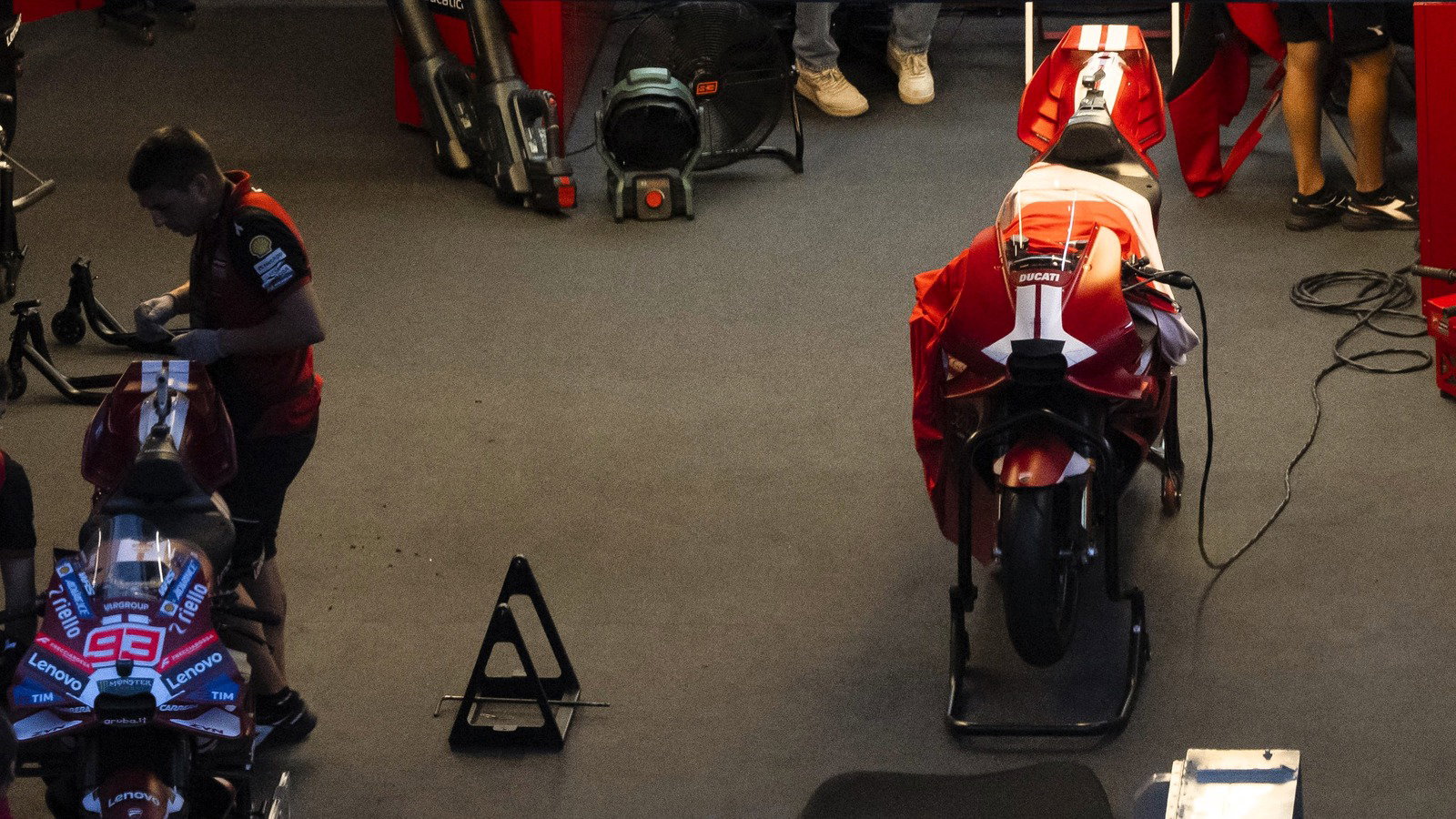
The first indications from private testing suggest that MotoGP’s 2027-generation 850cc motorcycles could remain close to today’s 1000cc bikes on some circuits. Their official lap times will not be known until the post-season Valencia test on December 1, where the new machines will run with Pirelli tyres. Even before that benchmark, the early pace is enough to suggest that the smaller capacity will not automatically mean a large single-lap deficit.
Ducati Corse general manager Gigi Dall’Igna says lap time is not the main target of the regulation change. Speaking at Mandalika, he identified the speed at which riders reach the first corner as the more important safety measure. His view is that reducing engine capacity and power can lower approach speeds and provide a safety benefit even if a 2027 lap remains relatively close to the 2026 benchmark. For Dall’Igna, this is a necessary step rather than an attempt to slow every circuit by a fixed amount.
Aprilia Racing CEO Massimo Rivola expects the new bikes to lose roughly 50 horsepower. He linked that estimate to the outright MotoGP speed record set at Mugello in May, where Jorge Martin and Aprilia team-mate Marco Bezzecchi both reached 368.6 km/h, or 229 mph, on current 1000cc machinery. Rivola believes that removing about 50 horsepower should reduce such speeds. At the same time, he describes the 850cc bikes as fast over one lap, with riders finding them easier to manage.
The full-race picture remains less certain. Rivola says the performance gap against the current 1000cc/Michelin package could become larger over race distance, because tyre behaviour is still an important unknown. A bike that looks competitive on a single lap may therefore show a different level of performance as the race progresses.
What changes for 2027
- Engine capacity drops to 850cc, with Pirelli becoming the tyre supplier.
- Ride-height devices will be removed and aerodynamic restrictions will become tighter.
- Fuel limits will be reduced for the smaller engines.
- Minimum weight will also fall by 4 kg, helping cornering performance.
THE EVIDENCE BEHIND THE STORY
Sources
Spotted something that needs correcting? Contact the editorial team ↗