
Acosta is still chasing his first MotoGP win—but KTM is moving forward
Second at the Balaton Ring after fighting Marc Márquez, Pedro Acosta says KTM has improved sharply while still lacking the corner performance of Ducati and Aprilia.

5 min read
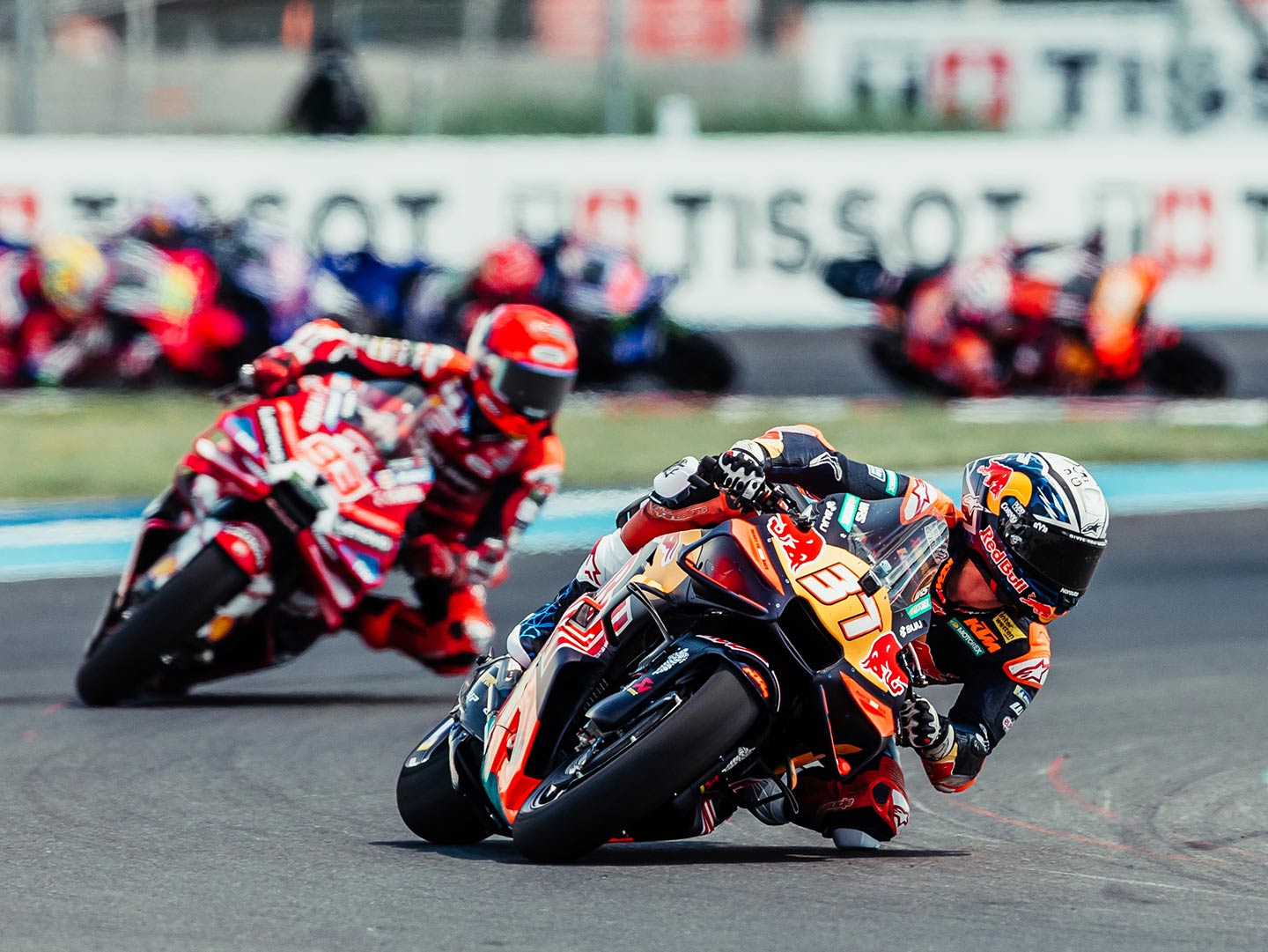
Pedro Acosta remains without a MotoGP victory, but his second place at the Balaton Ring carried more significance than a routine podium. The KTM rider was described as the only competitor to mount a serious challenge to Marc Márquez, using aggressive overtakes to keep the returning Ducati rider under pressure. Acosta ultimately finished second, satisfied that he had forced Márquez to work at his limit.
That result adds another chapter to an unusually rapid career. Acosta won the Moto3 title in his debut season in the category, then took the Moto2 championship in record time. He has now completed three years in MotoGP and had collected 13 premier-class podiums before the Balaton Ring event, but the first win is still missing. The weekend nevertheless suggested that both rider and motorcycle are better prepared for front-running battles than they were a year earlier.
A different Acosta in the battles at the front
Acosta said the season had started very well compared with the previous year. He recalled struggling heavily at several circuits, including Mugello, during the previous campaign, and described the progress made by himself and the team as a major step forward. He also argued that MotoGP’s expected generational change has not fully arrived: in his view, Márquez remains at the peak of his performance, while Jorge Martín is exceptionally strong overall. More time is needed, he believes, before the championship’s leadership changes completely.
The clearest improvement is psychological as much as technical. Acosta said he used to become nervous during battles at the front, make mistakes, crash or fail to score points. Now he feels more stable and believes he is executing those situations correctly. Staying close to Márquez, repeatedly overtaking him and making him work was, for Acosta, evidence of KTM’s strength as well as valuable personal experience.
At the Hungarian Grand Prix, he led again until approximately halfway through the race and said he fought hard for victory despite leading for only part of the distance. There was no clearly established tyre strategy among the riders, but he judged KTM’s tactical execution positively. The main takeaway was the wheel-to-wheel contest with Márquez: the result showed that Acosta can now remain in the fight rather than allowing the pressure to trigger the errors he associated with the previous season.
Where KTM still needs to improve
Acosta identifies qualifying as a major weakness and links it to the performance of the motorcycle itself. He expects upgrades to help KTM take another step, but the largest technical deficit relative to Aprilia and Ducati appears in corner entry and the middle of the turn. His request is straightforward: the KTM needs to turn better and carry more speed through corners.
The recent record shows progress, even if it does not yet amount to consistent victory form. KTM won a Sprint race for the first time during the current season, took pole position and a Sprint podium in Barcelona, and also achieved podiums in America. Acosta’s assessment is that the project still needs time to reach the leading teams. The gap to a regular first MotoGP win remains significant, and he believes the motorcycle must improve substantially.
KTM finished fourth overall in the championship standings the previous year, and Acosta wants to improve on that position. A top-three championship finish is an aspirational but possible target. The obstacles he named include both Aprilia riders, Fabio Di Giannantonio, Márquez and Pecco Bagnaia. That list also underlines why he rejects the simple description of KTM as definitively the third-strongest manufacturer behind Ducati and Aprilia.
In Acosta’s assessment, KTM is currently around Honda’s performance level. Aprilia and Ducati are operating at a similarly high level and are substantially ahead of the other manufacturers, while Yamaha is another significant step behind KTM and Honda. His conclusion is clear: KTM is progressing, but it is not yet matching the leaders.
Development, 2027 and the Schwantz influence
The window for major current-generation development may also be narrowing. Acosta believes motorcycle development is increasingly being directed towards the 2027 regulations, and expects the bikes to remain broadly as they are for the rest of the season as attention moves to those rules. That does not mean development stops completely, but it does place the team’s immediate ambitions within a limited technical timeframe.
Acosta’s approach to racing is closely tied to his admiration for Kevin Schwantz. He values Schwantz’s emphasis on putting on a show and believes a rider’s lasting public image matters alongside winning and losing. That philosophy is visible in the way he describes his own racing: fans appreciate the overtakes, the fighting and the effort, even while he continues to search for his first MotoGP victory. He says he always tries to give his maximum on track.
The connection also extends to authenticity. Acosta admires Schwantz for speaking honestly and prefers fans to see his real personality rather than a television-created version. At the same time, he says he follows his own path and believes people can recognise his professionalism without knowing everything he does during the day. The routine he offered is intensely focused: wake at 06:00, train, ride a motorcycle, eat, return to the gym, eat again and go to bed early, usually at 22:30.
For Acosta, little exists outside motorcycles that excites or moves him emotionally. That single-mindedness helps explain both the appeal of his aggressive style and the scale of the task ahead. The Balaton Ring showed that he can now challenge a rider at the front, manage the pressure and finish the fight. The next step is converting that progress—and KTM’s improving but incomplete package—into the victory that remains absent from his MotoGP record.
THE EVIDENCE BEHIND THE STORY
Sources
Spotted something that needs correcting? Contact the editorial team ↗