
Yamaha will replace Moto3’s 250cc singles with a 689cc twin from 2028
Yamaha will become Moto3’s exclusive supplier from 2028, targeting a 50 percent reduction in motorcycle and spare-parts costs with a re-engineered CP2-based machine.

4 min read
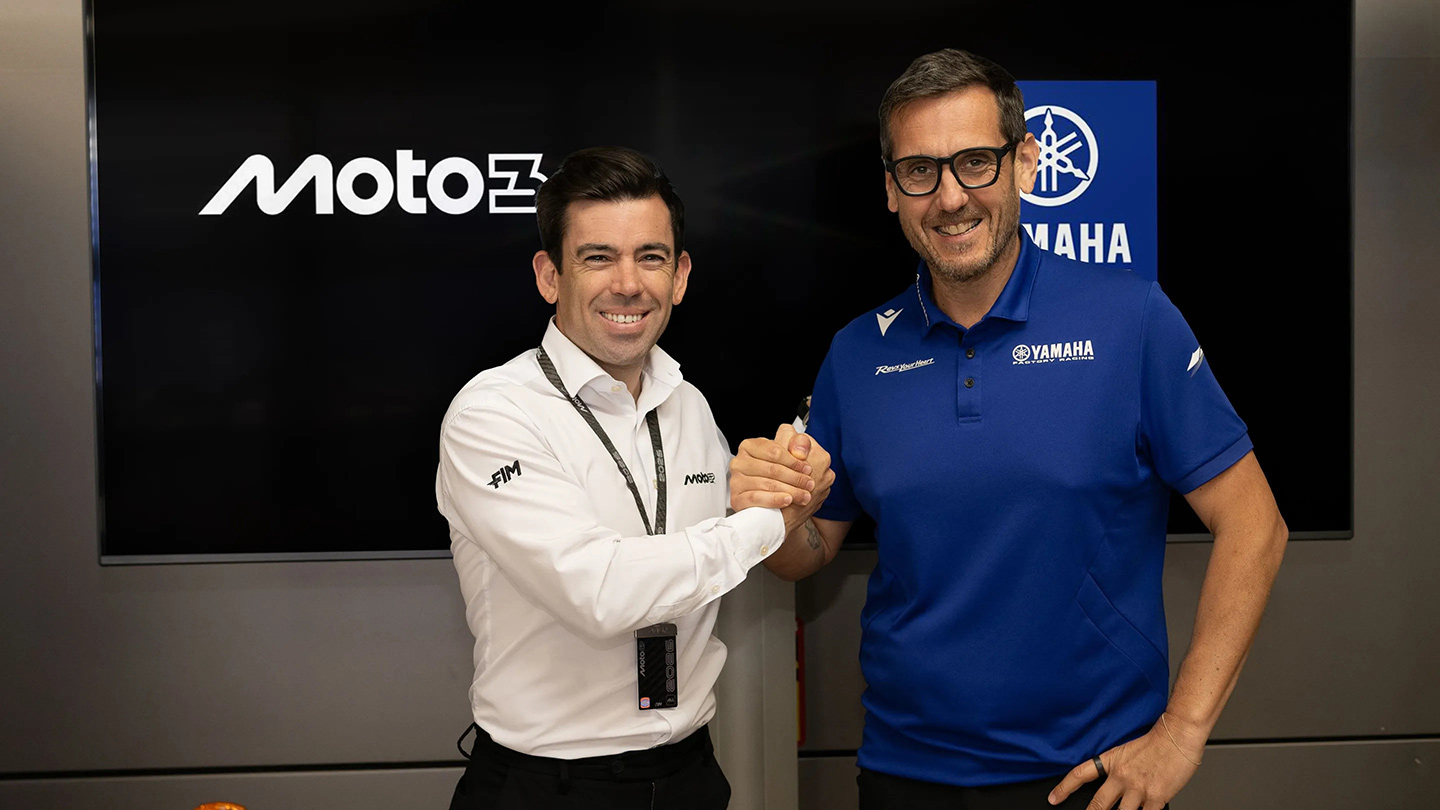
Moto3 is set for a major technical change after replacing the 125cc class in 2012. From 2028, Yamaha will be the exclusive motorcycle supplier to the Moto3 World Championship under an agreement running through 2033. The new machine will be based on Yamaha’s 689cc CP2 parallel-twin engine, which will be extensively re-engineered for Grand Prix competition rather than used in standard production form.
The project is also intended to change the economics of the category. Yamaha says it is targeting a 50 percent reduction in the price of the motorcycle and spare parts compared with current Moto3 prototypes. The company plans to use a semi-industrial manufacturing approach, designed to control costs and scale production to meet demand, instead of building each motorcycle as a hand-assembled prototype. Yamaha will manufacture the complete machine—including its engine and bespoke chassis—in Europe.
A larger step away from current Moto3
Current Moto3 regulations specify 250cc four-stroke single-cylinder engines. Current motorcycles have a maximum output of 60 hp, a stated top speed of 245 km/h (152 mph), and a combined motorcycle-and-rider minimum weight of 335 pounds. The KTM RC 250 GP and Honda NSF 250 RW are identified as the only motorcycles currently on the grid, and both are full prototypes.
Yamaha’s stated technical objective is a higher power-to-weight ratio than the current package. The final output, weight, top speed, chassis design and gearbox specification have not yet been released; Yamaha says those technical details will be announced when the motorcycle is unveiled in spring 2027. A racing-style gearbox is described as a likely starting point among the changes to the production-based engine, not as a confirmed final specification. Yamaha’s teaser video does show the racing engine with a dry clutch.
For context, a previous Cycle World dynamometer test recorded 66.3 hp at 8,610 rpm and 45.7 lb.-ft. of torque at 6,380 rpm from a Yamaha YZF-R7 using the CP2 engine. Those figures come from that tested YZF-R7 and do not describe the future Moto3 motorcycle. The CP2-based racing engine will be extensively re-engineered for championship use.
The rider-development argument
Moto3 has long served as a feeder category for MotoGP, but riders widely regard the move from Moto3 to Moto2 as more difficult than the later step from Moto2 to MotoGP. The planned Yamaha is intended to be full-size and better matched to the physical characteristics and riding style of the next generation of riders. Its larger dimensions and potentially greater engine performance are presented as factors that could make the transition to Moto2 easier—not as a guaranteed result.
That emphasis reflects a broader argument about the purpose of the class. MotoGP Sports Entertainment Group chief sporting officer Carlos Ezpeleta said the project is meant to create a global platform for young riders, rather than simply announce which motorcycle they will ride. He linked the objectives to making the sport as safe as possible and reaching the largest possible audience, while saying the change could benefit motorcycling globally and the MotoGP paddock. Yamaha Motor Racing managing director Paolo Pavesio said the aim is a platform capable of supporting riders, teams and championships for many years. Pavesio characterized it as a combination of accessibility, engineering efficiency and racing performance.
Prototype tradition versus practical racing
The move raises a legitimate question about what will distinguish Moto3 from production-based racing in other series. The world championship has used prototype machinery across all classes since its inception in 1949, so replacing the present prototypes with a motorcycle built around a production-based engine may trouble racing purists. At the same time, the current feeder-class role of Moto3 is different from an earlier era when small-displacement categories carried greater independent prestige. The production-based starting point is presented as preferable to the possibility of a smaller Moto3 grid, particularly for teams operating on very small budgets.
Lower-specification versions will be supplied to the FIM Moto3 Junior World Championship and other regional championships beginning in 2029. The commercial and sporting case will therefore depend on details still unresolved at the spring 2027 unveiling: the final performance, the chassis and transmission solution, and how the CP2-based motorcycle preserves Moto3’s identity within a championship built on prototype racing. Cycle World’s reporting also cites 13-time world champion Ángel Nieto as an example of a specialist described as unmotivated to progress through the displacement classes—an older reminder that rider development does not always follow a single ladder.
THE EVIDENCE BEHIND THE STORY
Sources
Spotted something that needs correcting? Contact the editorial team ↗