
Yamaha to replace primary aluminium in DiASil cylinders by 2030
A dedicated recycled-alloy programme will begin with commuter models built in Indonesia and is expected to cut Yamaha’s CO₂ emissions by about 47,000 tonnes a year.

2 min read
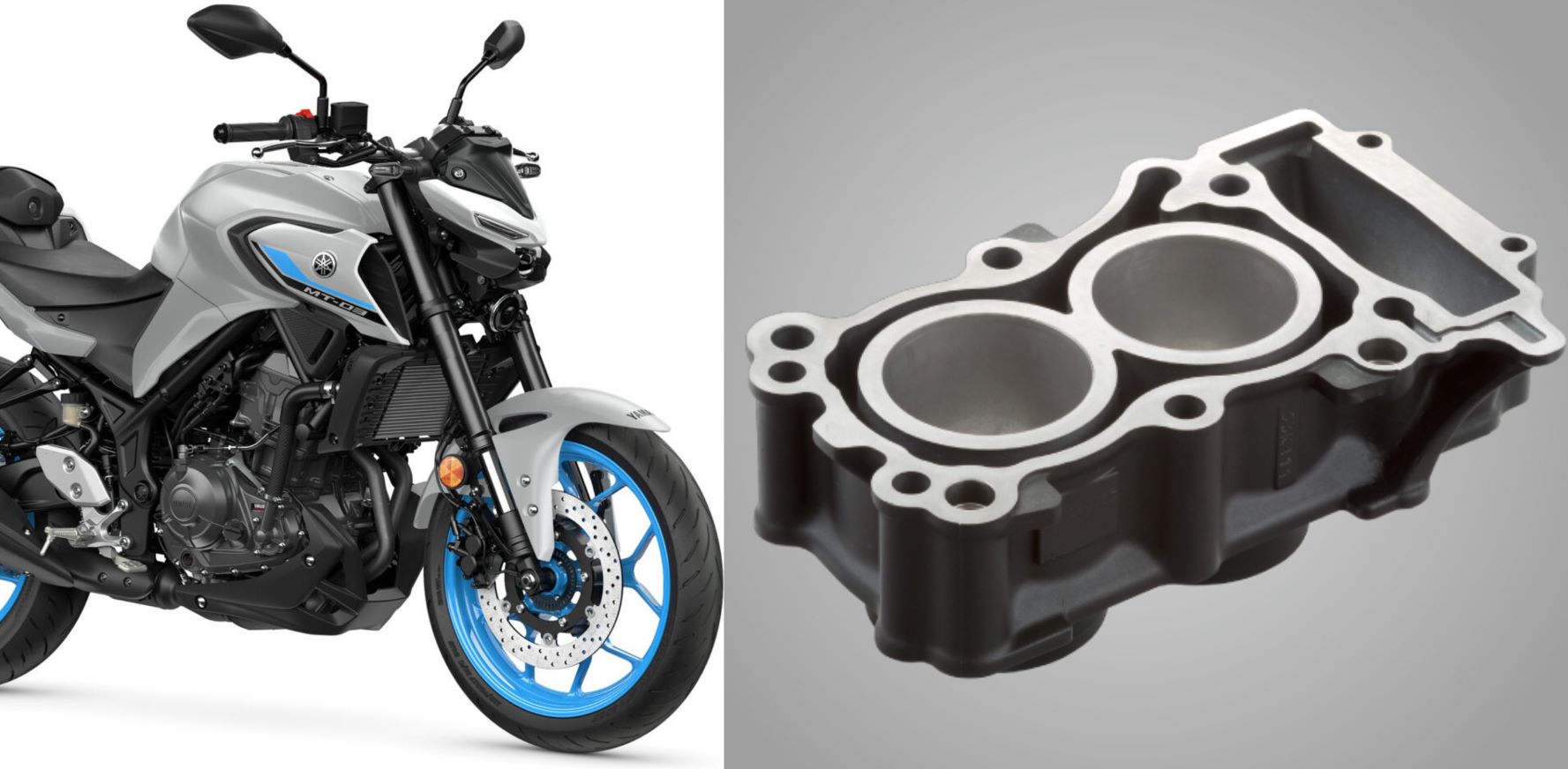
Yamaha Motor plans to replace the primary aluminium used for its DiASil cylinders with a dedicated recycled-aluminium alloy by 2030. Once the transition covers all products using the component, the company expects the change to reduce its CO₂ emissions by approximately 47,000 tonnes annually.
Why the cylinder needs a dedicated alloy
DiASil, short for Die-casting Aluminum-Silicon, is an all-aluminium cylinder design that does not require an iron liner or a separate special coating. Yamaha says it was the first company worldwide to develop and successfully apply this type of cylinder in 2002. The technology is now used in various Yamaha motorcycles and scooters.
The company lists several advantages for the design: resistance to wear and seizure, effective heat dissipation, lower weight, greater recyclability and reduced manufacturing cost. Until now, however, DiASil cylinders have used primary aluminium as their raw material. Conventional recycled aluminium can contain trace impurities, making it difficult to meet the required standards for the metal’s microstructure, surface properties, corrosion resistance and other characteristics.
Yamaha therefore developed a specific recycled-aluminium alloy whose properties it says are comparable with those of primary aluminium. It was also designed to work with the same production processes used for the relevant components. The material was developed using thermodynamic calculations, followed by repeated laboratory testing and vehicle evaluations. Yamaha says those checks confirmed that the alloy met all functional requirements, leading to approval for production use.
First production planned in Indonesia
The switch will begin with commuter-oriented models manufactured in Indonesia. Yamaha plans to expand the use of the recycled alloy globally at a later stage, while the overall transition to DiASil cylinders made from the new material is scheduled for completion by 2030.
The programme forms part of Yamaha Motor’s Environmental Plan, first presented in 2018. In 2021, the company revised the plan’s emissions targets and set a goal of achieving climate neutrality by 2050 across its business activities and the full life cycle of its products. Yamaha also aims to replace 100% of its raw materials with sustainable alternatives by 2030, with aluminium used in production processes specifically identified as part of that effort. The new DiASil alloy is presented as one of the main measures supporting that target.
THE EVIDENCE BEHIND THE STORY
Sources
Spotted something that needs correcting? Contact the editorial team ↗