
Who will fund motorcycle journalism after the print era?
Neil Graham describes the shift from mass-market magazines to a landscape where retailers, video and podcasts are helping shape new media economics.

2 min read
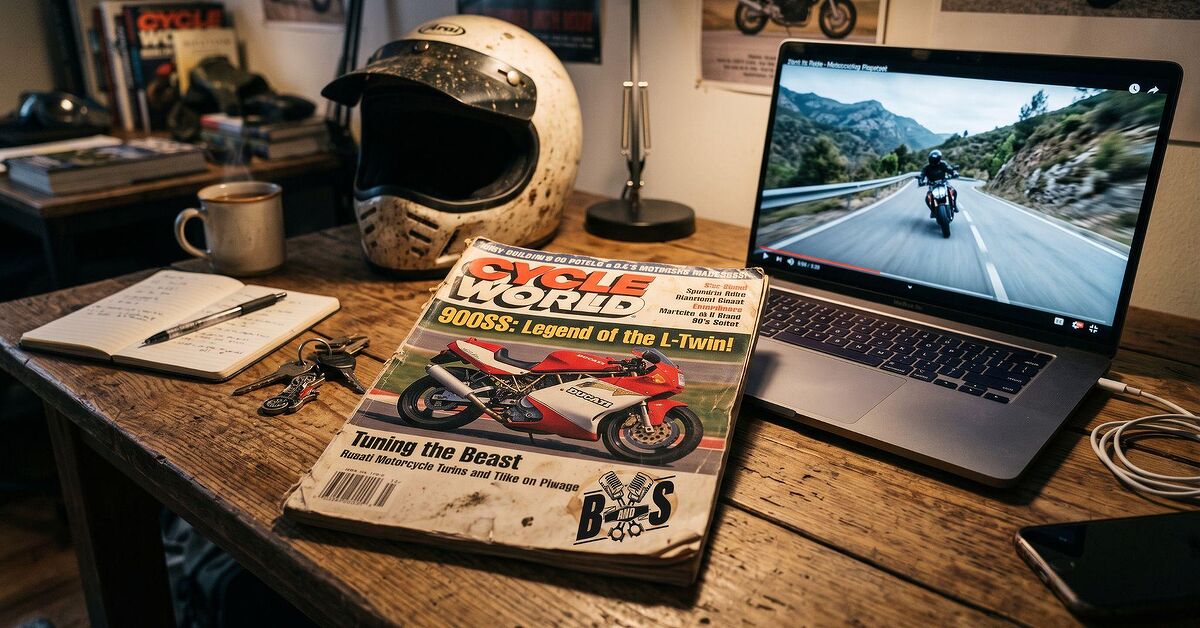
The business that once supported large-circulation motorcycle magazines has fragmented into online articles, video, podcasts and subscription platforms. The central question has not disappeared: who pays for journalism that requires time, reporting and a human voice? Neil Graham, a Gemini Award-winning documentarian and former editor-in-chief of Cycle Canada, explored that question as a guest on Episode 18 of the Bore & Stoke podcast.
Graham recalled a period when print magazines were the main — effectively exclusive — connection between motorcycle manufacturers and enthusiasts. He said Cycle World had 300,000 subscribers, giving magazines access to a concentrated audience and enabling exceptionally high advertising rates. As audiences moved online and print advertising revenue dried up, editorial budgets contracted, forcing media producers to look beyond the old arrangements for ways to pay for substantial work.
When gear retailers become media investors
Retail businesses that began by selling motorcycle equipment have become part of that search for a new model. Graham pointed to FortNine in Canada and RevZilla’s Common Tread in the United States as examples of retailers putting money into editorial and video production to build a stronger relationship with their audience. In his view, less dependence on traditional manufacturer advertising can give creators more freedom over subject choice, while also making ambitious production possible.
The format may keep changing, but the need for stories with human weight remains. Being frightened by a Panigale V4 or taking a trip with friends conveys an experience that an algorithm or a press release cannot easily reproduce. Motorcycle journalism therefore faces two linked tasks: finding a sustainable way to pay for the work and protecting the personal storytelling that gives motorcycle culture much of its meaning.
THE EVIDENCE BEHIND THE STORY
Sources
Spotted something that needs correcting? Contact the editorial team