
Italy retains the ISDE as Andrea Verona wins the overall
Italy took the World Trophy and Junior World Trophy again at the 100th ISDE in Portugal, while Andrea Verona won the individual classification.

4 min read
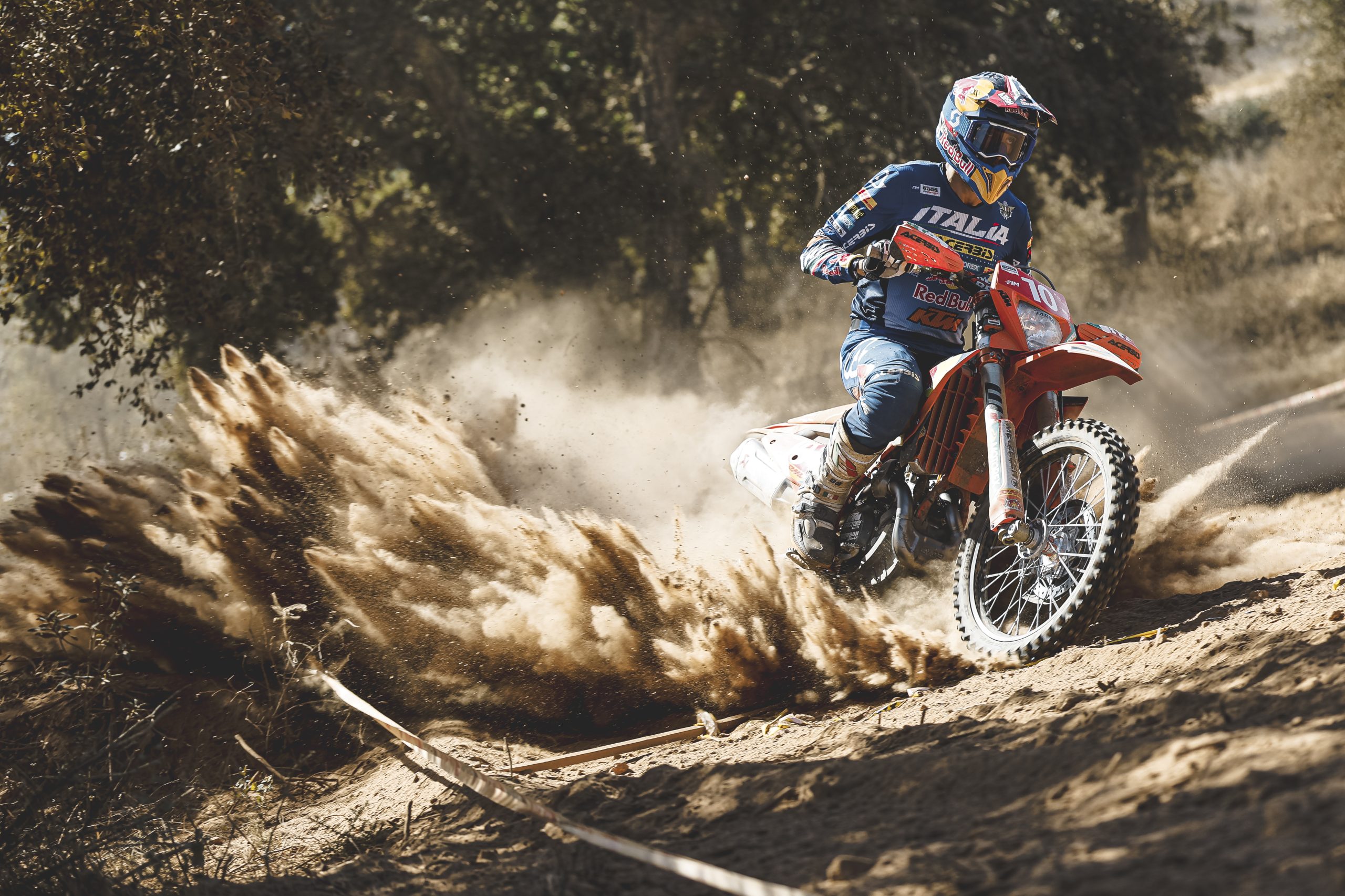
Italy left the 100th edition of the 6DAYS FIM Enduro of Nations with both major team trophies, retaining the World Trophy and the Junior World Trophy. Andrea Verona added the individual overall victory after a six-day contest that kept him in direct competition with Josep Garcia. The event took place in Portugal from 12 to 17 October 2026, combining a long route with conditions that changed repeatedly from one section to the next.
The paddock and event headquarters were based in Grândola, in Portugal’s Alentejo region, about an hour south of Lisbon. A total of 500 riders from more than 30 nations and six continents tackled a 1,500-kilometre route through Odemira, Santiago do Cacém and Sines. Sand, dust, hills, dirt roads and cork-oak forests formed the setting before the course reached the Atlantic coast. The normal schedule called for six special tests per day.
The organisers had to revise that plan as the event progressed. On day three, two of the six scheduled tests were cancelled because of excessive dust and organisational issues, leaving a 186-kilometre route. Day four consisted of one lap and three tests. On the penultimate day, the opening test was cancelled and the route was shortened as sun, sand and dust continued to shape the competition. Those changes made tyre and machine management part of the result alongside outright speed.
Verona and Garcia trade the advantage
Verona set the pace on the opening day, finishing ahead of Garcia and Morgan Lesiardo in the individual times. Garcia responded on day two and was again the fastest rider on day three. Italy nevertheless moved straight into the World Trophy lead, helped by the performances of Lesiardo and Samuele Bernardini as well as Verona’s own results.
The individual fight remained open into the final stages. Garcia made a mistake in the third test on the penultimate day and finished second behind Verona, with Brad Freeman third. The final day then brought the Final Cross Test and the prize ceremony on the Sines coastline, giving the event its closing sprint after five days of long-distance enduro competition.
Italy’s World Trophy team consisted of Andrea Verona, Samuele Bernardini, Morgan Lesiardo and Matteo Cavallo. France finished second, with Léo Joyon producing strong individual performances. Sweden took third with Albin Norrbin, Mikael Persson, Max Ahlin and Axel Semb. Metzeler supplied tyres to both the Italian and Swedish teams, and the Swedish quartet completed the event without mistakes.
For Italy, the result repeated its 2025 double in the World Trophy and Junior World Trophy. Verona’s individual win came in a discipline where endurance, consistency and the ability to adapt to changing ground can matter as much as the fastest time on a single test. The route’s mixture of loose surfaces, dust and faster sections made that balance particularly visible.
What the MCE 6 Days Extreme range offers
The Metzeler MCE 6 Days Extreme is a FIM-approved off-road competition tyre range intended for demanding and varied enduro conditions. Metzeler says the tyres use a cross-ply carcass made from polyester fibres. The company presents that construction as a way to combine flexibility, impact absorption and resistance to punctures.
The tread uses widely spaced blocks to help clear mud and debris. Metzeler also says the rounded rear profile increases the contact area, while compounds containing carbon black are designed to withstand overheating and tearing. Five compound choices are offered: Standard, Medium, Soft, Supersoft and Extra Soft. They are intended for different traction requirements on dry or wet, rocky or slippery terrain.
Metzeler links the range to its competition activity in the FIM Enduro World Championship and states that it has won 72 world titles there since 2005. At the Portuguese ISDE, the tyres were used across a route combining sand, dust, dirt roads, hills and changing speeds. That combination explains why predictable grip, steering accuracy and durability remained relevant all the way to the Final Cross Test.
THE EVIDENCE BEHIND THE STORY
Sources
Spotted something that needs correcting? Contact the editorial team ↗