
Italy’s 2027 road-tax exemption faces a regional funding dispute
The proposed 12-month relief has strict eligibility rules, while regions question whether the €2,293.5 million compensation fund will cover lost revenue.

4 min read
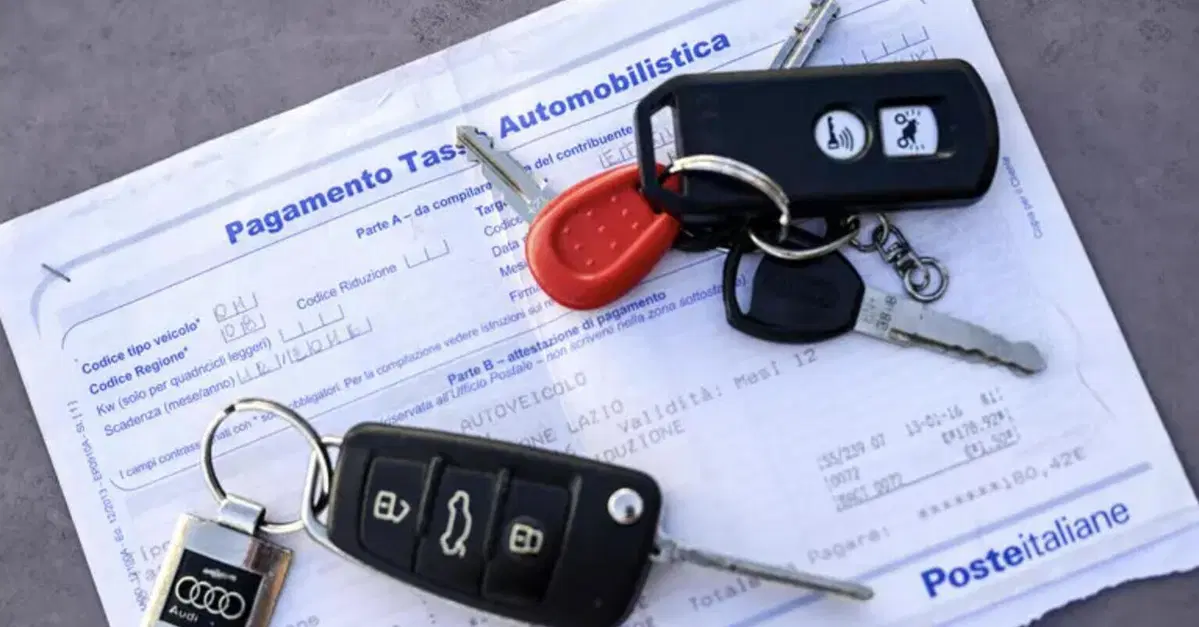
Italy’s planned 2027 suspension of road tax for selected vehicles is already facing a major funding dispute. Decreto Legge 162/2026 would create a temporary exemption for certain private owners, but the regions are challenging the way the state intends to compensate them for the revenue they would lose. The proposed compensation fund is worth €2,293.5 million, or roughly €2.29 billion.
The confrontation surfaced during hearings before the joint Budget Committees of the Chamber of Deputies and the Senate on 12 November 2026. Marco Alparone, vice-president of Lombardy and a representative of the Conference of Regions and Autonomous Provinces, called for urgent negotiations over both the amount of money provided and the rules governing the measure. He said the regions had not yet been able to establish whether the proposed payment would actually cover the lost revenue.
Alparone’s objection is significant because the concern is not limited to one political camp: he is also a prominent figure in Brothers of Italy, the party leading the national government. His position was that the regions need a direct discussion before the financial and regulatory details are settled.
A 12-month exemption with tight conditions
The proposal is not a permanent abolition of the road tax. It applies only to liabilities whose ordinary due date falls between 1 January and 31 December 2027, creating a defined 12-month window. A late payment made in 2027 does not move an older liability into the exemption: if the normal deadline was at the end of 2026, that earlier tax remains outside the measure.
Eligibility is restricted to private individuals, excluding companies, VAT-registered businesses and company rental fleets, and the benefit is limited to one vehicle per person. For cars, the maximum permitted output is 80 kW, approximately 109 CV. The category includes hybrid cars as well as vehicles powered by LPG or methane.
Motorcycles and mopeds are treated through an additional ownership condition rather than the car power threshold: a two-wheeler can qualify only when its owner is not already using the exemption for a car of up to 80 kW. The vehicle must also have active third-party liability insurance when it is checked. The relevant date for the tax is the ordinary deadline, not the day on which the owner eventually makes a payment.
Why the regions doubt the compensation
The dispute concerns more than the headline size of the fund. The regional administrations argue that the central estimates and the records used to calculate actual tax receipts are not based on the same databases. A projection built around the theoretical number of vehicles that could qualify may therefore fail to match the real cash flows recorded in each territory.
Different regional tax policies make the calculation harder. Regions can apply different rates or specific concessions, so they are asking for the lost revenue to be restored under the legislation currently in force and at the standard rate. Their concern is that a single formula based only on standard tariffs could undercompensate territories whose actual rates or reliefs produce a different tax burden.
That could turn a benefit for private vehicle owners into a budget problem for local administrations. The regions warn that a shortfall could put pressure on funding for local public transport, healthcare services and energy-efficiency work in healthcare facilities. The municipalities’ association, ANCI, has also sought the option of increasing the tourist accommodation tax as a partial way to offset the effects.
The decree still has to complete the parliamentary process required for conversion into law. The exemption criteria and the compensation mechanism can therefore change before the final rules are established. For riders, the immediate point is that the proposed saving depends not only on the vehicle and its owner meeting the conditions, but also on whether the regions accept the financial framework behind the measure.
THE STORY IN PHOTOS
4 photos



THE EVIDENCE BEHIND THE STORY
Sources
Spotted something that needs correcting? Contact the editorial team