
Is Ducati Losing Some of Its Mechanical Character?
Neil Graham sees Ducati’s smoother, easier-to-use motorcycles as progress — but also questions what happens to the brand’s distinctive mechanical feel.

2 min read
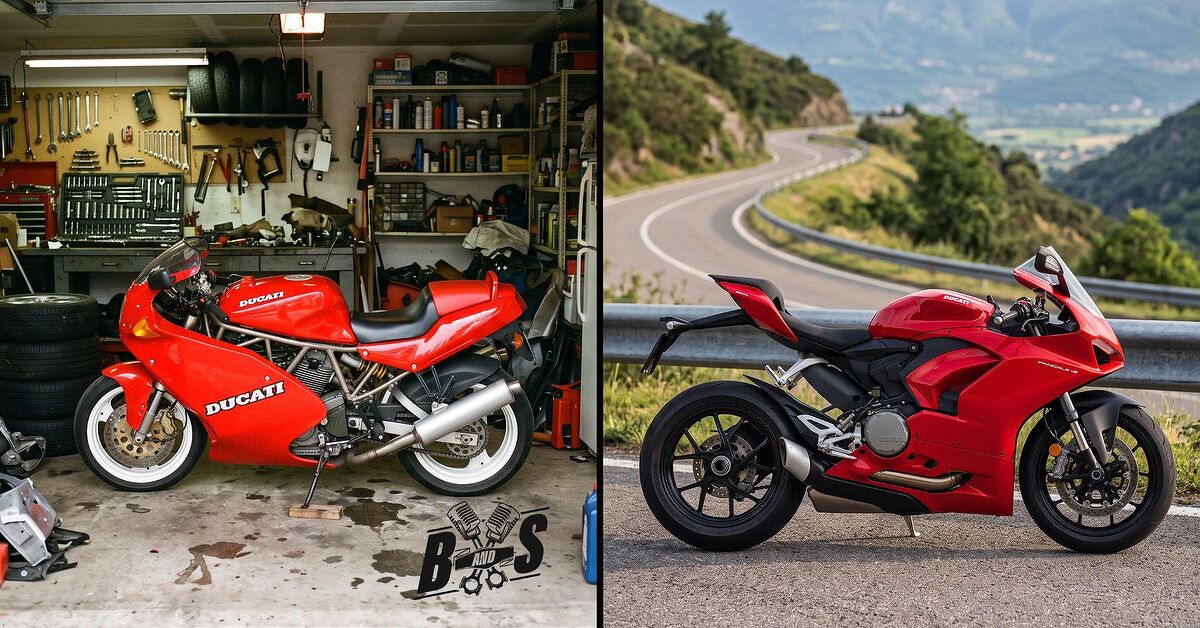
Ducati has moved from raw V-Twins and Desmodromic valve actuation toward motorcycles that are smoother and easier to live with. For Neil Graham, that shift is more than a technical update: it raises the question of whether the brand is moving away from the mechanical feel that made older Ducatis so distinctive. The veteran journalist and vintage racer discussed the issue during the 18th instalment of the Bore and Stoke podcast.
When imperfection becomes part of the appeal
Graham does not argue that older Ducatis are objectively superior. He readily concedes that Japanese motorcycles are better in many measurable respects: they are better built, last longer, run more quietly and are often more powerful. Ducati’s attraction lies elsewhere. On the 1990s machines in particular, the rider remains closely aware of the engine and its mechanical parts instead of experiencing them as something hidden behind layers of refinement.
That is where the lasting appeal of Desmo enters the discussion. Graham says that modern valve springs can support engines operating above 16,000 rpm, meaning that Desmodromic actuation is no longer an obvious technical necessity. Manually setting Desmo valves still provides a tangible connection with machining, precision and the way the mechanism works — a form of feedback that modern electronics and smoother delivery can reduce.
Ducati’s new balance
Recent Ducati engines show a clear move toward greater civility. The lightweight Panigale V2 engine combines high performance with delivery that is easier to use, while the Multistrada V4 employs conventional valve springs and takes a more polished approach to ergonomics and operation. For many riders, that is meaningful progress. Graham’s concern is different: if smoothness becomes the dominant goal, Ducati may blur the distinction between Italian intensity and Japanese usability. The question is not whether the newer motorcycles are easier to ride, but how much of the distinctive identity that shaped Ducati’s appeal will remain.
THE EVIDENCE BEHIND THE STORY
Sources
Spotted something that needs correcting? Contact the editorial team ↗