
Yamaha RW700: CP2 power meets Y-AMT adventure practicality
The new RW700 combines a 690 cc engine, automated transmission and scooter-style practicality, with market arrival expected in spring 2027.

3 min read
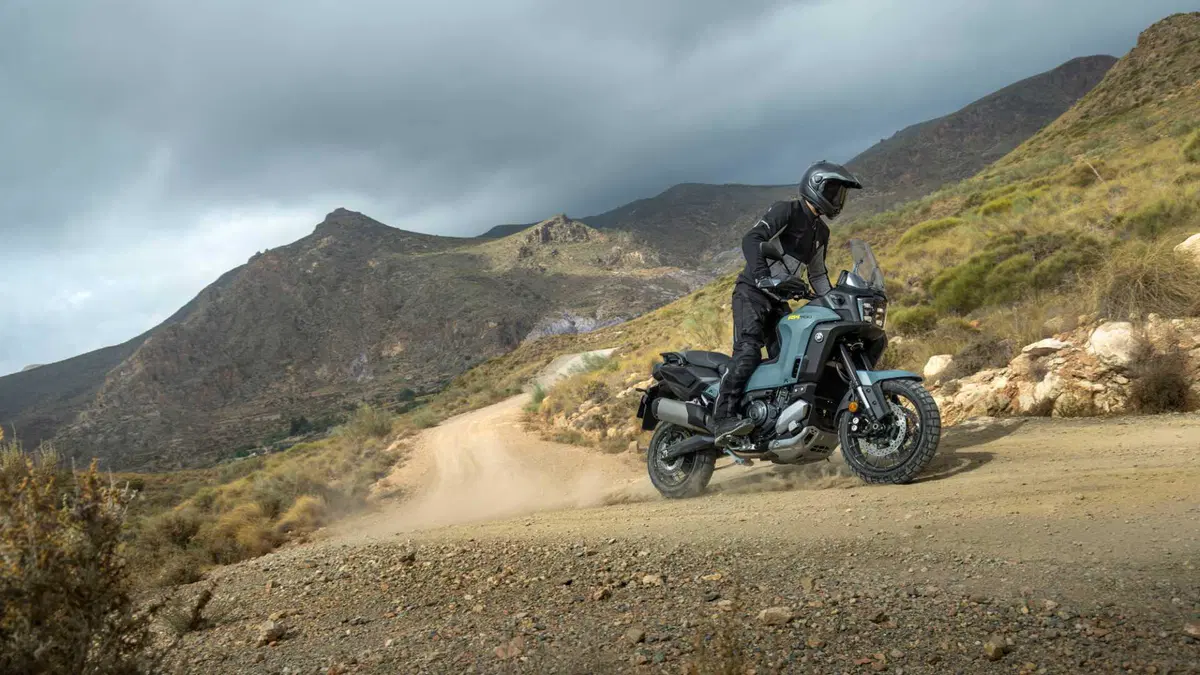
Yamaha’s RW700 is one of the most unconventional motorcycles presented at EICMA 2026 in Milan. Its concept sits between two familiar categories: the styling draws heavily from the Ténéré 700 and Yamaha’s adventure range, while the ergonomics, transmission and storage capacity bring scooter thinking into a machine aimed at more than urban commuting. Yamaha expects the RW700 to reach the market in spring 2027.
A CP2 foundation with a more accessible layout
The RW700 uses the 690 cc CP2 parallel twin, producing 69.3 CV. The same engine is also used in the Ténéré 700, MT-07 and Tracer 7, giving the new model a clearly motorcycle-based foundation despite its unusual format. Seat height is 810 mm, while the 14-litre fuel tank sits forward. That arrangement is intended to make it easier for the rider to get both feet down than on a conventional enduro motorcycle.
Y-AMT changes the usual controls
The key mechanical departure is Yamaha’s Y-AMT automated transmission. There is no clutch lever and no conventional gear-change pedal. Instead, shifts are selected through paddle-style controls on the left side of the handlebar. The rear brake is also operated by a handlebar lever rather than a foot pedal. This reinforces the RW700’s scooter-style operation, but it also moves the motorcycle away from the control layout many riders expect, especially when considering unpaved riding.
Adventure styling with useful everyday equipment
The styling is the part most likely to divide opinion. The compact, muscular front section maintains a strong visual link with the Ténéré and has attracted positive reactions. The tall, bulky centre section is less immediately familiar and has prompted reservations about the overall shape. Yamaha offsets that bold design with a practical feature: the space beneath the seat can accommodate a full-face helmet, something not normally associated with a conventional adventure motorcycle.
The RW700 is not limited to road-oriented convenience. Its 41 mm upside-down fork offers 160 mm of travel, while ground clearance is 170 mm, figures that point towards light off-road use. The electronics include ROAD mode with Sport, Street and Eco settings, plus GRAVEL mode with Explore and Explore+ options. A 5-inch TFT instrument display completes the equipment package.
The result is an attempt to occupy the space between a scooter and an adventure motorcycle. A scooter rider may see the RW700 as a more direct route towards motorcycle touring without giving up everyday practicality, while an adventure rider may appreciate the easier ergonomics and storage without losing the category’s visual character. Whether that balance works beyond the show floor will become clearer when Yamaha’s expected spring 2027 market arrival takes place.
THE EVIDENCE BEHIND THE STORY
Sources
Spotted something that needs correcting? Contact the editorial team