
Yamaha enters the adventure-scooter fight with the RW700 and RW350
The new RW700 duo combines a 689cc twin with Y-AMT, while the smaller RW350 brings a new single-cylinder engine, CVT transmission and off-road-focused equipment.

5 min read
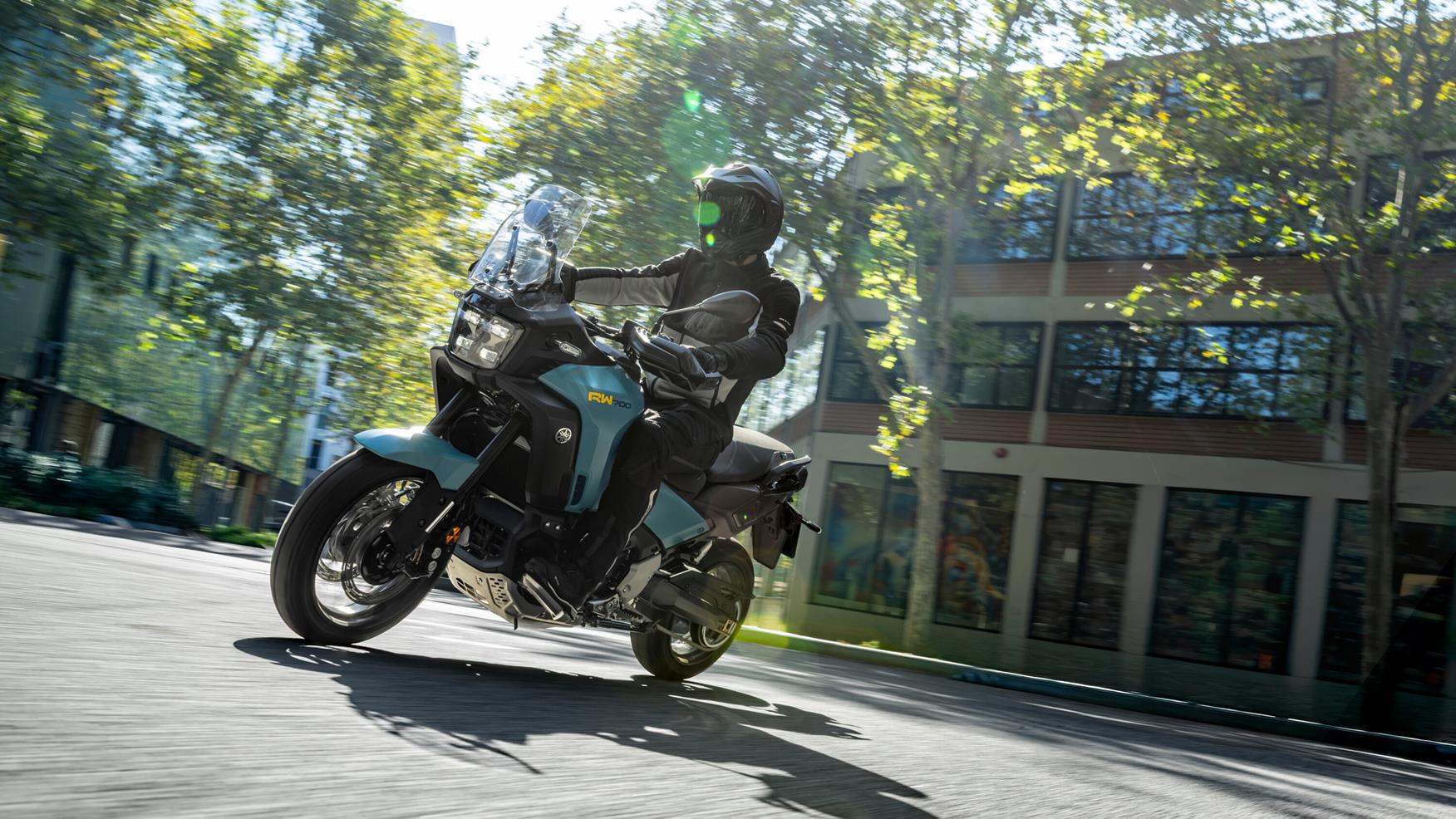
Yamaha is entering the adventure-scooter market for 2027 with three new models: the RW700, the higher-specification RW700 Explore and the smaller RW350. The larger pair use Yamaha’s 689cc CP2 parallel twin and a six-speed Y-AMT automated manual transmission, while the RW350 uses a new liquid-cooled single-cylinder engine with a fully automatic CVT. All three keep the feet-forward layout and practical storage associated with scooters, but add central footpegs, longer-travel suspension and electronic controls intended to extend their brief beyond urban commuting.
The move places Yamaha directly against a part of the market where Honda has already built substantial momentum. Honda’s X-ADV had sold more than 60,000 units across Europe since its introduction in 2017 and was the brand’s second best-selling motorcycle in Europe in 2023. The ADV350 was also Europe’s best-selling scooter above 300cc in 2024. Yamaha is therefore offering both a large twin-cylinder alternative and a smaller single-cylinder model rather than treating the segment as a one-bike experiment.
RW700 and RW700 Explore
Both RW700 versions produce a claimed 68.4bhp at 8,250rpm and 48lb.ft of torque at 6,750rpm. Their six-speed Yamaha Automated Manual Transmission can be operated manually through tabs on the left-hand switchgear, or placed in a fully automatic mode. Yamaha will also offer a restricted 47bhp version for A2 licence holders. The system is said to have been adapted for this application with off-road riding in mind, while internal changes including a rubberised clutch damper are intended to make gear changes smoother.
The two large scooters share a steel double-cradle frame, 41mm upside-down front forks and 160mm of front suspension travel. Both have an 810mm seat height and a 14-litre fuel tank. The standard RW700 has a claimed wet weight of 221kg, while the additional equipment on the Explore takes its figure to 224kg. Tubeless tyres measure 120/70×17 at the front and 160/60×15 at the rear.
Their riding position remains recognisably scooter-like, with fold-out front footboards for seated riding. Yamaha also fits a second, central set of substantial adventure pegs with removable rubber inserts, allowing riders to stand when the surface becomes rougher. The layout is intended to preserve everyday convenience without limiting the machines to paved roads.
The Explore is distinguished primarily by its equipment level. It adds front preload and rebound adjustment, a 10-stage adjustable heated rider’s seat, heated grips, a centre stand, backlit switchgear and two exclusive colour schemes. The standard model and Explore otherwise share the same basic engine, frame and wheel dimensions.
A ride-by-wire throttle works with a six-axis inertial measurement unit to provide traction control, slide control and cornering ABS. Yamaha’s Ride Control system groups the electronic settings and Y-AMT behaviour into Road and Gravel categories. Road offers three preset modes, while Gravel offers two. In Gravel mode, the rider can switch off the rear ABS. A Back-slip Regulator manages engine torque when the rear wheel locks, and Yamaha says the system can hold the selected gear during acceleration and a slide when an off-road mode is active.
Cruise control and a speed limiter are standard. The electronics are managed through a rectangular five-inch colour TFT display, which provides turn-by-turn navigation through the Garmin StreetCross mobile application. LED lighting and keyless ignition are also included. At the rear, illuminated underseat storage is designed to accommodate a full-face helmet. A fixed windscreen and hand guards complete the equipment intended to make the RW700 models useful in daily traffic as well as on less demanding gravel routes.
The smaller RW350
The RW350 follows the same rugged design direction in a narrower package. Yamaha says its proportions and easy reach to the handlebars are intended to make it easier to manoeuvre through town and tight lines of traffic. Its new liquid-cooled single-cylinder engine produces a claimed 28.8bhp at 7,000rpm and 23.2lb.ft at 5,750rpm, driving through a fully automatic CVT twist-and-go transmission.
The engine sits in a tubular steel backbone frame. Yamaha says the arrangement leaves only the CVT transmission rotating around the crankshaft pivot with the swingarm, bringing less unsprung weight, greater rigidity and improved composure over rough ground. The RW350 has front footboards for conventional scooter use, plus central pegs for standing on more difficult surfaces. There is also room for a pillion behind the rider, bordered by substantial grab rails.
The RW350 has a claimed wet weight of 192kg and an 810mm seat height. Storage beneath the seat is designed for a full-face helmet. Suspension consists of 37mm front forks and twin rear shocks with seven-stage preload adjustment. Front travel is 140mm and rear travel is 105mm. Ground clearance is 185mm.
The smaller scooter uses a 16-inch front wheel and a 14-inch rear wheel, both fitted with tubeless Dunlop D615 tyres developed specifically for the model. The tyres have a block-pattern appearance suited to the RW350’s intended use, while the skid plate beneath the engine adds protection on rougher surfaces.
Its electronics and everyday equipment include ride-by-wire, three preset riding modes and cruise control. Keyless ignition, mobile connectivity and a five-inch colour TFT display are also standard. The specification continues with LED lighting, self-cancelling indicators, a 13-litre fuel tank, a USB-C charging port and a one-touch easy-start system. Tapered steel handlebars complete the more upright, adventure-oriented layout.
Yamaha will display the RW700, RW700 Explore and RW350 at Motorcycle Live at Birmingham’s NEC from November 21 to 29. The three-model range gives the company two distinct approaches to the same idea: the RW700s combine the performance and electronic sophistication of a parallel twin with automated shifting, while the RW350 prioritises a narrower footprint, automatic operation and manageable dimensions without abandoning the adventure-scooter format.
THE EVIDENCE BEHIND THE STORY
Sources
Spotted something that needs correcting? Contact the editorial team ↗