
Triumph’s 2027 Street Triple 798 leads a wider Tiger overhaul
A new 798cc three-cylinder Street Triple headlines Triumph’s 2027 previews, while the Tiger 900 and 1200 show signs of more performance and radar-based rider assistance.

6 min read
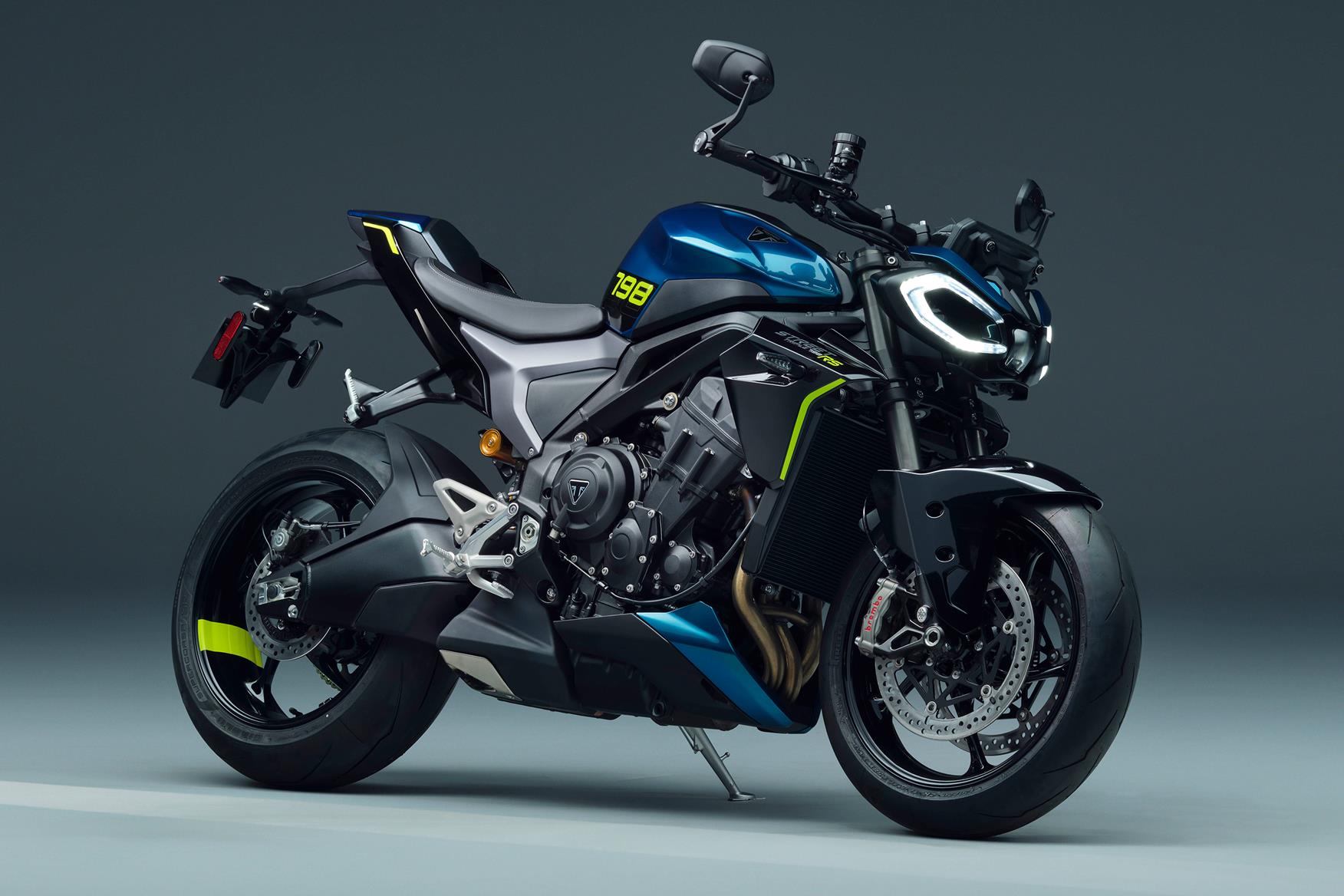
Triumph is preparing a substantially revised Street Triple for 2027, and the most obvious clue is now on the side panel: the familiar 765 identity gives way to 798. Alongside it, the manufacturer has shown updated versions of the Tiger 900 and Tiger 1200. The three motorcycles are not yet accompanied by complete production specifications, but the images and the information released so far point to a new engine and chassis for the Street Triple, plus increased performance and enhanced rider technology for both adventure platforms. Two single-cylinder Bonneville T40 models are also part of Triumph’s wider 2027 model preview, but the Street and Tiger families represent the more significant developments for performance and adventure riders.
A 798cc Street Triple with Moto2 links
The new Street Triple is built around a three-cylinder 798cc engine, a larger-capacity unit related to the engine that Moto2 is due to use from 2027. In racing form, the change raises peak power by a claimed six per cent, from approximately 142bhp to about 150bhp. That figure belongs to the competition engine, not automatically to the road motorcycle. The current Street Triple RS is quoted at 128bhp, so the new platform leaves room for a substantial increase in the production bike, but Triumph has not yet confirmed its final road-bike output or torque figure.
The competition version’s revisions explain why the 798 badge represents more than a capacity change. Triumph has focused on airflow and combustion with a new cylinder head, redesigned low-inertia valve train, revised combustion chamber and higher-flow ports. The higher compression ratio is intended to raise torque across the rev range. New crankcases and internal parts also contribute to a claimed 2kg reduction in the racing engine’s weight. Those details describe the Moto2 specification, so they should not be read as a complete equipment list for the production Street Triple, but they establish the technical direction of the new family.
A much more extensively reworked chassis
The visible changes extend well beyond the engine. The main frame, subframe and double-sided swingarm appear to be new, with the swingarm noticeably more substantial and possibly shorter than before. Its more exposed shape is partly the result of the exhaust moving underneath the swingarm, replacing the previous right-side arrangement. The new subframe rises more sharply, a change that should place the rider further over the handlebars, while the stripped-back rear bodywork leaves considerably less room for a passenger. The rear lamp also appears to be incorporated into the number-plate bracket, potentially allowing the lighting and bracket assembly to be removed as one piece.
The front end abandons the separate twin-headlight treatment associated with the Street Triple since its introduction. In its place are two perimeter LED elements with hollow centres and a central main beam, topped by colour-matched eyebrows. The pictures also suggest a revised colour TFT display. At the suspension and braking ends, the motorcycle appears to use 41mm Showa Separate Function Forks–Big Piston units, four-piston Brembo Stylema calipers and 310mm discs. Pirelli Supercorsa tyres are also visible. A gold-anodised reservoir on the rear shock could indicate an Öhlins unit similar to the STX40, although the final shock specification and the confirmed adjustment range have not been announced.
The current Street Triple RS uses adjustable compression and rebound damping together with preload adjustment, and has 115mm of front-wheel travel. Whether the 2027 motorcycle retains those particular settings and measurements remains to be established. The new images do, however, show a more prominent frame, revised tank shape and a flatter, more angular overall design. The result is not simply an updated face for the existing 765: the motorcycle appears to have been reworked around a new engine and a significantly altered chassis.
The Tigers add performance and electronic ambition
Triumph is also revising the Tiger 900 and Tiger 1200 for 2027. The manufacturer has indicated increased performance for both adventure platforms, while the unchanged model names suggest that the update is not being presented as a capacity increase. Final engine outputs and the detailed equipment breakdown have not yet been released, but the visual changes are already clear. Both motorcycles retain the upright adventure-bike silhouette, spoked wheels, long-travel suspension and protective bash plates, while receiving revised bodywork and front-end treatment.
The most interesting electronic clue sits at the front of the two motorcycles shown in the studio images: a sensor that appears to be a forward-facing radar unit. Its exact function has not been defined, but adaptive cruise control is the obvious possibility. The sensor is not visible in every Tiger 900 image, including some recent spyshot material, so different trim levels or equipment packages may be involved. It is therefore more accurate to describe radar assistance as an indicated direction than as confirmed standard equipment across either range.
For the Tiger 1200, forward radar would complement rear-facing radar already introduced on the latest top-spec Explorer versions. That system supports Blind Spot Assist and Lane Change Assist. Adding adaptive cruise control would bring the large Triumph closer to motorcycles that already combine forward and rear radar functions. The move would be more unusual for the Tiger 900: there are relatively few motorcycles in the sub-1,000cc adventure and sport-touring class with this type of assistance. The Yamaha Tracer 9 GT+ is an obvious comparison, although its road-focused character differs considerably from the Tiger 900 Rally Pro shown in the images.
The 900’s rear section has also changed. More of the subframe is covered by plastic trim and the passenger grab rail is smaller and less visually prominent. On the 1200, a separate image appears to show Apple CarPlay being used for functions such as navigation, which would suggest a possible change from the current model’s MyTriumph mobile-app approach. That remains an indication rather than a confirmed feature list. The two models may also receive rear radar or related rider-assistance functions, but the exact combination of sensors and software has yet to be detailed.
When the details are expected
Triumph has scheduled the next steps in the reveal programme across the end of 2026. The Tiger 1200 is due to receive its fuller presentation on October 27, followed by the Street Triple on November 17. The Tiger 900 is scheduled to be the final reveal, with further details promised for December 15. Both the Street Triple and Tiger 1200 are also due to appear at Motorcycle Live at Birmingham’s NEC from November 21 to 29.
The information released so far establishes the broad hierarchy of the 2027 range. The Street Triple 798 is the substantial mechanical story, combining a new displacement with a new-looking chassis and a Moto2-related engine programme. The Tigers keep their established identities but appear set to gain stronger performance and a more advanced electronic package, potentially including forward radar. Triumph’s scheduled presentations should determine which of the visible components and suggested systems reach production, and in which versions.
THE EVIDENCE BEHIND THE STORY
Sources
Spotted something that needs correcting? Contact the editorial team ↗