
Suzuki GSX-10R: 150.2bhp and superbike ergonomics for the road
Suzuki’s new GSX-10R combines the GSX-S1000 mechanical platform with GSX-R bodywork, a committed riding position and modern electronics.

4 min read
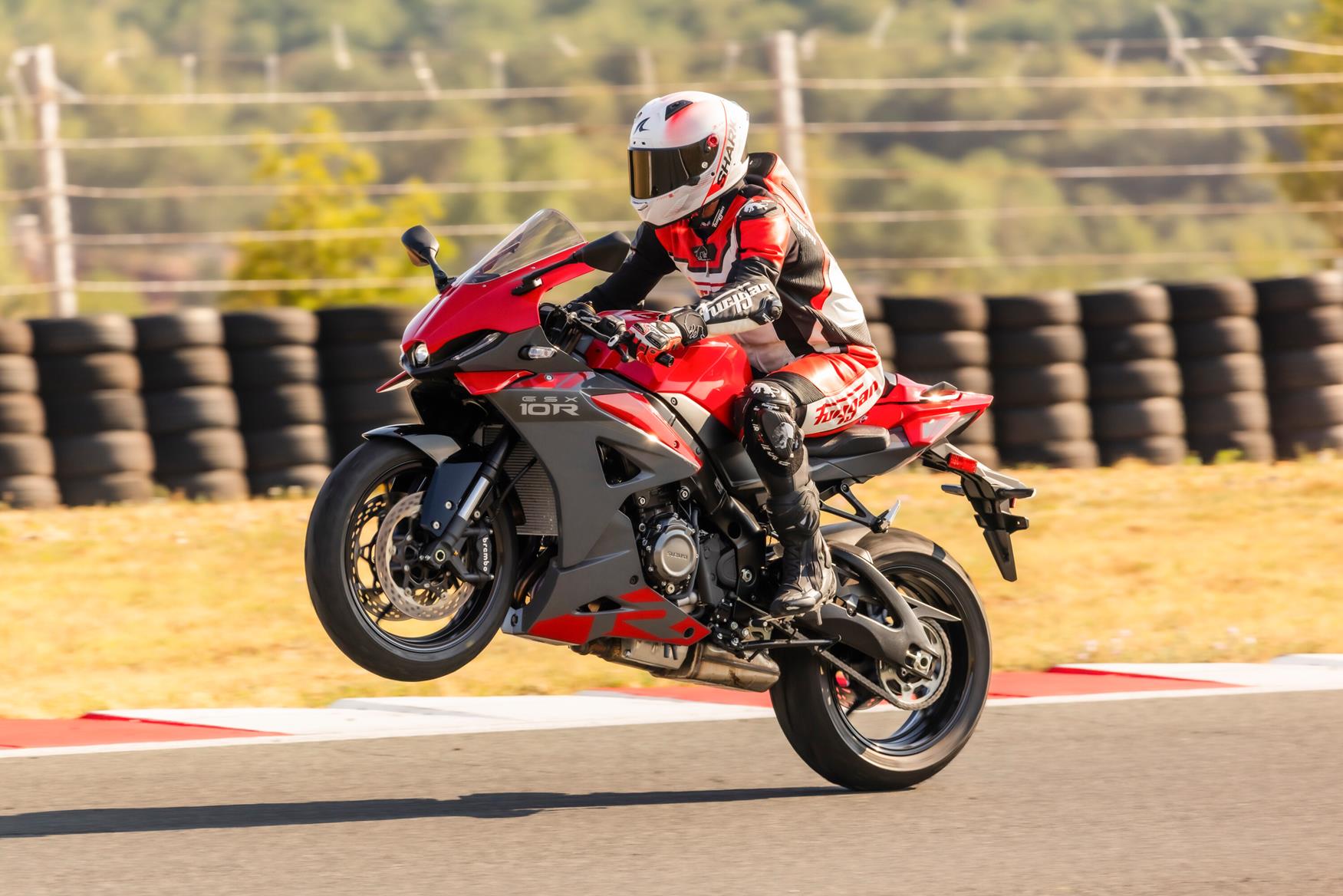
Suzuki’s 2027 GSX-10R takes aim at the space between the supersport and superbike classes. It uses the engine and main chassis elements of the GSX-S1000, then adds GSX-R1000-inspired fairing and a considerably sportier riding position. The result is a four-cylinder sportsbike intended primarily for road use, while retaining the hardware and attitude needed for occasional track riding.
This is a different answer to the modern superbike question. Rather than pursuing the 200bhp-plus output and uncompromising track focus of the most extreme machines, Suzuki has taken a familiar litre-bike platform and given it a more committed shape without abandoning everyday usability. It is a return to the idea of a superbike designed for real roads first, even if the GSX-10R does not fit neatly into an established class.
A GSX-S1000 foundation with a sharper stance
The aluminium beam frame is shared with the GSX-S1000 family, which also includes the GSX-S1000GX, GSX-S1000GT and Katana. Suzuki adds a new subframe for the GSX-10R. Low handlebars and high, rear-set footrests produce a layout close to the GSX-R1000, while the 810mm seat is lower than the 825mm seat height quoted for the GSX-R1000R. The result is a properly sporting triangle without adopting the taller seat height of the superbike.
The four-cylinder engine can trace its lineage to the 2005 GSX-R1000 K5. Its relatively long-stroke design remains, but a ride-by-wire throttle brings the package into the current electronics era and supports modern emissions requirements. Peak output is 150.2bhp at 11,000rpm, with 78.2lb.ft of torque at 9,250rpm. Those are the same stated power figures as the GSX-S1000, although the GSX-10R gives the engine a much racier setting through its ergonomics and aerodynamic protection.
The quoted kerb weight is 214kg, placing the Suzuki on the heavy side of current sportsbike design. Against the 890cc Yamaha R9, it carries an additional 19kg in the comparison accompanying the presentation. Its chassis is not simply carried over: the offset changes by 5mm, the rear tyre uses a 55 profile and the revised geometry allows up to 53 degrees of lean before hard parts touch down. Rake is 25 degrees, and an electronic steering damper varies its assistance with speed.
Adjustable suspension and a full rider-aid package
Suspension consists of fully adjustable 43mm KYB forks and a monoshock with separate high- and low-speed compression adjusters, plus rebound and preload adjustment. Brembo supplies four-piston radial calipers, paired with a radial master cylinder. The specification gives the GSX-10R the adjustability expected of a serious sportsbike, even though its engine and chassis origins are shared with a road-focused model.
Three riding modes alter the throttle maps, while lean-sensitive traction control uses an IMU to account for the motorcycle’s attitude. Adjustable wheelie control and Suzuki’s first slide-control system are also included. The same inertial platform provides cornering ABS, and the ride-by-wire system allows a bidirectional quickshifter together with an auto-blipper.
The colour TFT display connects to a phone and brings turn-by-turn navigation, notifications, weather information and traffic alerts to the dash. The fairing is clearly related to the GSX-R1000 and includes front winglets, but Suzuki presents the GSX-10R as a road motorcycle rather than a race-only machine. Its wind protection is intended to work both when the rider is tucked in and during touring, reinforcing the model’s broader brief.
Road equipment and pricing context
An 18-litre fuel tank supports the GSX-10R’s road remit. There is also a brake-hold function for sloping stops: it keeps the rear brake applied for up to 30 seconds and releases it when the motorcycle pulls away. It is a practical detail rather than a performance feature, but it fits the attempt to make a committed sportsbike easier to use outside a circuit.
Suzuki has not announced the GSX-10R’s price. The GSX-S1000 is quoted at £10,999 and the GSX-S1000GX+ at £12,999, while the Yamaha R9 is quoted at £12,504 in the comparison. Those figures frame the space Suzuki is entering, but they do not establish the eventual price of the new model.
The GSX-10R therefore offers more visual drama and a more purposeful riding position than a naked sports tourer, while avoiding the track-first brief of a modern superbike. Its 150.2bhp output is substantial without pursuing the headline figures of the most extreme litre machines. That middle ground is the central idea behind the bike: a road-oriented superbike shape, familiar Suzuki mechanicals and enough electronic and chassis specification to make the package credible beyond straight-line performance.
THE EVIDENCE BEHIND THE STORY
Sources
Spotted something that needs correcting? Contact the editorial team ↗