
Honda Fireblade 2027: a three-bike range gains an HRC flagship
The CBR1000RR-R returns with revised engine, chassis and aerodynamics, while the Works Edition adds a more circuit-focused specification.

3 min read
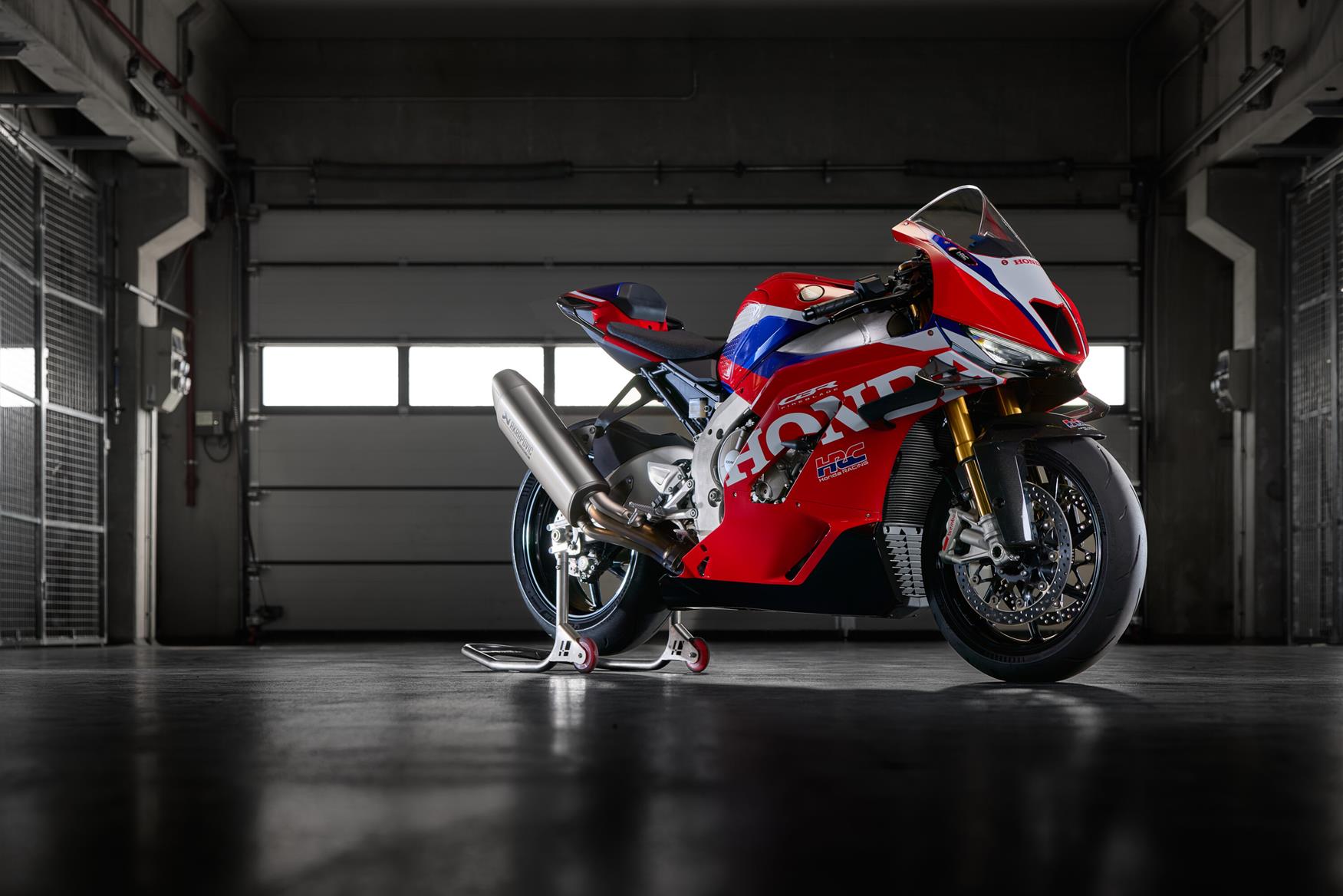
Honda is reshaping its CBR1000RR-R Fireblade family for 2027 with three versions: the returning standard model, the SP and a new HRC Works Edition. The base bike comes back to the UK range, where only the SP had been offered since 2024. At the top sits the Works Edition, described as a homologation special aimed squarely at circuit use and positioned against machines such as BMW’s M1000RR and Ducati’s Panigale V4R. The changes extend well beyond bodywork, covering the engine, chassis, geometry, suspension and aerodynamic package.
More output and a lighter mechanical package
All three motorcycles share the revised four-cylinder engine. Honda quotes 214.6 bhp at 14,000 rpm, with variable-length intake trumpets intended to improve performance through the midrange. Peak torque moves from 83.3 lb.ft to 84.1 lb.ft at 10,500 rpm. New pistons and combustion chambers raise compression from 13.6:1 to 13.8:1.
Weight reduction comes through lighter crankcases and magnesium components in the cylinder-head cover, clutch cover, right crankcase cover and oil pan. Some engine fasteners also change from steel to aluminium. A titanium fuel tank and lighter wheels are standard across the range. Honda’s claimed kerb figures are 199 kg for the standard Fireblade, 201 kg for the SP and 200 kg for the Works Edition.
The six-speed transmission retains its quickshifter but gains more space between the main and countershafts. That layout gives racing teams greater freedom when revising the gearing. The Works Edition can additionally be ordered with a reverse shift pattern, placing neutral at the bottom in a race-style arrangement.
A more flexible chassis
The revised frame has a larger air passage in the headstock and 20% less lateral rigidity. On the standard bike and the SP, rake changes from 24.1° to 24°, while trail is cut by almost 1 mm. The crankshaft sits 5.2 mm higher, shifting more of the motorcycle’s weight towards the front wheel.
Every version receives a shorter, lighter swingarm, and the rear shock mounting point moves from the frame to the engine. The Works Edition adds its own geometry and adjustment options: rake is 23.8°, seat height rises to 847 mm from 843 mm, and both the steering stem and swingarm pivot are adjustable.
The standard Fireblade uses 43 mm Showa Big Piston forks, a Showa BFRC shock and radial four-piston Nissin calipers. The SP moves to Öhlins S-EC3.0 electronic suspension, combining 43 mm NPX forks with a TTX36 shock and Brembo Hypure calipers. On the Works Edition, the electronic suspension is replaced by manually adjustable Öhlins equipment, while the brakes use Brembo Hypure Sports calipers described as the higher-spec option.
Aerodynamics shared, then sharpened for the Works Edition
Honda has also revised the aerodynamic treatment. On the standard model and SP, the side-mounted winglets make way for upturned air guides below the headlights. More enclosed side panels and GP-style extensions on the lower fairings are intended to preserve the previous version’s downforce while reducing drag.
The Works Edition adds carbon-fibre winglets, a reshaped carbon front mudguard that channels air towards the side sections and a single-seat tail. Across the range, the electronic equipment includes IMU-based cornering rider aids, riding modes, adjustable launch control and an electronic steering damper. The result is a clearer step-by-step range: a standard Fireblade, a more highly equipped SP and an HRC version built around a more specialised circuit brief.
THE EVIDENCE BEHIND THE STORY
Sources
Spotted something that needs correcting? Contact the editorial team ↗