
Borile Multiuso: the hand-built motorcycle that refused every category
Born as a practical tool for mushroom hunting, the Multiuso combined a 229cc engine, an aluminium frame and a wet weight just above 90 kilograms.

4 min read
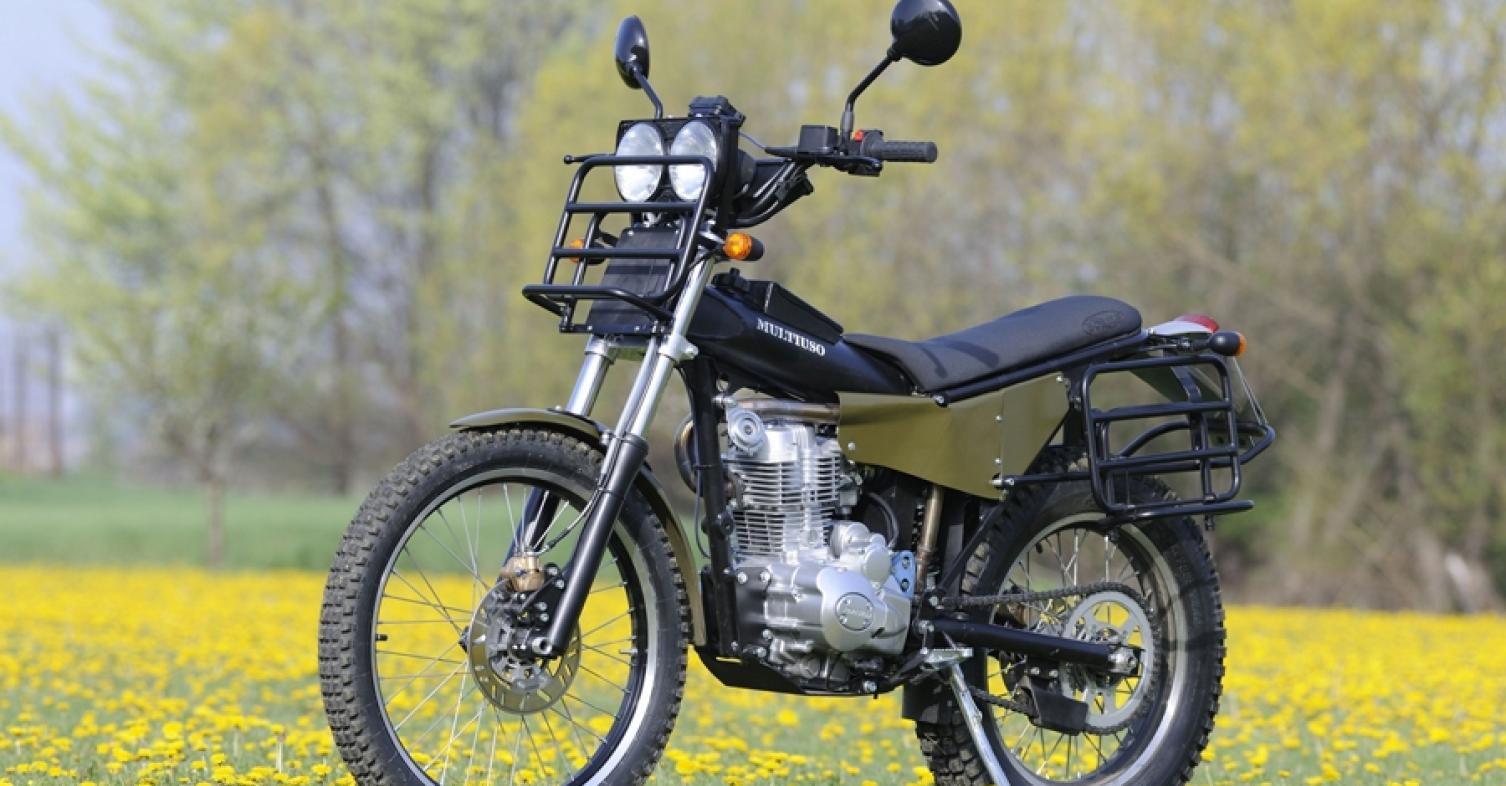
The Borile Multiuso is an unusual motorcycle not because it chases performance, but because it was never built around a conventional category. Hand-built in very small numbers, it became an instant classic by following a simple and unusually personal idea: a light motorcycle that Umberto Borile could use while searching for mushrooms in the Colli Euganei hills. That origin explains why the Multiuso feels less like a product designed for a market segment and more like a practical machine developed to solve one particular problem.
Its intended surroundings are equally broad. The Multiuso can be used on dirt roads, forest trails, gravel routes, paved city lanes and short stretches of asphalt, yet it is not a pure enduro or trial motorcycle. It is not quite a scrambler or an urban commuter either. The name reflects the central idea: a small, agile and versatile two-wheeler that puts low mass and straightforward operation ahead of outright speed.
A motorcycle shaped by its maker’s idea
Umberto Borile’s approach stands apart from the market research and target-audience planning normally associated with mass production. The Multiuso emerged from a direct need, then kept that directness in its construction. Its proportions and exposed structure recall older trial motorcycles, as well as the Italian tuboni mopeds of the 1980s. The result is immediately recognisable, although its appearance is unlikely to appeal to every rider.
The hand-built character is not hidden beneath layers of cosmetic finishing. Machining marks remain visible, the welds can look rougher than those on a mass-produced motorcycle and the equipment is restricted to what the concept needs. Those details could be judged as imperfections on a conventional model, but here they form part of the Multiuso’s identity. Even the headlights reflect the practical philosophy: they are removable and can also be used as hand torches.
Aluminium frame, 229cc engine and very little mass
The frame is made from aluminium and incorporates both the fuel tank and the airbox, helping keep the motorcycle compact in both weight and volume. The tank holds approximately five litres. Power comes from an air-cooled, single-cylinder, four-stroke 229cc engine manufactured by the Chinese company Zonsen. Its valves are operated through pushrods, and output is approximately 12 horsepower.
Those figures make the Multiuso’s priorities clear. The engine is not intended to deliver a high top speed or dramatic acceleration; its character is centred on low-rev torque and ease of use. The motorcycle’s full-of-fluids weight is only slightly above 90 kilograms, giving it the most important performance advantage in its intended environment: there is less mass to manage when the ground becomes difficult, and changes of direction require less effort.
At the rear, a twin-shock layout works with a cantilever-type system acting on gas shocks derived from downhill mountain-bike equipment. It is an unconventional arrangement that matches the rest of the design. Rather than adding complexity in pursuit of speed, the Multiuso uses a compact and distinctive solution consistent with its emphasis on lightness and function.
The 125cc version and the rare 230 R
The original 230cc Multiuso was later joined by a 125cc version. The smaller model retained the same design philosophy while opening the concept to a wider group of riders, including those able to ride with a Category B car licence. Its engine produced approximately nine horsepower, reinforcing the same focus on manageable performance rather than outright pace.
There were also extremely limited-production derivatives, including the Multiuso 230 R, which introduced frame improvements. The model’s low-volume, hand-built production helps explain why its price was relatively high for the engine capacity, while the small number sold made examples difficult to find. No mass-market logic shaped the Multiuso: its rarity was a consequence of the way it was made, not a strategy based on large-scale production.
That tension is what gives the Borile its lasting character. In a motorcycle industry increasingly defined by shared platforms, sophisticated electronics and tightly standardised manufacturing, the Multiuso presents a much more direct alternative. It is deliberately simple, technically unconventional and visually distinctive. Its strongest statement is not a headline power figure, but the decision to remain faithful to a clear practical idea from the first ride through its limited production life.
THE EVIDENCE BEHIND THE STORY
Sources
Spotted something that needs correcting? Contact the editorial team ↗