
BMW RS at 50: From Rennsport to the R 1300 RS
BMW Motorrad’s RS name has moved from racing motorcycles to a long-running sport-touring boxer lineage, now reaching 145 hp with the R 1300 RS.

4 min read
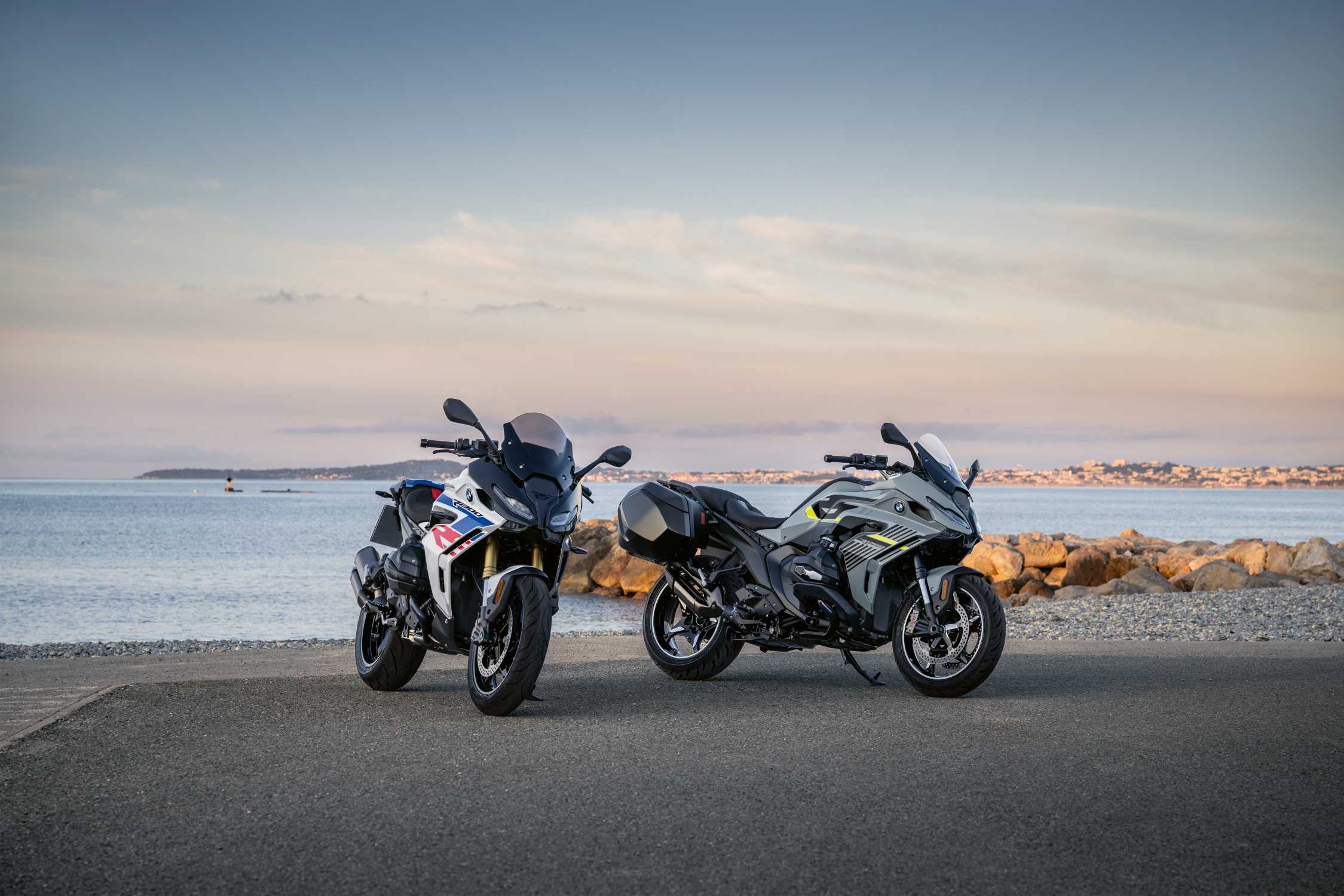
BMW Motorrad is marking 50 years of RS production and competition motorcycles. The name began with two meanings: on BMW competition motorcycles, RS stood for “Rennsport”, or racing; on production motorcycles, the 1976 R 100 RS established “Reise und Sport” — travel and sport — as the guiding idea.
The R 100 RS set the pattern
Presented at the 1976 IFMA trade fair, the R 100 RS used a 1,000 cc boxer engine and was the third BMW model equipped with that engine. Its frame-mounted full fairing had been developed in a wind tunnel, with the standard fairing described as aerodynamically optimised by Pininfarina. That combination made the RS concept clear: long-distance capability shaped by sport-oriented engineering.
BMW later produced the R 100 RS Classic 500 special edition in 1984, limited to 500 units. The model also returned at the 1986 IFMA after BMW had initially planned a 1,000-unit limited edition, and it remained in the permanent range until 1992.
From endurance records to boxer evolution
The RS name gained competition context at Nardò, Italy, on 29 and 30 October 1977. BMW used a modified R 100 RS for world-record attempts. After modifications by Helmut Dähne and engine expert Helmut Bucher, the motorcycle produced 84 hp, exceeded 220 km/h and used a 19-inch rear wheel with the lower fairing section removed. The BMW Motorrad team set five new world records over 10 km, 100 km, six hours, 12 hours and 24 hours.
The next major boxer step was the R 1100 RS, introduced in 1993 with a four-valve, air/oil-cooled engine, digital ignition and fuel injection. It also introduced BMW’s Telelever front-suspension system. The R 1150 RS followed in autumn 2001, using the RT’s engine and exhaust with the familiar R 1100 RS fairing.
The modern RS boxer line
Presented at Intermot in September 2014, the R 1200 RS represented the fifth generation of BMW’s boxer RS motorcycles. It produced 92 kW (125 hp) and 125 Nm, and introduced semi-active BMW Dynamic ESA suspension.
The R 1250 RS, unveiled at EICMA 2018 in Milan, brought a 1,254 cc boxer engine producing 100 kW (136 hp), together with BMW ShiftCam variable valve timing. The current R 1300 RS is described as the seventh generation of the boxer RS line. Its 1,300 cc boxer produces 107 kW (145 hp), while the stated top speed is 240 km/h.
The R 1300 RS is listed with three riding modes and engine drag torque control as standard. BMW also offers an automated shift assistant and Dynamic Suspension Adjustment as options. The evidence further describes it as the first production motorcycle with a telescopic fork featuring adjustable spring rate, a claim that merits careful checking before publication.
RS beyond the boxer range
BMW also applied the RS concept to its four-cylinder K series. The K 100 RS appeared at the 1983 Paris Motor Show with a half fairing designed around aerodynamic qualities. A four-valve K 100 RS arrived in 1989, combining K1 technology with the familiar RS fairing; the K 1100 RS followed in 1992 with an updated fairing and new lower section. In 1997, the K 1200 RS introduced a 1,172 cc engine producing 130 hp and a claimed top speed of 245 km/h.
Across five decades, the RS badge has therefore retained a consistent central idea while its technical expression has changed substantially: from the wind-tunnel-developed fairing and 1,000 cc boxer of the R 100 RS to the electronics, variable valve timing and 145 hp of the R 1300 RS. The racing meaning of “Rennsport” remains part of the name’s history; in production form, “Reise und Sport” became the more enduring definition.
THE EVIDENCE BEHIND THE STORY
Sources
Spotted something that needs correcting? Contact the editorial team ↗