
2027 Honda Fireblade puts WorldSBK development first
Honda’s 2027 CBR1000RR-R Fireblade brings a race-led redesign, 214.6 hp, revised aerodynamics and a 1 kg reduction in wet weight.

3 min read
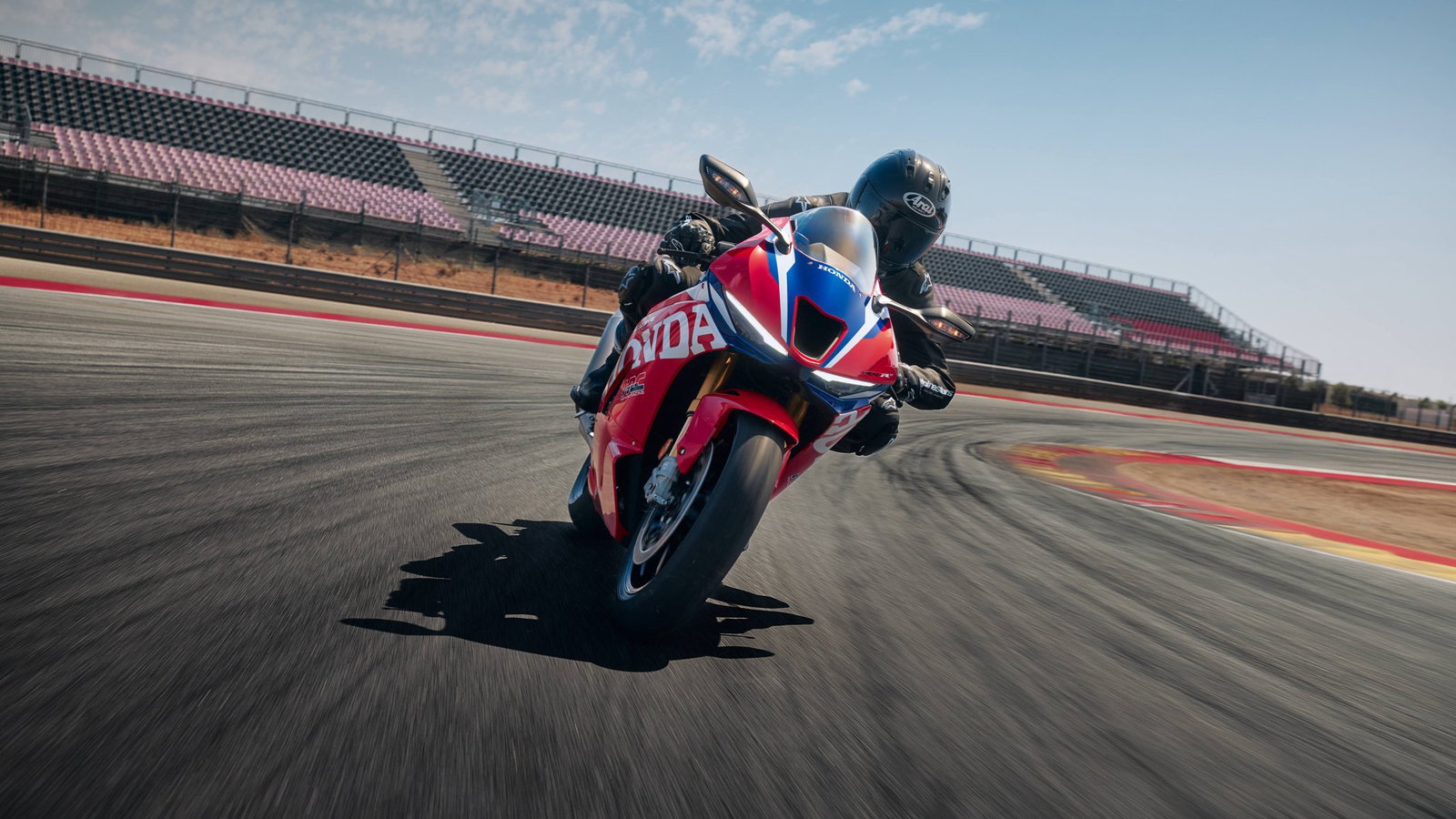
Honda is reversing the usual order of development for the 2027 CBR1000RR-R Fireblade. The demands of the World Superbike Championship came first, with the production motorcycle developed afterwards as the foundation for a racing machine. HRC’s racing know-how is central to the project, which revises the Fireblade’s chassis, aerodynamics, engine, transmission, mass and electronic controls rather than treating the road bike and race bike as separate programmes.
A chassis shaped around the circuit
The aluminium frame has a new stiffness distribution and revised steering geometry, while the swingarm is lighter. Honda has also reworked the aerodynamic package with HRC for greater effectiveness at high speed. The new fairing incorporates an aerodynamic element into its central section. Honda says it produces the same downforce as the previous design, which used external winglets, but achieves that result through a cleaner integrated arrangement.
The changes extend beyond the parts most visibly associated with racing. The LED headlight now includes daytime running lights, the fuel tank is made from titanium and the seat height has increased. Lighter wheels and 330 mm front discs are also part of the revised specification, although the conflicting descriptions of the associated suspension and brake components make it prudent to focus on the confirmed wheel and disc changes rather than assign disputed hardware to the motorcycle.
More power, less mass
The short-stroke 1,000 cc inline-four produces 214.6 hp (160 kW) and 114 Nm. Its two-stage variable-length air funnels are designed to preserve strong performance at high engine speeds while adding power through the middle of the rev range. A 2-Motor Throttle-by-Wire system manages throttle response during both acceleration and deceleration, including the engine-braking phase.
Honda has revised the camshaft timing, expanded the adjustment range available at the cam gears and updated the valve mechanism. Newly machined piston crowns and combustion chambers support a higher compression ratio. Magnesium engine covers, aluminium fasteners and lighter crankcases contribute to the reduction in mass. Taken together, the changes cut the Fireblade’s weight with fluids by 1 kg compared with the 2024 model.
The gearbox has also been reconsidered for racing use. Revised spacing between the mainshaft and countershaft creates more possibilities for selecting transmission ratios, while first gear is 5% taller. The exhaust system includes an Akrapovič muffler. These are practical changes for a motorcycle whose development brief is explicitly tied to circuit performance, but they also alter how the machine delivers its performance on the road.
Electronics with a race-led brief
A six-axis inertial measurement unit coordinates the electronic systems, including the Honda Electronic Steering Damper. The steering damper offers three adjustment levels. In front of the rider is a 5-inch colour TFT display, controlled through a four-way switch to provide access to the motorcycle’s settings.
Three preset riding modes provide initial settings for different conditions, while the rider can tailor the main performance parameters. Those include Power (P), Engine Brake (EB), Wheelie Control (WC) and Honda Selectable Torque Control (HSTC), which manages torque and traction. The package also includes an adjustable Start Mode intended to optimise launches and a Honda Smart Key for easier everyday operation.
The result is a Fireblade whose headline change is not simply a higher output figure. Honda has reorganised the project around WorldSBK requirements, then carried that logic into the production motorcycle through its frame, aero package, engine internals, transmission options, weight reduction and control systems. The 2027 model therefore presents a more direct link between Honda’s racing development and the machine offered to road riders.
THE EVIDENCE BEHIND THE STORY
Sources
Spotted something that needs correcting? Contact the editorial team ↗