
Why MotoGP cancelled its final Phillip Island race
A 60-minute visibility window for the medical helicopter could not be secured at Phillip Island and Melbourne.

2 min read
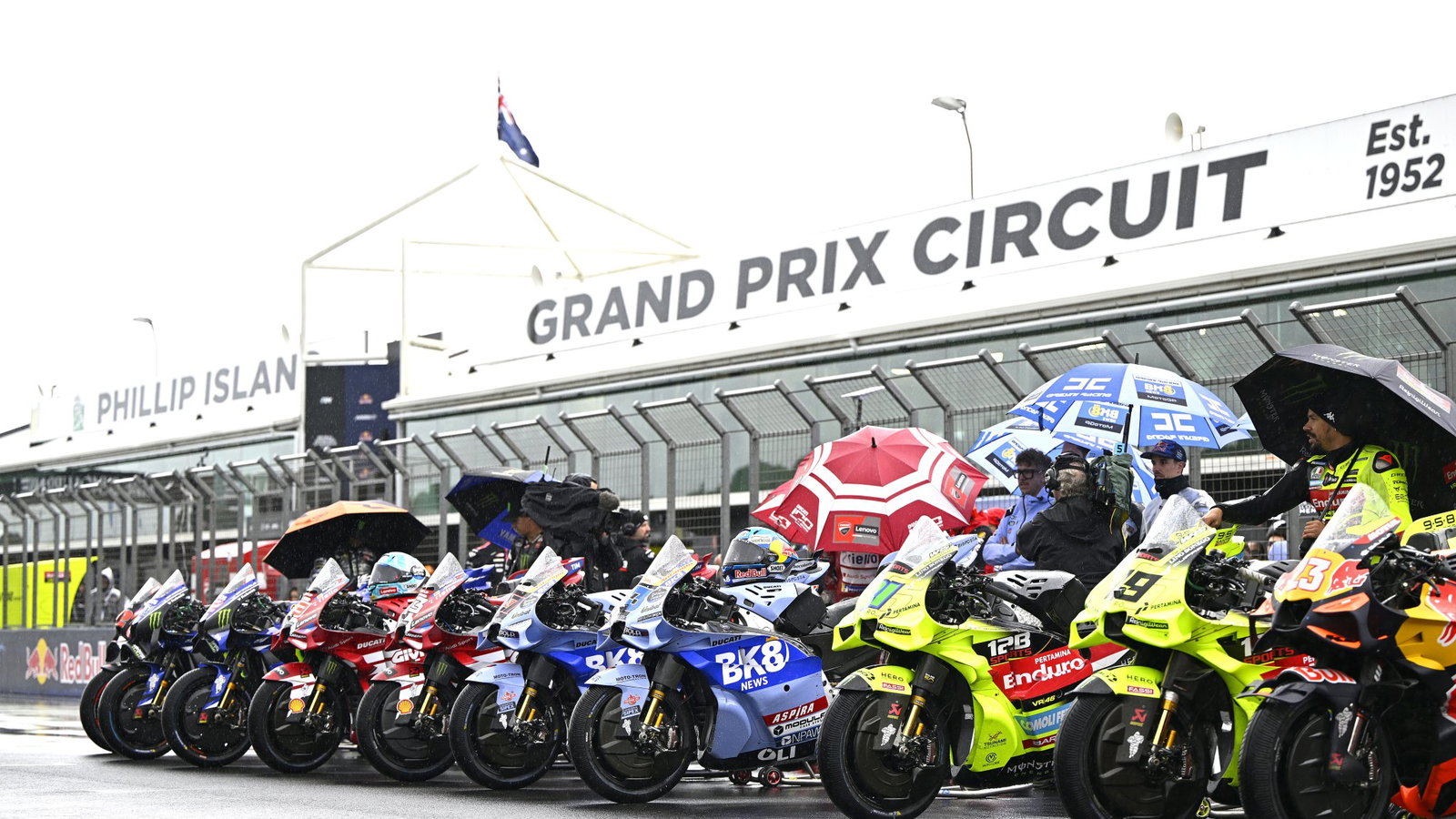
MotoGP’s final race at Phillip Island was cancelled after a delay of several hours because the required medical cover could not be secured. Warm Up, Moto2 and Moto3 had already been called off. The riders eventually went out for a parade lap, a symbolic farewell to a circuit that is expected to be replaced by the Parkland Circuit in Adelaide next year.
The 60-minute visibility window
MotoGP race director Graham Webb identified the medical helicopter as the decisive factor. Race control needed visibility to hold for around 60 minutes at both Phillip Island and Melbourne before the race could be approved. Melbourne matters because it is the location of the nearest hospital if a rider needs urgent transfer after an incident.
Weather was poor in both areas. Television pictures occasionally made the circuit look close to raceable, but that was not enough to clear the start. The helicopter had to remain able to operate for the full required period, rather than merely cover an opening lap or a short improvement over the circuit itself.
Why a road ambulance was not enough
At some other circuits, a road ambulance can provide the route to hospital. Phillip Island presents a different problem: the road journey to the hospital takes more than 45 minutes. The event therefore depends on air transport and, in turn, on visibility at both the circuit and Melbourne. Better conditions over Phillip Island alone could not make the race safe to run.
THE EVIDENCE BEHIND THE STORY
Sources
Spotted something that needs correcting? Contact the editorial team ↗