
Valentino Rossi on Bezzecchi, 2015 and the end of his MotoGP career
Rossi discussed Bezzecchi’s Qatar win, Bagnaia’s injury, the 2015 dispute with Marquez and his Ferrari test.

4 min read
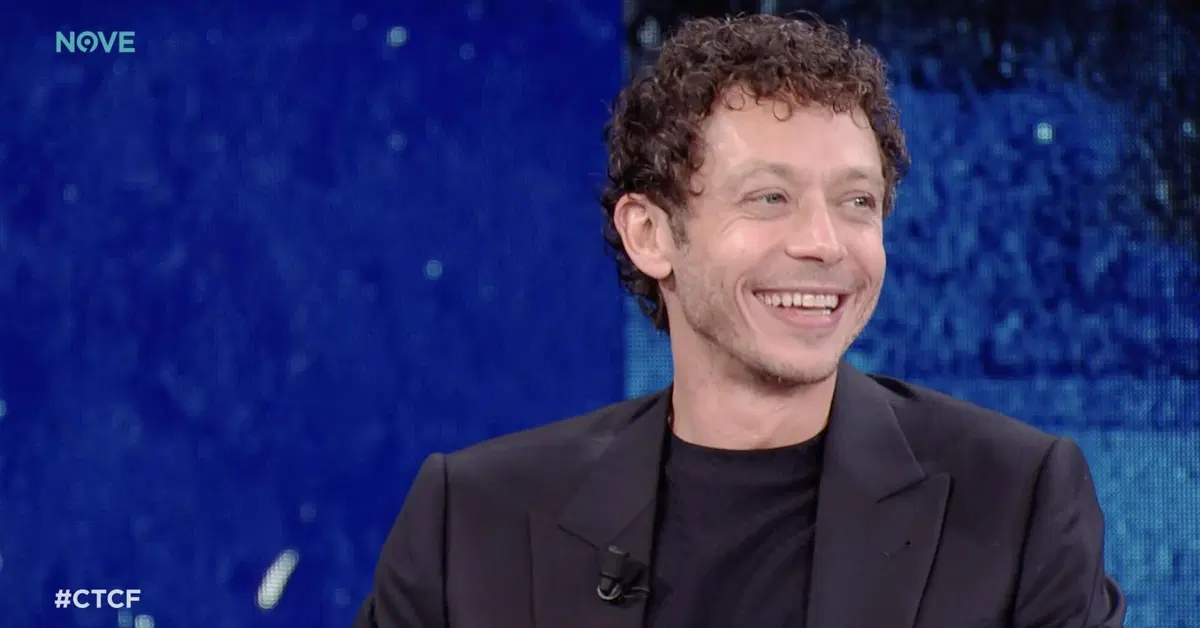
Valentino Rossi revisited defining moments from his career while also assessing two very different stories from the current MotoGP season during a television conversation with Fabio Fazio. The nine-time world champion appeared on Che Tempo Che Fa to present his autobiography, “La mia storia”, written with Giorgio Terruzzi and scheduled for release on Tuesday, 10 November 2026. The discussion covered Marco Bezzecchi’s Qatar victory, Francesco Bagnaia’s injury, the unresolved emotions surrounding 2015, Rossi’s retirement from MotoGP and his first Ferrari test.
Bezzecchi had the pace; Bagnaia faced surgery
Marco Bezzecchi’s victory in Qatar led Rossi to assess the progress of a rider he knows through his academy. His judgment separated outright speed from the execution of a championship campaign. Rossi said Bezzecchi possessed the pace required to fight for the World Championship, but too many mistakes had undermined that opportunity. As a result, he considered it likely that Bezzecchi would not ultimately take the title, despite having the performance level needed to challenge for it.
The same Qatar weekend also brought a serious setback for Francesco Bagnaia. Rossi said Bagnaia was doing well, while also explaining that he was due to undergo surgery after suffering two fractures in one foot during the Sprint. He did not present the injury as minor: two fractures in a foot are plainly a significant problem. At the same time, Rossi’s assessment was that the outcome could have been worse when measured against the force of the crash.
The 2015 episode still carries the same emotional weight
The conversation returned to 2015, the season that remains the most painful episode in Rossi’s recollection. He repeated his interpretation of Marc Marquez’s role that year, maintaining that Marquez was not fighting to win the championship for himself but was instead focused on preventing Rossi from taking it. Rossi said the episode still angers him and still “burns”, even after more than ten years have passed.
More revealingly, Rossi linked his present reaction to the night in Valencia. When he thinks about the events of 2015, he said his emotional state is essentially the same as it was then. He acknowledged that it would be healthier to concentrate on the championships he won rather than the one he lost, but added that sport often makes defeat hurt more deeply than victory satisfies. That balance is also reflected in the autobiography: Rossi described it as containing the enjoyable and funny parts of his life alongside the difficult experiences.
Laguna Seca, Barcelona and refusing to settle
Among the victories he remembered, Rossi highlighted Laguna Seca in 2008 and Barcelona in 2009. At the 2009 Catalan Grand Prix he passed Jorge Lorenzo at the final corner, at a place generally regarded as an almost impossible overtaking opportunity. Rossi explained the move through the mindset of a rider running second with only one corner left and unwilling to accept defeat. The decision could have produced either a remarkable move or a serious mistake.
The crucial factor, in his account, was that he refused to give up. He knew the conventional overtaking points came earlier, yet believed a small opportunity remained if every element of the attempt worked. He also drew a clear line around aggressive racing: the pursuit of victory does not remove the obligation to respect the other rider.
Retirement and an informal Ferrari welcome
Looking back at his departure from MotoGP, Rossi admitted that he probably should have stopped somewhat earlier. He carried on because racing still gave him enormous pleasure. He recalled speaking with Michael Schumacher and with other riders, including Troy Bayliss, and seeing how some former competitors were left with regrets after ending their careers. That influenced his decision to keep racing for as long as he genuinely could. Once he crossed the finish line for the final time, however, Rossi felt the chapter had closed. He said he never again considered returning or riding a MotoGP bike.
A separate story concerned his first Ferrari test in 2004 at Fiorano. To keep the test secret, Rossi and Uccio Salucci stayed inside the circuit, in the house where Enzo Ferrari had kept his office. The following morning they went downstairs to open the door for Jean Todt wearing flip-flops, swimming trunks and T-shirts. Todt jokingly asked whether there was a swimming pool. Rossi recalled that this first impression, in his own humorous calculation, reduced his chances of joining Ferrari by at least half.
THE EVIDENCE BEHIND THE STORY
Sources
Spotted something that needs correcting? Contact the editorial team