
Marc Marquez: The adaptation putting a 10th title within reach
A changed riding style after shoulder surgery has put Marc Marquez in position to fight for the championship mathematically at Qatar.

2 min read
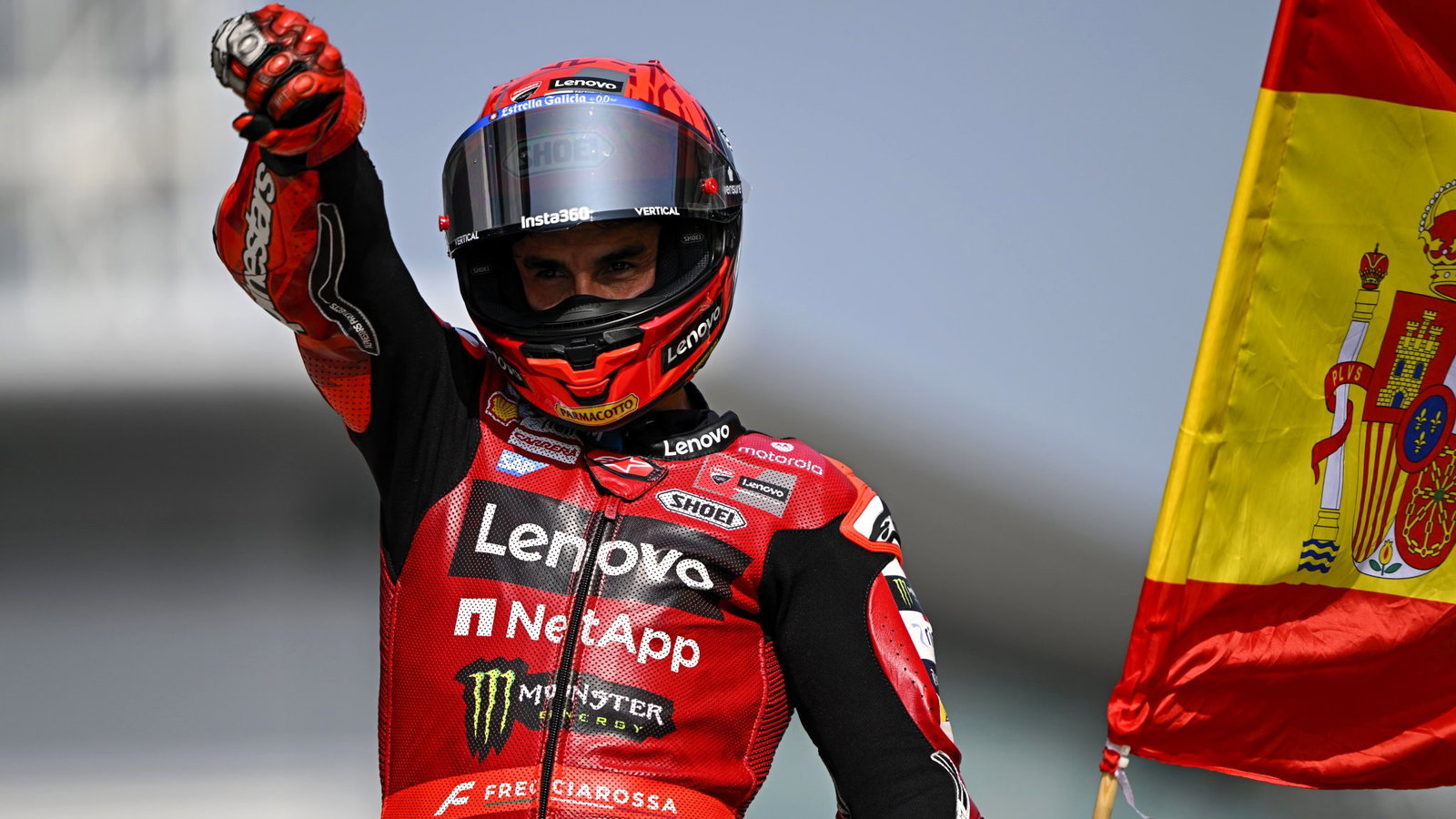
Marc Marquez now has a first opportunity to secure a tenth world title, after his Sepang victory increased his World Championship advantage to 44 points. The title can be decided mathematically at Qatar, with Portimao and Valencia still to come.
The turnaround began from a difficult position. When Marquez returned from his latest shoulder surgery at Mugello, he was 102 points behind Marco Bezzecchi, who led the championship at the time. Since then, Marquez has taken seven Grand Prix wins. Bezzecchi has won once over the same period, while Jorge Martin has not won a Grand Prix.
Marquez says the key was adaptation rather than rehabilitation. He has reshaped the way he rides compared with last year: left-hand corners now give him less control and less performance, while he feels stronger through right-handers. Even so, his overall performance remains better in left corners. Alex Marquez can identify the difference in the data, and Marc also dealt with radial-nerve problems in his shoulder earlier in the season.
A selective ride-height strategy
At Sepang, Marquez kept his use of the ride-height device to a minimum. He activated it early to prepare the bike for the corner exit, rather than using it during acceleration. That approach came during a weekend in which he attacked from FP1, giving the team a better opportunity to establish the bike’s setup.
Marquez sees Sepang as particularly favourable to Ducati because its engine helps, the bike performs well in stop-and-go sections and the very low grip through the flowing corners limits how much corner speed can be used. The victory was Ducati’s tenth in Malaysian MotoGP and its fifth in a row at the venue. Pedro Acosta finished second for KTM and Alex Marquez third. Alex also said he will undergo shoulder surgery after returning to Spain.
THE EVIDENCE BEHIND THE STORY
Sources
Spotted something that needs correcting? Contact the editorial team ↗