
Taiwan puts its full two-wheel ecosystem on display at EICMA 2026
Around 130 Taiwanese companies are exhibiting in Milan, while a new collective showcase brings vehicles, electronics, components and mobility technology together.

4 min read
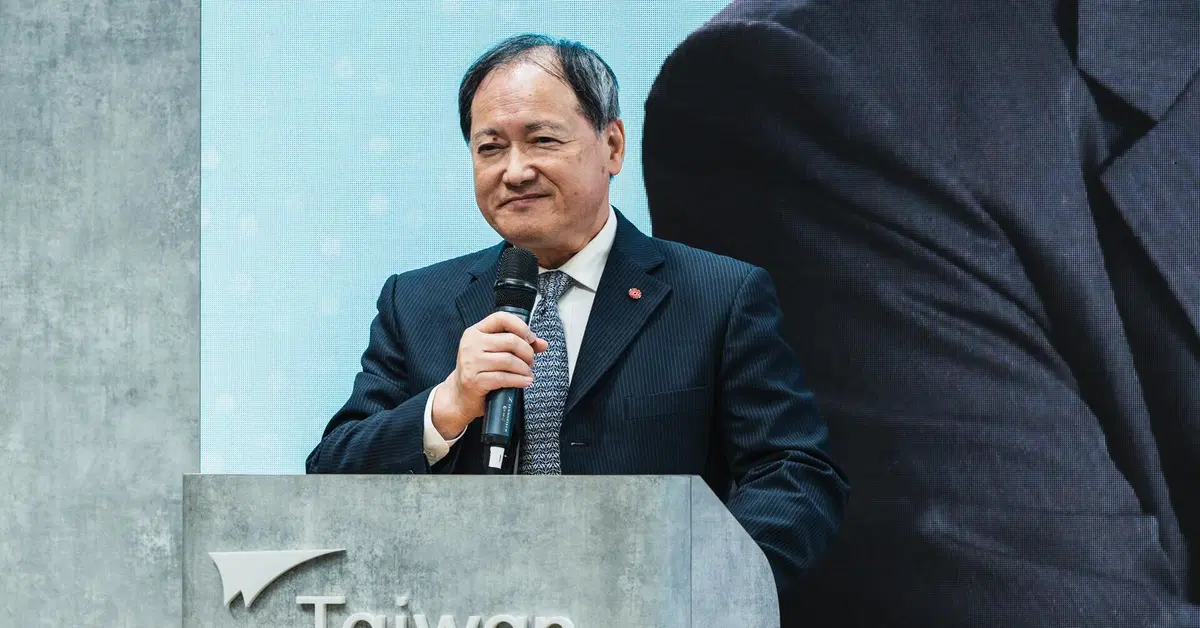
Taiwan is using EICMA 2026 to present itself as more than a major supplier of electronics and motorcycle components. Around 130 Taiwanese companies are taking part in the Milan exhibition, making Taiwan the third country by exhibitor numbers. Their stands remain spread across several halls, but the country has also created a shared focal point this year: the Taiwan Flagship Showcase, promoted by TAITRA, the Taiwan External Trade Development Council.
The collective display is designed to make the breadth of Taiwan’s two-wheel industry easier to understand. Instead of asking visitors to piece together the country’s capabilities from separate stands, it gathers companies, technical expertise and commercial proposals in one location. Simon Wang, TAITRA’s CEO and president, says this is the first time the showcase has been organised at this scale and with this format.
Ten companies, from complete vehicles to connected equipment
Ten companies form the core of the Taiwan Flagship Showcase: SYM, KYMCO, AEONTEK, JARVISH, VIGORPLUS, Orange Electronic, BESV, ADATA Power, MOS and KENDA. Together, they cover a much wider range than a conventional motorcycle manufacturer display. The group includes complete vehicles, electric mobility, connected helmets, tyre-monitoring systems, cameras, components and accessories.
The participating companies also illustrate how the different layers of the industry fit together. SYM and KYMCO bring the complete-vehicle side of the Taiwanese sector, while AEONTEK represents mobility platforms. JARVISH and VIGORPLUS are associated with onboard technology and safety. Orange Electronic focuses on tyre monitoring, BESV and ADATA Power on electric mobility, MOS on accessories, and KENDA on tyres.
That spread matters because Taiwan’s role in the two-wheel market is not limited to one product category. It combines established vehicle brands with businesses working on the systems, electronics and supporting hardware that surround a modern motorcycle or scooter. The showcase therefore works as an overview of an industrial network rather than simply as a collection of unrelated products.
A manufacturing partner as well as a supplier
Wang describes Taiwan’s competitive industrial base as extending across two-wheel products, machine tools, industrial machinery, bicycles, fasteners such as screws and bolts, and automotive components. He says Taiwan ranks among the world’s ten largest producers in some component segments. The point is not that Taiwan leads every part of the global industry, but that its manufacturing capacity is substantial in specific areas of the component business.
He also presents Taiwan as an exception to a familiar industrial pattern. A country that is strong in automotive components often has its own complete automotive industry, including factories and assembly lines. Taiwan does not have that kind of complete automotive production chain. Its strength instead lies in making components and parts for international manufacturers, while retaining a broad network of industrial and technology companies.
That structure supports two types of cooperation. Through OEM arrangements, Taiwanese companies can manufacture products or components for an international brand. Through ODM work, they can also help develop solutions intended for a customer’s requirements. Wang says Taiwanese businesses already work with major international companies, including several Italian manufacturers, while companies such as SYM and KYMCO show that Taiwan also has the ability to build and manage important proprietary brands. AEONTEK is another example of the country’s industrial depth.
For Italian and other European manufacturers, Wang sees a potential division of strengths rather than a simple supplier relationship. European companies bring recognised brands, design and a long motorcycle tradition. Taiwanese partners can add production capacity, component know-how and technology, particularly in electronics. The intended result is cooperation in which each side contributes a different part of the final product or development process.
Why electronics may be the biggest surprise
Asked where Taiwan could most surprise Italian motorcycle brands, Wang points first to electronics and technology. He also highlights the wider industrial ecosystem itself. In his view, Taiwan is often reduced to a few familiar sectors, while the companies behind that reputation can develop products, technologies and solutions for several markets.
This is the central message behind the EICMA initiative. The Taiwan Flagship Showcase does not present the country solely as a source of individual parts, nor solely as a group of finished-vehicle manufacturers. It places complete vehicles, electric systems, safety technology, connected equipment, monitoring products, tyres and accessories in the same industrial picture.
For visitors, the practical value is the chance to see potential partners at different stages of the two-wheel supply chain in one place. For Taiwan, the objective is to turn that visibility into new commercial relationships and to show that its companies can participate not only in production, but also in product development and technology. At EICMA 2026, the country is presenting its motorcycle industry as a connected ecosystem with ambitions that extend beyond component supply.
THE EVIDENCE BEHIND THE STORY
Sources
Spotted something that needs correcting? Contact the editorial team