
Isle of Man TT Sidecars return in 2027 with new rules
The class will move beyond its 600cc four-cylinder formula, restrict aero development and run two-lap races in 2027.

3 min read
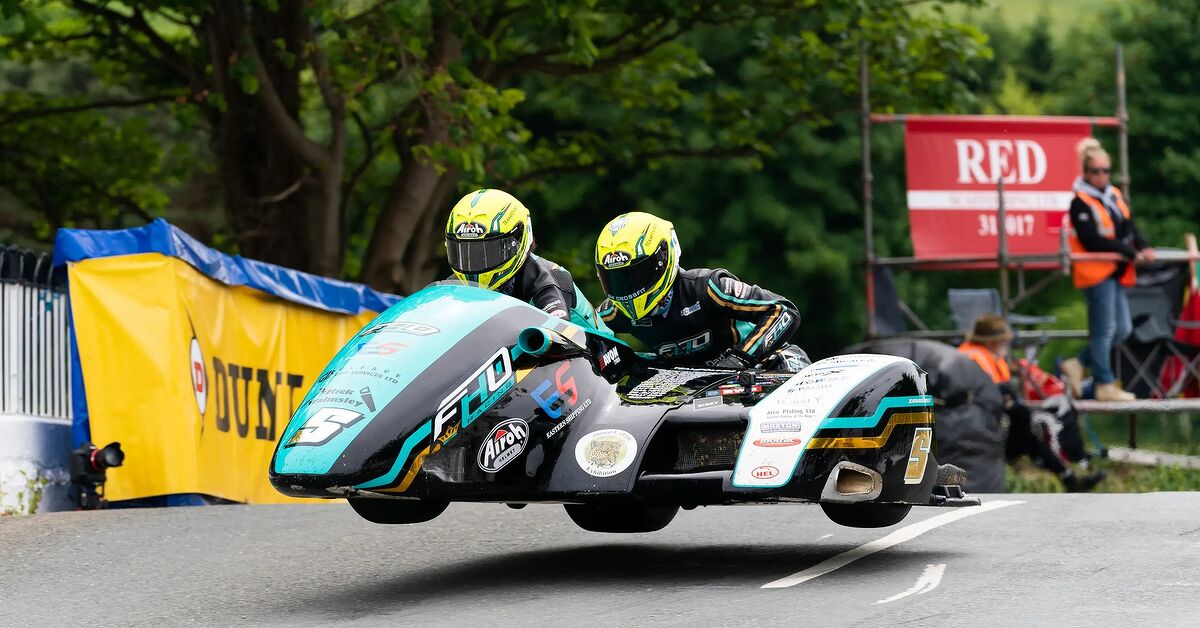
The Isle of Man TT Sidecar class is scheduled to return in 2027 after being suspended for the 2026 TT, but it will do so under a substantially revised technical package. The traditional 600cc four-cylinder formula will be replaced by a production-derived framework, alongside tighter controls on aerodynamics, chassis work and entrant fitness.
The suspension followed two separate qualifying crashes that seriously injured competitors. Brothers Ryan and Callum Crowe crashed at Crosby Leap on May 27 and were hospitalized. The incident came one day after Maria Costello and passenger Shaun Parker crashed at Brandish. Costello, who was marking her 30th year competing on the Mountain Course, later reported that she was “currently paralyzed” from the T5/T6 vertebrae down and had suffered injuries including broken back, arm, nose and eye socket.
Organizers launched the TT Sidecar Sustainability Review in June and accepted written submissions through the end of the month. The review found strong support for keeping Sidecars at the TT, but also concluded that the existing rules had to change to improve safety while maintaining competition. The outcome is a three-year commitment covering the 2027, 2028 and 2029 events, with two Sidecar races at each event.
Production-derived engines and tighter aero rules
The new framework will use engines derived from production motorcycles and aligned with British Sportbike regulations. The named modern middleweight platforms are the Yamaha R7, Aprilia RS660 and Kawasaki Ninja 650. Every outfit will use a common Mectronik ECU, while a Balance of Performance system is intended to narrow the differences between eligible engine configurations. Gary Thompson, the Clerk of the Course, said controlled electronics and BoP could also reduce the advantage created by heavy spending on engine development.
Existing chassis will remain eligible, so teams will not be forced into a single construction. However, the rules covering construction, modification, repair and inspection will become stricter. Bodywork provisions around floors, undertrays and wheel arches will be clarified. Separate wings, aerofoils, fins and spoilers will be prohibited, limiting aerodynamic development and aiming to improve access for rescue crews.
The 2027 races will run over two laps rather than three as a conservative first-year format. The distances for 2028 and 2029 will be reviewed. Entry standards will put greater emphasis on recent competitive activity and medical fitness. Paul Phillips said the class needed a future beyond simply returning to its previous formula, while the three-year commitment gives competitors and constructors the certainty to invest in the new direction.
THE EVIDENCE BEHIND THE STORY
Sources
Spotted something that needs correcting? Contact the editorial team ↗