
Honda’s brochures, four visions of motorcycle advertising
From the stripped-back C90 to the theatrical CB750K, Honda’s old brochures relied on images to create desire.

2 min read
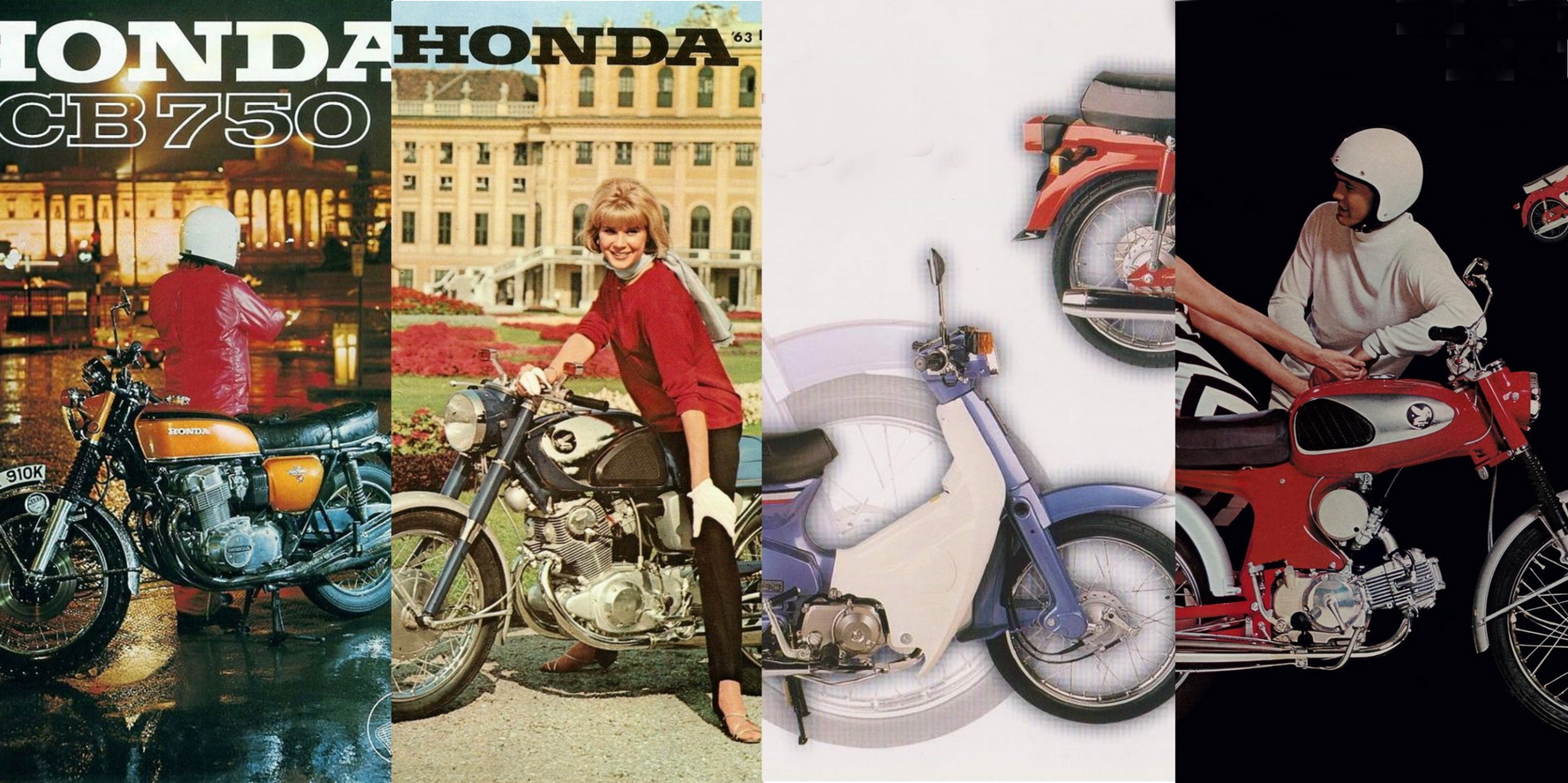
Four old Honda brochures show how far motorcycle advertising could move beyond specifications and slogans. MOTORBIKE’s “Prospectus Stories” series examines the models and the visual ideas behind these publications; this instalment is written by Vasilis Antzoulatos.
Minimalism, then drama
The C90 appears in a 1960s brochure with no headline and no slogan. The model is left to speak through photographs, shown in the two colours identified there: metallic red and metallic blue. Two faint step-through motorcycles sit in the background, apparently serving the layout more than the message. The sparse treatment did not prevent the C90 from becoming a major commercial success.
The CB750K receives a far more theatrical treatment from Honda Britain. It is shown at night in torrential rain, with the location described tentatively as Trafalgar Square in London. The rider faces away from the camera and stands in the middle of the frame in a light red jacket. Rather than offering a straightforward display of the motorcycle, the image builds its appeal around atmosphere—and around visual choices that the article criticises.
The CB77’s grand setting and the S90’s pop energy
The 1963 Honda CB77 Super Hawk uses a more traditional kind of visual theatre. Its black finish and chrome details are set against a garden with red flowers, while a palace appears in the distance. The grand surroundings lend the machine an aristocratic tone, despite its popular small-to-medium-displacement identity. The brochure describes it with a 305 cc inline twin-cylinder engine, 28 horsepower and a top speed of 165+ km/h.
The S90 brochure shifts to a livelier, almost pop-art composition. Four women in short black-and-white dresses surround a motorcyclist wearing a white sweater and white helmet. The image leaves unresolved whether they are four different people or one woman shown in different poses. The S90 was produced from 1964 to 1969, delivered 8 horsepower and reached 100 km/h. It is also described as particularly popular in the United States among students and motorcyclists seeking a small motorcycle that was easy, practical and reliable.
These brochures do not share one formula. The C90 keeps the message almost silent; the CB750K uses rain and city drama; the CB77 borrows status from its setting; and the S90 depends on movement and pop imagery. Their common idea is simpler: a carefully chosen photograph could sometimes sell the motorcycle without a long list of specifications.
THE EVIDENCE BEHIND THE STORY
Sources
Spotted something that needs correcting? Contact the editorial team ↗