
Honda: Recall numbers alone cannot define reliability
Honda explains why recall totals need context and directs owners to VIN-based checks for possible open recalls.

2 min read
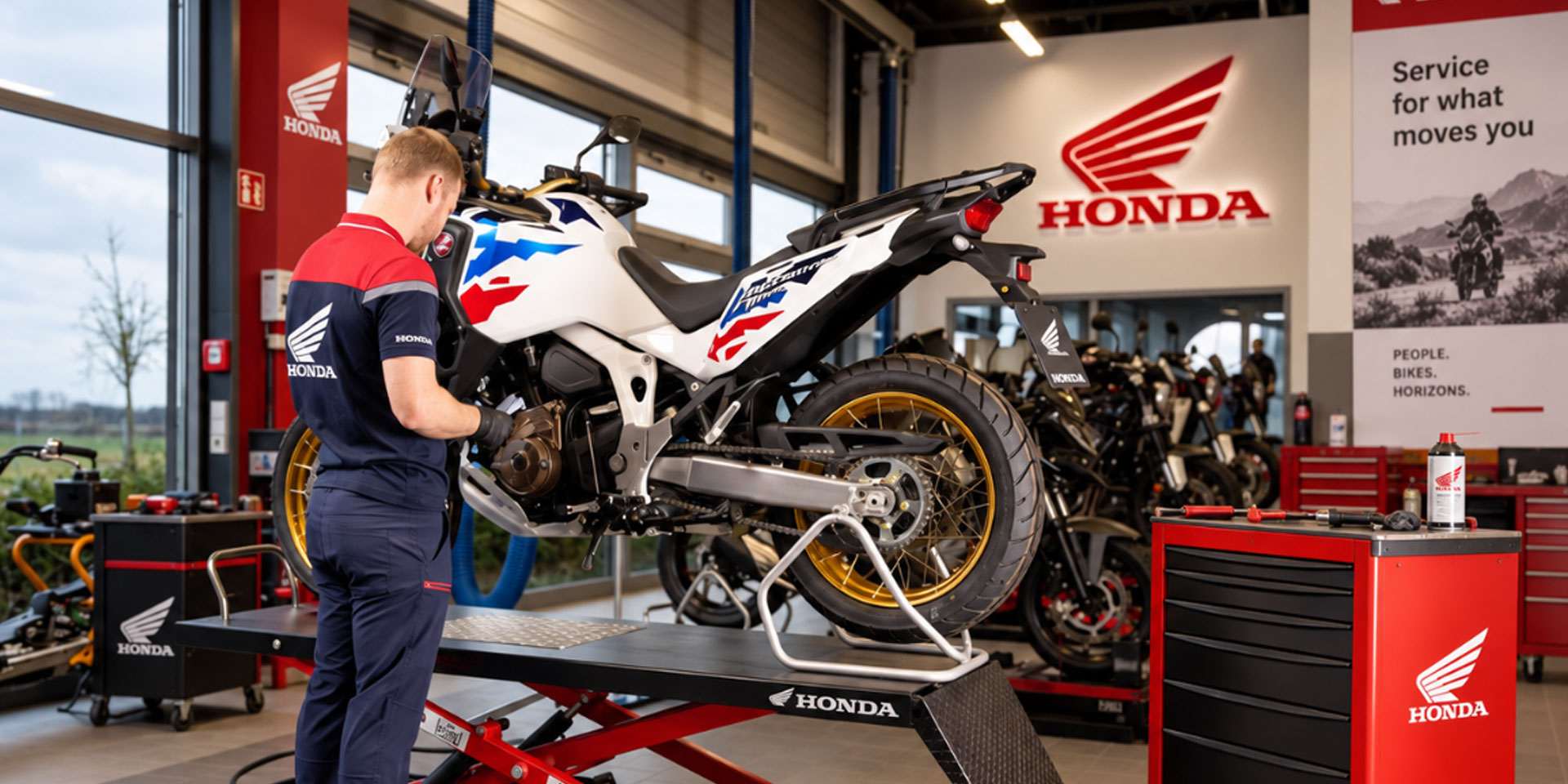
Honda has addressed how recalls should be interpreted in the Greek market. The company argues that even a high number of recalls cannot, by itself, establish the reliability of a motorcycle or a brand.
Honda says reliability is built through quality, technical expertise, attention to detail and strict checks throughout development and production. It presents a recall as the process used when an issue has been identified: the response may involve an inspection, preventive action or a technical intervention. In the company’s view, informing riders and taking the necessary measures are part of a manufacturer’s responsibility.
Honda also warns against drawing the opposite conclusion. The absence of recalls, or a lower total, does not automatically prove that no problems exist. The number recorded is influenced by how manufacturers and the relevant authorities identify, assess and address potential issues. That makes a simple comparison of recall totals between brands difficult to interpret.
What owners can check
For riders, the more useful question concerns the individual motorcycle. Honda points to the public page maintained by Greece’s Ministry of Infrastructure and Transport for vehicle and component safety recalls in the country, where entries can be searched by manufacturer.
Honda’s Recalls and Updates page also allows a check using the motorcycle’s vehicle identification number, or VIN. Honda gives the NX500 and NT1100 as examples, but the principle is broader: the owner checks whether an open recall applies to that particular motorcycle instead of relying only on a brand-wide total.
Honda’s wider point is that trust depends not only on product quality but also on how a company responds when action is needed. For riders, staying informed and checking the VIN are the practical steps when an open recall may concern their motorcycle.
THE EVIDENCE BEHIND THE STORY
Sources
Spotted something that needs correcting? Contact the editorial team ↗