
Five very different ideas that stood out at EICMA 2026
Benda’s production-ready Vinster models, Honda’s V3 supersport, Yamaha’s smaller Ténéré, Kawasaki’s Corleo and Benelli’s triple point to different futures.

5 min read
EICMA 2026 showed that a concept can mean several very different things. The Milan exhibition included motorcycles already presented as production models, technical proposals exploring new directions and a hydrogen-powered vehicle that leaves the conventional two-wheel layout behind altogether. These five ideas stood out not because they share one clear destination, but because each illustrates a different way manufacturers are thinking about the next generation of motorcycles and personal transport.
Benda Vinster 700 and Vinster X 700
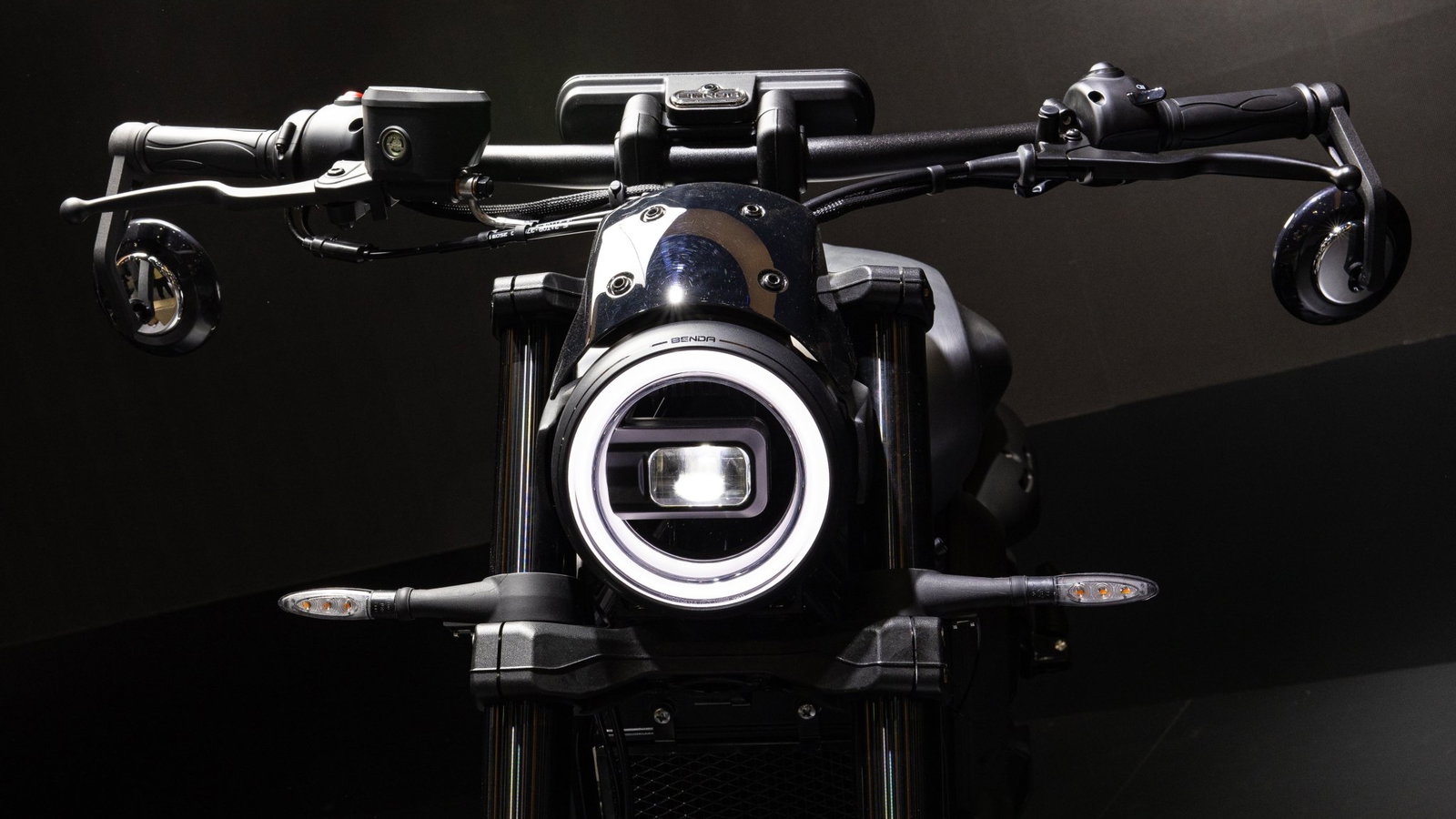
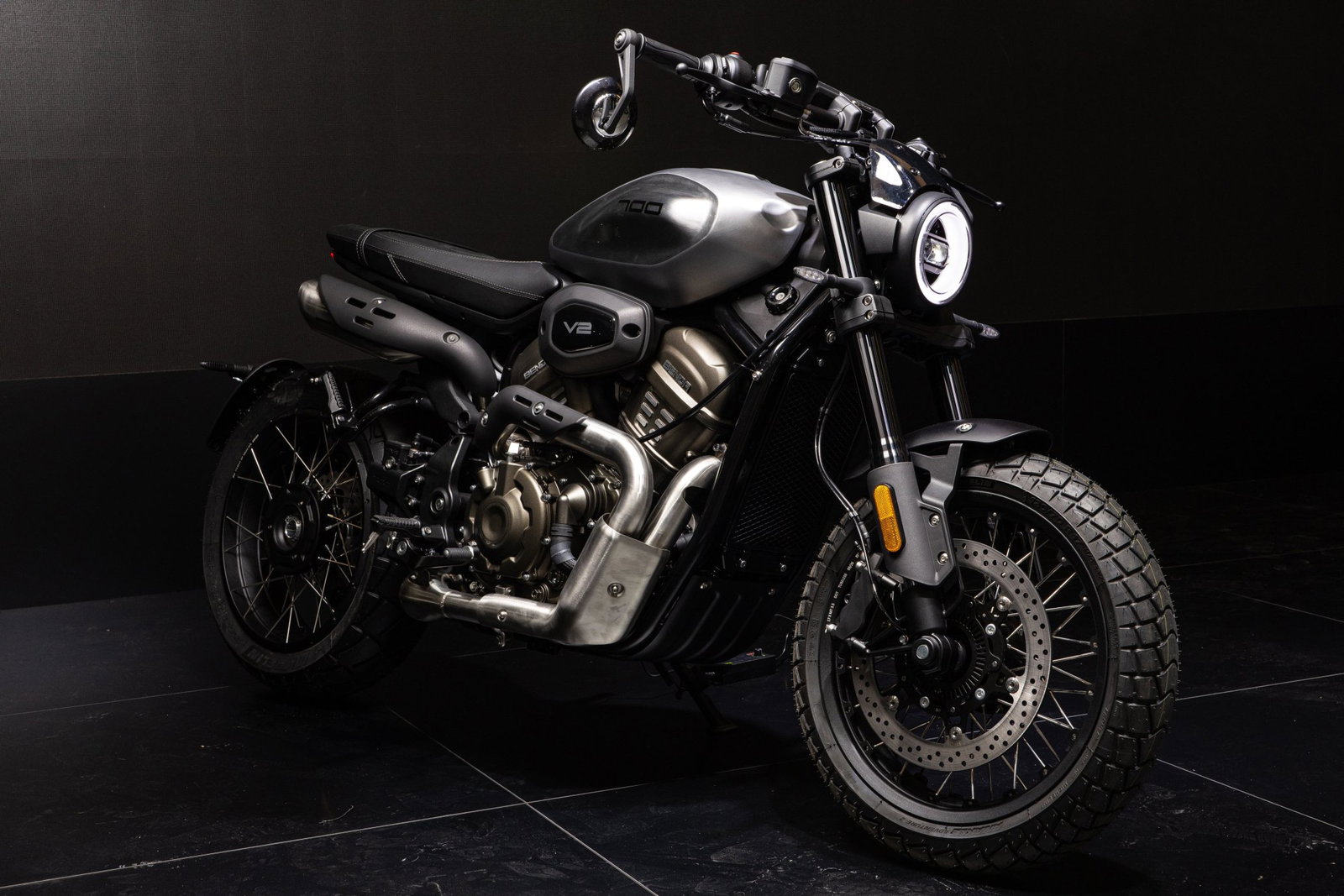
The two Bendas are the closest to becoming familiar road-going products. Although they began as a design-led project, Benda formally unveiled both as production models after their EICMA appearance. The Vinster 700 follows a straightforward roadster formula, while the Vinster X 700 applies the same basic idea to a more adventure-touring-oriented package.
Both motorcycles use Benda’s 691.6cc liquid-cooled V-twin, quoted at 72bhp at 9,000rpm and 50lb-ft of torque at 6,500rpm. The engine is mounted in a double-cradle frame, with an aluminium swingarm and conventional suspension at either end. The distinction between the models is therefore more substantial than a change of bodywork. The standard Vinster has a 17-inch front wheel and an 830mm seat height; the X moves to a 19-inch front wheel and an 865mm seat. Using one engine as the basis for two different types of motorcycle gives Benda a relatively direct way to broaden its range without creating a separate engine programme for every segment.
Honda VIIIR V3 Supersport
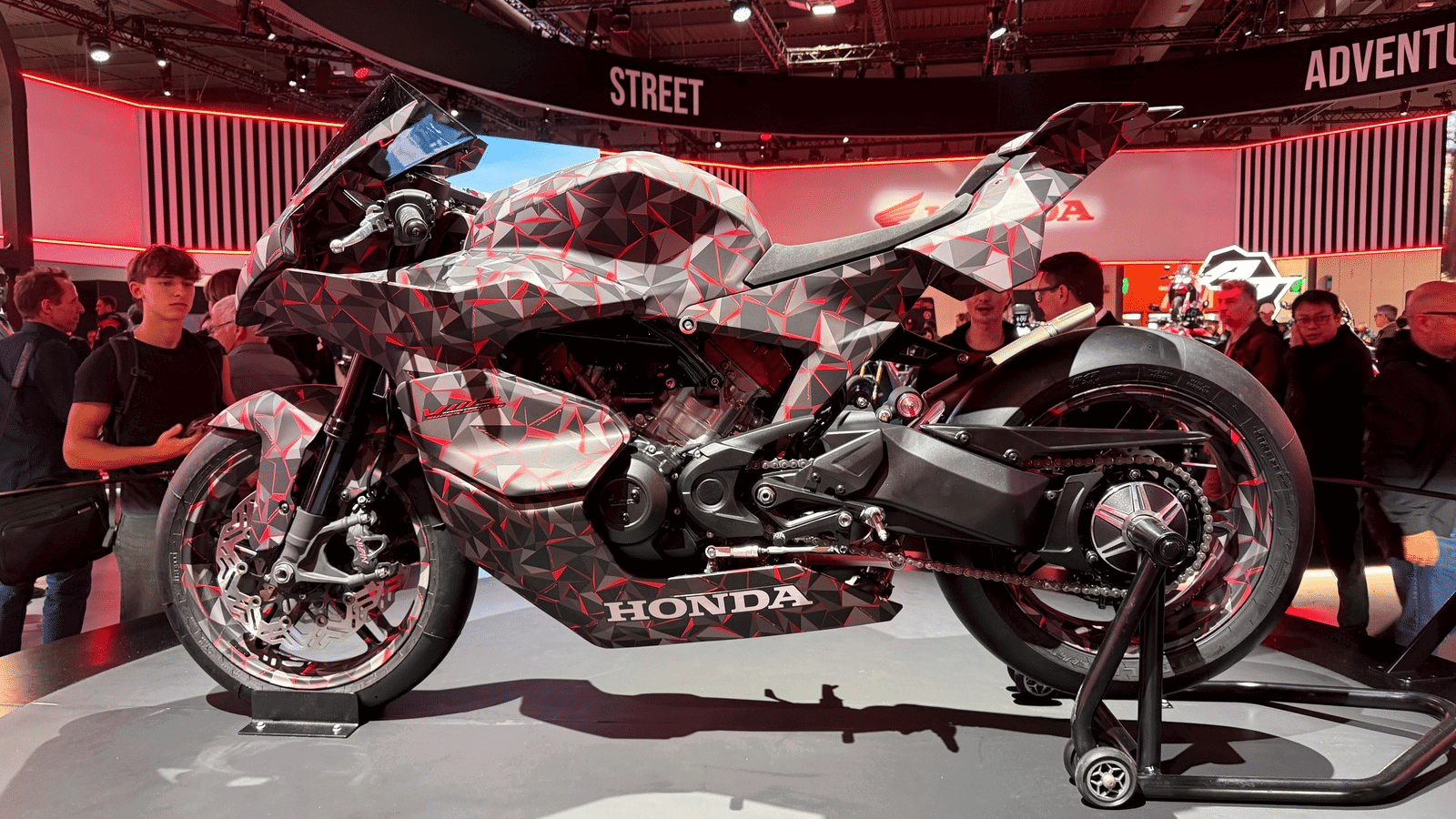
Honda used the VIIIR to show how its V3 architecture might be packaged in a sports motorcycle. The machine is a supersport concept built around a liquid-cooled V3 of approximately 900cc, related to the engine being developed for the V3R900 E-Compressor. The key difference is expected to be the induction system: the VIIIR is said to use a naturally aspirated configuration rather than the electronically controlled compressor arrangement associated with the V3R900.
That would give Honda another technical route in a middleweight sportsbike sector dominated by familiar four-cylinder and parallel-twin layouts. Honda continues to campaign the CBR600RR in World Supersport, while the Ducati Panigale V2, Yamaha R9 and Kawasaki ZX-6R underline the level of competition in the category. The VIIIR could eventually provide the basis for a road motorcycle with racing potential, but a concept display is not a production commitment. There is no guarantee that a future road bike would appear in exactly this form, or that this particular proposal will move beyond the show floor.
Yamaha Ténéré 4 Concept
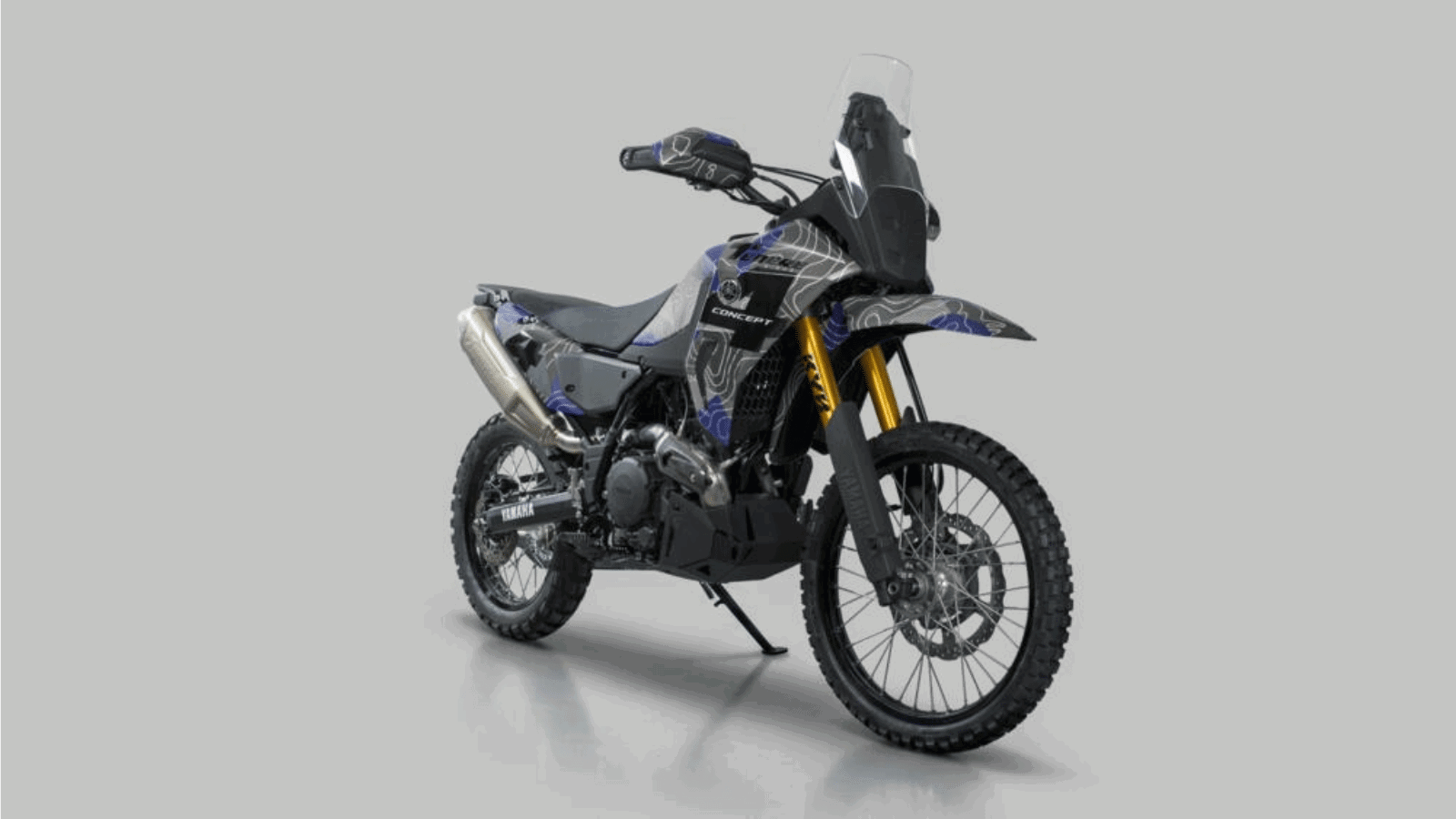
Yamaha is exploring a smaller entry point for the Ténéré family. The Ténéré 4 Concept was developed in response to customer demand and is intended as a lightweight, A2-compliant adventure motorcycle. Its design retains the family’s off-road emphasis while presenting it in a more compact and accessible form, with a slim profile, a low fuel-tank silhouette and rally-inspired bodywork.
Yamaha has not confirmed the engine capacity or final performance figures. The exhibition motorcycle is equipped with KYB suspension, 21-inch front and 18-inch rear spoked wheels, Michelin Anakee Wild tyres and a titanium Akrapovič exhaust. Those parts may not all reach a production version, but they make the intended direction clear. A smaller Ténéré would enter an already busy part of the adventure market, alongside motorcycles such as the Royal Enfield Himalayan 450, KTM 390 Adventure and Honda NX500. Its appeal would depend on combining manageable size with genuine off-road ability and keeping the weight under control.
Kawasaki Corleo
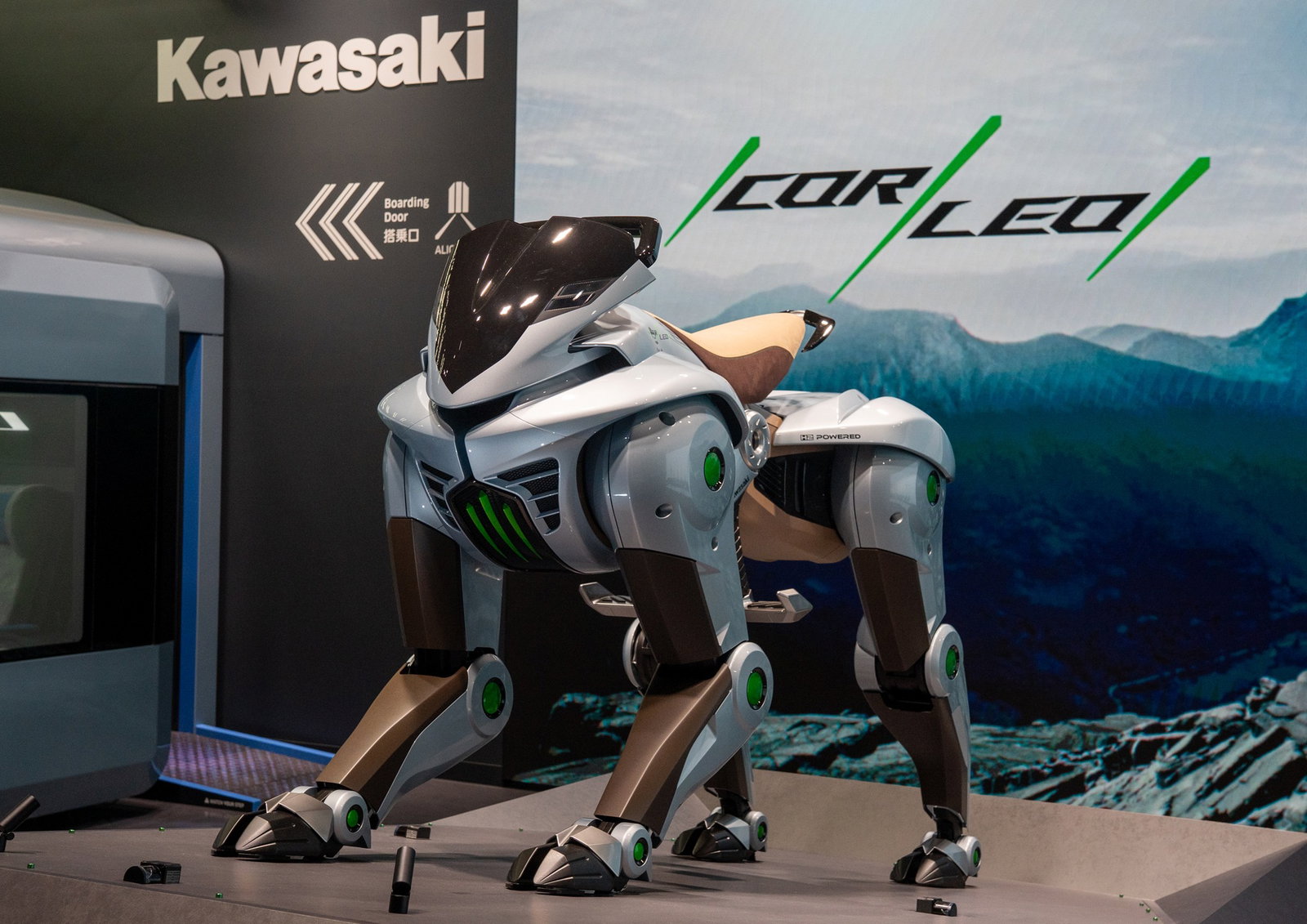
Kawasaki’s Corleo is the most radical proposal in the group and stretches the usual definition of a motorcycle. It has no two-wheel chassis: instead, it uses four independent robotic legs and hydrogen power. The rider sits astride the machine and influences its movement by shifting body position, creating a control philosophy closer to riding an animal than steering a conventional motorcycle.
Corleo was shown as a full-scale mock-up and forms part of Kawasaki Heavy Industries’ broader work in robotics and alternative transport. Its legs are designed to respond to changes in terrain, while the navigation system is intended to consider weather, temperature, surface conditions and the presence of wildlife. This is clearly a technology demonstration rather than an everyday vehicle. Hydrogen storage and supply, robotic hardware and the unfamiliar control method all introduce challenges that a conventional motorcycle does not face, while the environments in which such a machine could operate would also need to be defined.
Benelli Tornado Naked Tre 903 Concept
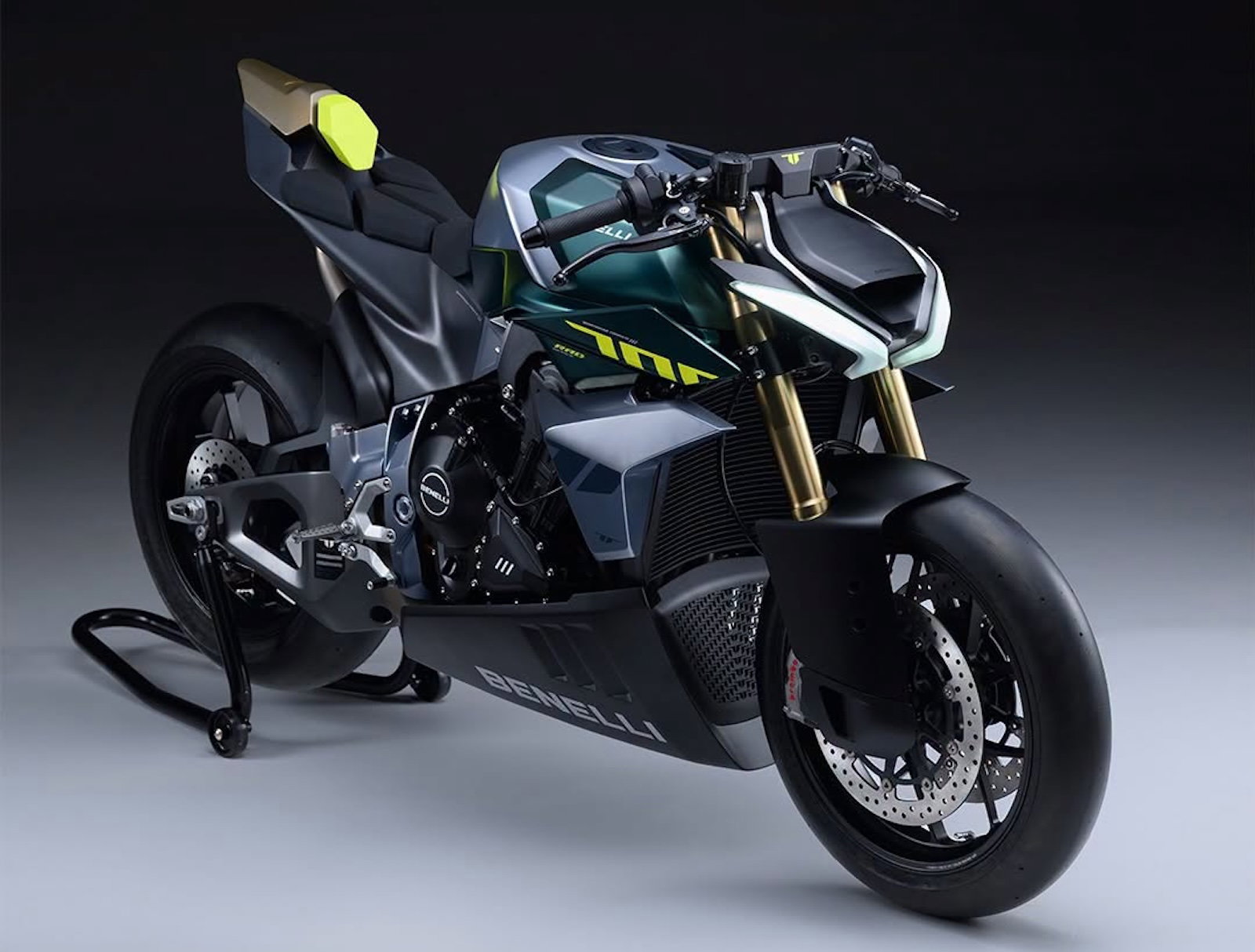
Benelli brought a three-cylinder idea back into focus with the Tornado Naked Tre 903 Concept. The name recalls the earlier Tornado Tre models, but the important story is the engineering underneath. The near-900cc triple has a quoted weight of 56kg and a 14,000rpm rev limit. No performance figures have been announced. Even so, the cylinder layout and stated operating range suggest a character distinct from the parallel-twin engines used across much of Benelli’s current line-up.
The chassis is just as notable. It is divided into three sections, with aluminium front and rear structures connected by a composite centre section. That modular arrangement could be adapted to different motorcycles if Benelli decides to develop it further. The 903 also carries fully adjustable Öhlins rear suspension, Marzocchi front forks and an IMU-controlled active aerodynamic system. Its winglets work independently, with their operation adjusted according to speed, riding conditions and rider inputs.
Benelli describes the 903 as a test bed for ideas under development, not as a confirmed future production model. That distinction matters, but it does not make the concept irrelevant. A modern triple and a platform designed for possible reuse indicate a technical direction without promising a specific road bike. The five EICMA proposals therefore occupy very different positions: the Bendas have already been presented as production motorcycles, while Corleo remains an experimental mobility project. Together they show how the exhibition can preview not only future models, but also the engineering and design thinking that may shape them.
THE STORY IN PHOTOS
6 photos
THE EVIDENCE BEHIND THE STORY
Sources
Spotted something that needs correcting? Contact the editorial team