
Pedro Acosta warns MotoGP’s 2027 format could shorten riders’ careers
The KTM rider objects to an extra qualifying session, the loss of Sunday warm-up and 22 Sprint races in the revised MotoGP weekend.

4 min read
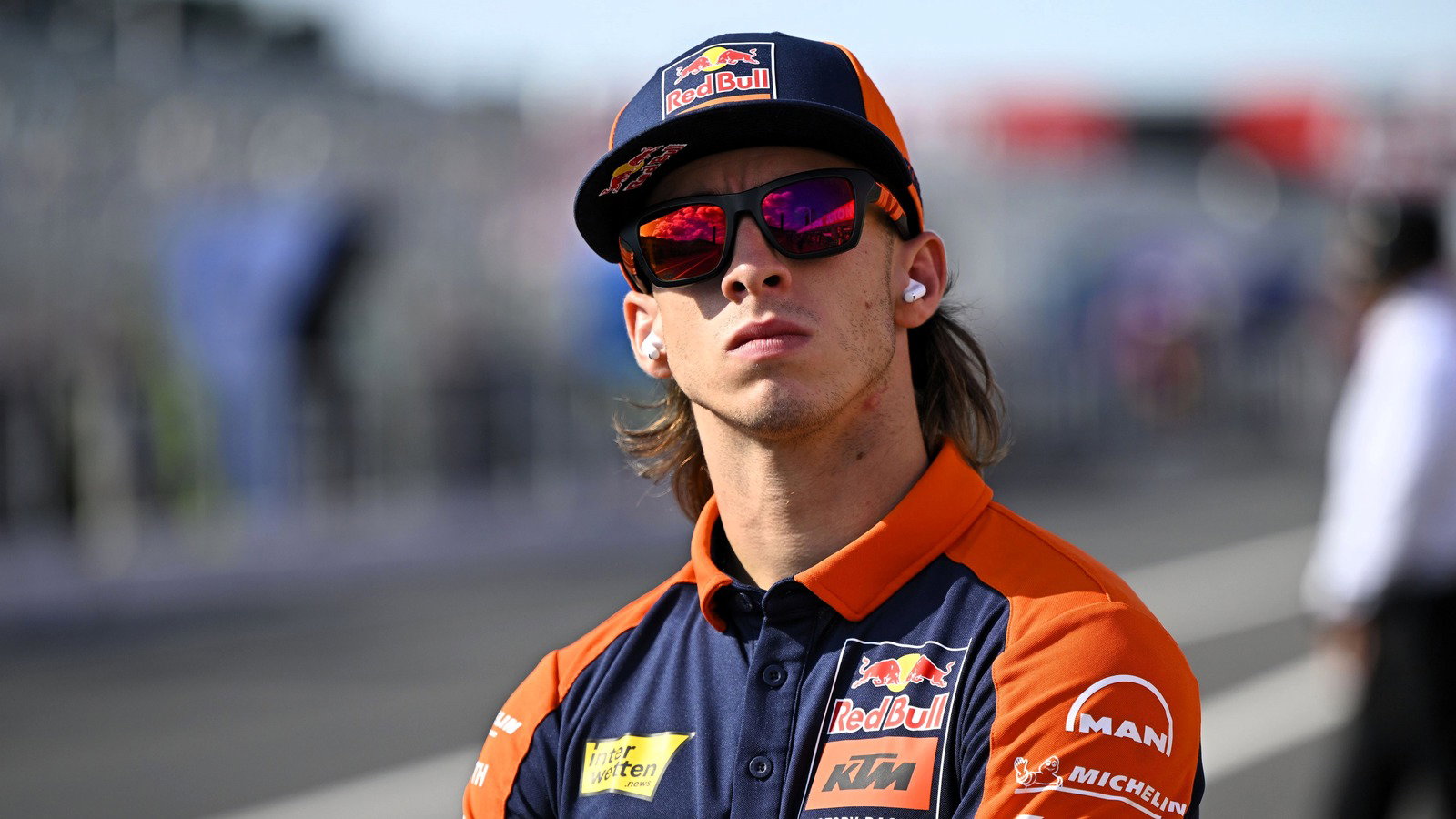
Pedro Acosta has strongly criticised MotoGP’s planned 2027 weekend format, warning that the combination of additional high-pressure sessions, 22 Sprints and the removal of Sunday warm-up could increase injury risk and reduce the length of riders’ careers. The revised schedule will introduce a separate qualifying session for the Sprint on Friday, taking time away from practice, while Saturday qualifying will determine the starting grid for Sunday’s Grand Prix.
The new arrangement changes a system that has used one qualifying session to set the grids for both races since Sprint events were introduced in 2023. In 2027, every rider will take part in Q1 on Saturday, with the 12 fastest progressing to Q2 for the Grand Prix grid. Friday’s separate qualifying session will establish the Sprint grid. Acosta believes that this creates another occasion when riders must chase maximum performance, despite the existing demands of the weekend.
More sessions, more exposure to crashes
Acosta said the pressure can begin before the track action, with some MotoGP weekends starting on Wednesday because of pre-event commitments. Once competition begins, he counts practice, qualifying, the Sprint and the main race as four sessions in which riders may need to operate at the limit. With a Sprint scheduled at all 22 rounds, the 2027 format would maintain that repeated exposure throughout the season.
His concern is not only the number of sessions but the physical consequence of making mistakes on a motorcycle. Acosta stressed that riders are not protected by a car cockpit: even a relatively small crash can leave the rider’s body striking the ground. He argued that continuing to ask riders to take risks at maximum intensity makes injuries an expected consequence rather than an exceptional event. In his view, a championship with fewer Sprint races could make more sense; the problem is that the current plan combines the extra qualifying session with 22 Sprints.
The Saturday schedule could also leave less time for ordinary work on the motorcycle. Acosta referred to a 20-minute FP2 session in the 2027 format and said that it would leave too little time even to complete a Sprint-distance preparation run. His broader argument is that MotoGP should remove risky sessions rather than continue adding them.
Why the missing warm-up matters
Sunday’s ten-minute warm-up is also due to disappear in 2027. It will be replaced by a ten-minute pre-race window for multiple sighting laps, but Acosta does not see that as an equivalent opportunity to prepare. Sighting laps do not provide the same continuous riding time as a warm-up, he said, because riders are not completing a full lap at race preparation pace.
The current session allows riders and teams to build rhythm, bring the motorcycle and its systems up to temperature and check that everything is working properly before the Grand Prix. That check becomes particularly important after a Saturday crash. Under the new arrangement, if a rider reaches the grid and discovers a problem with the motorcycle, there may be no meaningful opportunity left to correct it before the race begins. Acosta described that possibility as a serious weakness of the change, while acknowledging that riders themselves cannot decide whether the format goes ahead.
Acosta’s alternative: use practice and cut the Sprints
Acosta is broadly satisfied with the current qualifying route, under which the ten fastest riders in practice go directly to Q2 and the rest use Q1, with two riders receiving another opportunity. Rather than adding a dedicated Friday qualifying session, he would support using the existing practice result to set the Sprint grid. That would retain valuable time for working on the motorcycle and understanding what is happening with its setup before the time attacks begin.
He also supports reducing the Sprint calendar to roughly half its current size. Sachsenring was his example of a circuit where overtaking can be so difficult that a Sprint changes little from the first lap to the last, making the additional risk harder to justify. Acosta said that, after four years of Sprint racing, it is already possible to identify which events produce the more interesting races, so keeping approximately half of them would be a reasonable compromise.
The issue carries additional significance for Acosta because the Red Bull Ring winner is scheduled to leave KTM and join Marc Márquez at Ducati in 2027. His conclusion was blunt: if MotoGP continues in the same direction, riders’ professional careers will become progressively shorter.
THE EVIDENCE BEHIND THE STORY
Sources
Spotted something that needs correcting? Contact the editorial team ↗