
MotoGP Motegi: Michelin removes the soft rear tyre
Sprint blistering leaves teams choosing between a medium that needs careful management and a reinforced hard with no Motegi lap completed.

3 min read
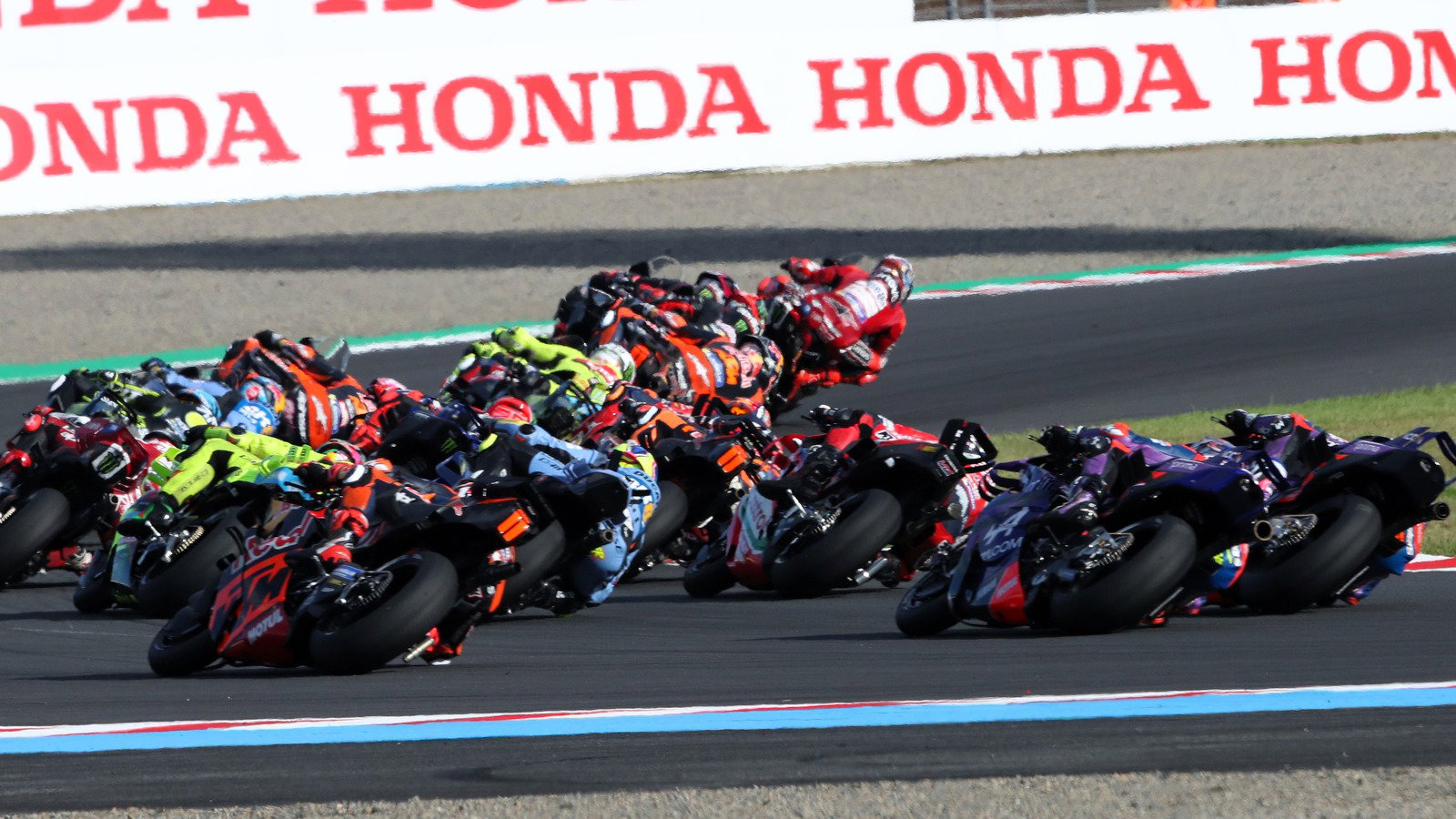
Michelin has removed the soft rear tyre from the MotoGP race allocation at Motegi after it suffered serious problems in Saturday’s 12-lap Sprint. The medium remains available, but Michelin is recommending the reinforced hard for the Grand Prix. That leaves teams with an unusual choice: the medium has already been used but will require careful management, while the hard had not completed a lap at Motegi before the race.
The change does not make the hard compulsory. Teams can still select the medium, the race distance has not been altered and no mandatory pit stop has been added. Warm-up has, however, been extended from 10 to 20 minutes, giving riders more time to assess their preferred option before the start.
Why Michelin changed the allocation
Michelin’s Piero Taramasso described Motegi as an aggressive, demanding circuit with new asphalt that had not previously been tested. The allocation consisted of soft and medium rears with the standard casing, plus a hard tyre with a stronger casing. That hard used the same casing specification as the tyre brought to Austria, reflecting expectations of particularly high rear temperatures.
Rear-tyre temperatures were high and close to the limit for most bikes, while the track reached 40 degrees during the Sprint. The pace was also significantly faster. The Sprint was nine seconds quicker than the equivalent race last year, and the qualifying lap record improved by six-tenths.
Fuel consumption was less of a constraint in the Sprint, allowing the riders to use full power from the opening lap to the finish. That increased wheelspin and the energy transferred into the rear tyre. The effect varied across the field, with riding style, tyre management and bike settings all influencing the final result.
The Sprint exposed two very different outcomes
Jorge Martin and Pecco Bagnaia encountered serious problems with the soft. Bagnaia pitted one lap before the finish, while Marc Marquez won the Sprint without reporting a comparable issue. His victory reduced the gap to championship leader Martin to seven points.
Jack Miller, one of the two riders who selected the medium, also reported heavy blistering and suggested that everyone could ultimately be forced onto the hard. Toprak Razgatlioglu agreed with that assessment. The hard, however, remains an option without any Motegi lap data, which adds a further element of risk.
Marco Bezzecchi was the other rider on the medium. He had been fastest in the final practice session, but could not reproduce that pace and finished sixth. Bezzecchi said the tyre’s wear did not appear excessive, although the race’s 12 extra laps represented a substantial step and left the outcome of that choice uncertain.
Michelin’s alternative is not without its own questions. The same reinforced hard tyre had been associated with grip problems for Ducati at the Red Bull Ring. Teams must therefore decide whether to manage a medium that has already shown increased stress or gamble on a hard that may support a more consistent pace but has not been tested through a Motegi lap.
THE EVIDENCE BEHIND THE STORY
Sources
Spotted something that needs correcting? Contact the editorial team ↗