
MotoGP 2027: New format, separate grids and no Sunday warm-up
Carlos Ezpeleta explains the reasoning behind the changes, tighter tyre limits and the consultation process with riders.

5 min read
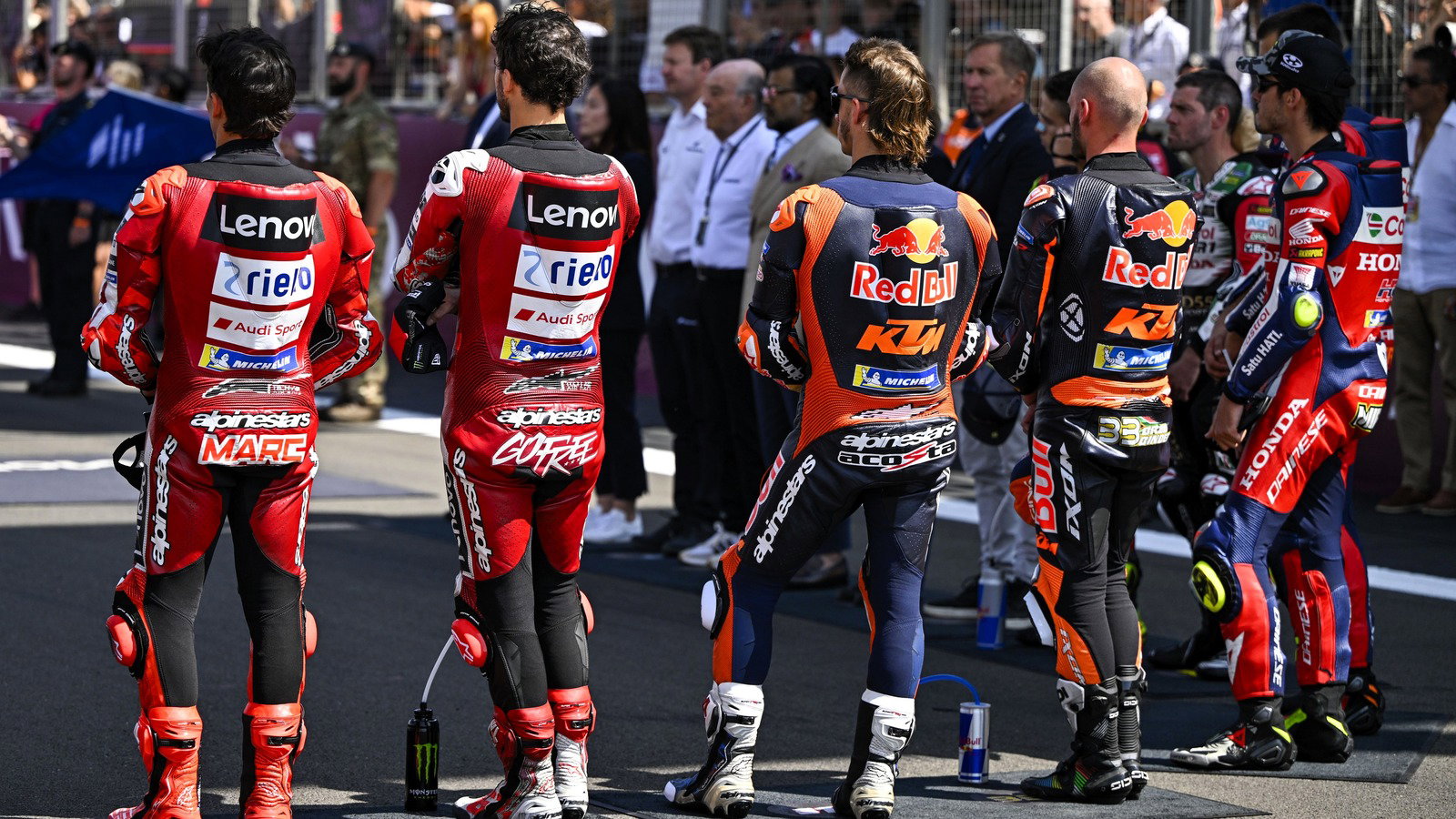
MotoGP will reshape its race weekend in 2027, adding Sprint qualifying on Friday, separating the grids for the Sprint and Grand Prix, and removing Sunday’s ten-minute warm-up. Carlos Ezpeleta, the championship’s deputy CEO, explained the reasoning at Mandalika while rider concerns over safety and the added qualifying workload remain central to the debate.
Ezpeleta stressed that the new structure did not begin as a unilateral MotoGP decision. Teams and manufacturers approached the championship at Misano to request a revised schedule. Manufacturers had already proposed changes intended to reduce track time, opening a broader discussion about whether the current format was still the best option. The stated goal was to maintain, or reduce, today’s level of risk while improving the outcome for spectators, media partners and the championship as a whole.
Tyre limits are meant to offset more qualifying activity
Adding Sprint qualifying and putting every rider into the Grand Prix Q1 process naturally raised the question of whether time attacks would increase. MotoGP’s answer is a much tighter limit on the new tyres available during qualifying. Ezpeleta argues that the number of high-risk attacks should not grow because riders will have less opportunity to repeat a run on fresh rubber.
As a current reference point, Ezpeleta said that 80% of riders now make two time attacks on Friday afternoon. The remaining qualifying processes add further attempts for part of the field, but the precise figures described in the account were internally inconsistent and are not used here for a detailed count. For 2027, Ezpeleta expects one new set of tyres to be available for each qualifying session.
The intended effect is to make a mistake more costly. With a limited tyre allocation, a rider has a stronger incentive to leave a larger safety margin because there may not be another fresh set available to erase the consequences. Under the current approach, Ezpeleta said, the number of tyres gives riders more of a second chance after a crash or a failed attempt. The new plan is therefore designed to prevent extra qualifying sessions from automatically becoming extra high-risk attacks.
Ezpeleta acknowledged that this explanation had not reached everyone clearly enough. Some riders, he said, had not fully understood the tyre and time-attack limits. Pedro Acosta and Marc Márquez had warned that adding qualifying sessions could increase injuries and potentially shorten riders’ careers. Ezpeleta accepted that MotoGP needs better communication with teams and riders, while maintaining that the overall number of attacks is not increasing.
Separate grids and a different Sunday routine
From 2027, one qualifying result will no longer determine both the Sprint and Grand Prix grids. Ezpeleta believes the split will give riders two opportunities and reduce the pressure concentrated on Friday afternoon. Under the current arrangement, Friday performance affects access to Q2 and can leave a rider feeling that the whole weekend has been compromised after missing the leading group. The new structure separates that pressure instead of allowing one result to shape both grids.
The removal of warm-up is likely to remain the more controversial change. Sunday’s shared ten-minute session will be replaced by a ten-minute pit-lane opening before the race. Riders will be able to complete multiple sighting laps during that period before heading to the grid. The teams proposed the change because they believe a longer pit-lane window can still help identify problems that appeared on Saturday. In practical terms, the check moves from a common session to a more flexible procedure immediately before the start.
How directly were riders consulted?
The response to parts of the new format has also put the consultation process under scrutiny. Ezpeleta said MotoGP asked teams to speak with their riders, while the Safety Commission remains open every Friday for ideas and discussion. Four riders were reportedly present at the Motegi Safety Commission meeting where the 2027 weekend format was considered.
Ezpeleta’s position is that teams carry the main responsibility for representing rider views. They have contractual relationships with MotoGP and form part of the championship’s governance model, whereas MotoGP does not hold contracts with the individual riders. That does not mean riders should be excluded: the Safety Commission remains open to them. However, for questions such as how necessary warm-up is for checking motorcycle safety, Ezpeleta considers the teams better placed to assess the requirement.
The schedule was not presented as permanently fixed. Ezpeleta said MotoGP remains open to changes and improvements, and revealed that some riders had personally asked him to remove the warm-up despite public opposition from others. Alex Rins was one of the few to state openly that he welcomed its removal, although he will not be in MotoGP in 2027. Before the revised weekend reaches the track, the key task will be ensuring that everyone understands how the tyre limits are intended to affect qualifying in practice.
THE EVIDENCE BEHIND THE STORY
Sources
Spotted something that needs correcting? Contact the editorial team ↗