
KTM opposes single-bike MotoGP rule and backs cost cap
Gottfried Neumeister supports targeted savings and a common fuel basis, but says cost cutting must not weaken MotoGP’s racing spectacle.

4 min read
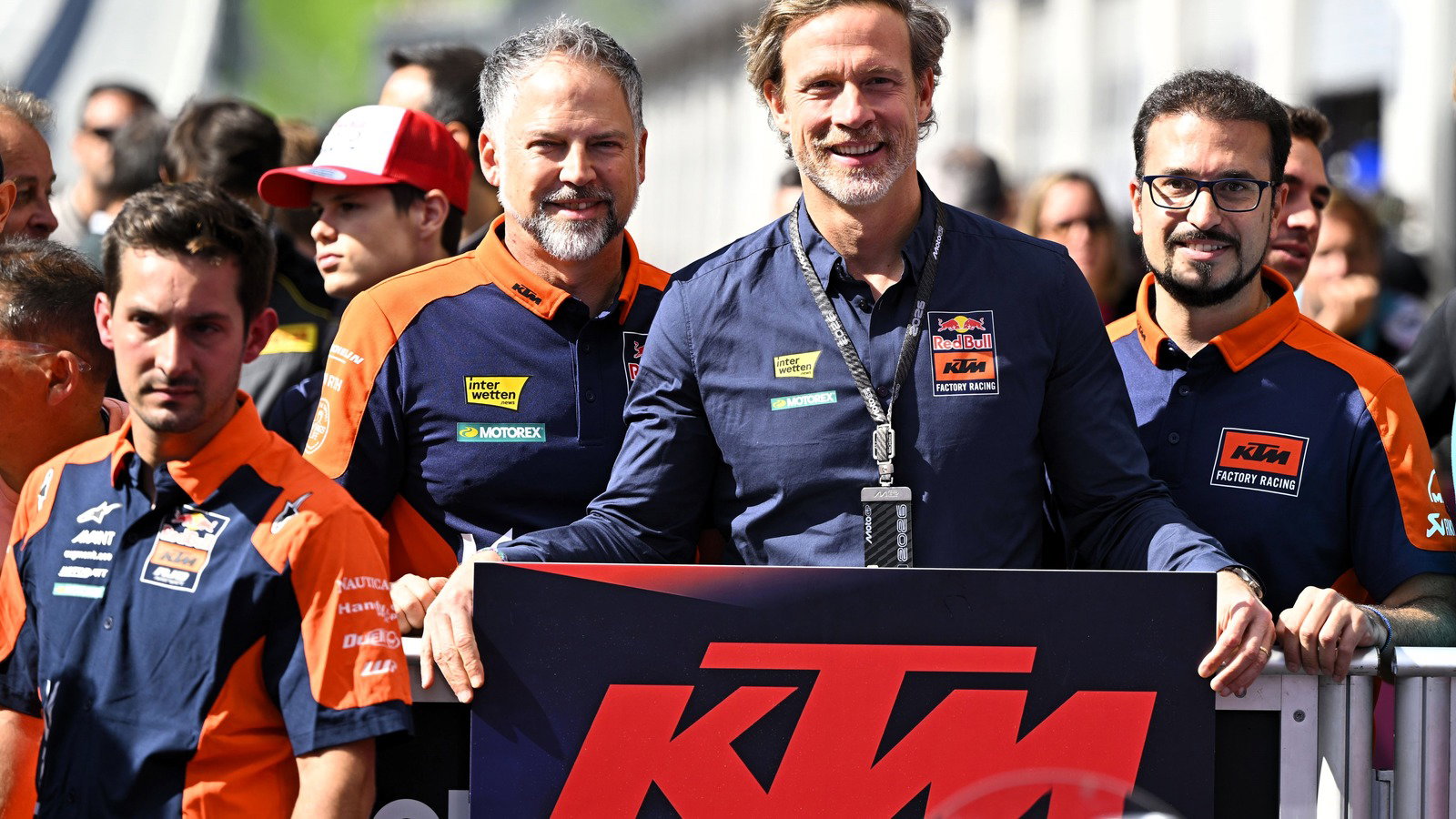
KTM CEO Gottfried Neumeister has rejected the idea of giving each MotoGP rider only one motorcycle, arguing that the saving would come at the expense of one of the championship’s defining features. He said he had been “completely against” the proposal because a rider who crashes or suffers a technical problem could be left waiting for repairs instead of returning to the circuit on a second machine. In the most serious case, that delay could mean missing the rest of a session or an entire race.
The proposal had been supported by some manufacturers as a way to reduce costs, but it did not proceed after KTM opposed it. For Neumeister, the ability to run back to the pits after a crash, change motorcycles and continue riding is part of MotoGP’s spectacle. Removing that option would make the championship cheaper in one area while making the racing less resilient to incidents.
KTM wants savings away from the spectacle
Neumeister is not opposed to manufacturers taking more responsibility for controlling expenditure. He said KTM could support an F1-style cost cap in MotoGP if it were introduced intelligently and agreed through dialogue. In his view, the principle could give teams a more equal basis on which to compete, although he questioned whether Formula 1’s system always functions as an absolute limit on spending.
The important distinction for KTM is where the savings are made. Neumeister’s preference is to streamline costs in areas fans do not see, rather than remove equipment or procedures that affect what happens on track. He argued that a cost-control system should be developed collectively, with the manufacturers and other parties listening to one another before a final solution is imposed.
A common fuel supplier is his clearest example. MotoGP is moving to 100% non-fossil fuel, and Neumeister said that having every manufacturer work from the same fuel basis could eliminate the need for several companies to develop separate solutions in parallel. The teams could still extract performance from the fuel, while the development burden and associated expense would be shared more efficiently.
The price attached to that technical change could be substantial: the sustainable fuel is expected to cost as much as 86 euros per litre. That makes fuel supply a potentially meaningful area for savings, provided the arrangement does not prevent manufacturers from maintaining sponsorship agreements with competing fuel brands. Neumeister’s argument is that the public would not lose anything visible from a common supplier, unlike the direct effect of restricting riders to one motorcycle.
A cost cap is being studied for MotoGP
MotoGP deputy CEO Carlos Ezpeleta has confirmed that a cost-cap system based broadly on the Formula 1 approach is being studied for the future. Neumeister supports the idea in principle because it could give teams more equal opportunities, but he does not regard the Formula 1 model as a guarantee that every form of spending is fully contained.
His condition is that the process must remain collaborative rather than becoming a unilateral decision. Neumeister said the wider objective should be to make MotoGP accessible to a larger audience and keep people passionate about motorcycles, riding and the sport itself. That position leaves KTM supporting financial discipline, but only where it does not undermine the practical ability of riders to race after an incident.
The competitive backdrop
The financial debate comes as Aprilia leads the riders’, teams’ and constructors’ standings. KTM is fourth in the riders’ championship with Pedro Acosta and third in the constructors’ classification, ahead of Honda and Yamaha. The current balance also underlines why spending is such a sensitive subject: manufacturers with larger budgets can potentially gain a greater advantage when the technical framework changes.
KTM’s position is therefore not a rejection of cost control. It is a demand that the championship save money where the audience will not notice, while preserving the second motorcycle, recovery after a crash and the competitive freedom that Neumeister considers central to MotoGP. A common fuel basis is acceptable on those terms; a rule that leaves a rider sidelined after a failure is not.
THE EVIDENCE BEHIND THE STORY
Sources
Spotted something that needs correcting? Contact the editorial team ↗