
KTM MotoGP: Seven engines failed after a supplier defect
Pit Beirer details the RC16 reliability crisis, the quality-control fault and the approval process required to replace the faulty parts.

4 min read
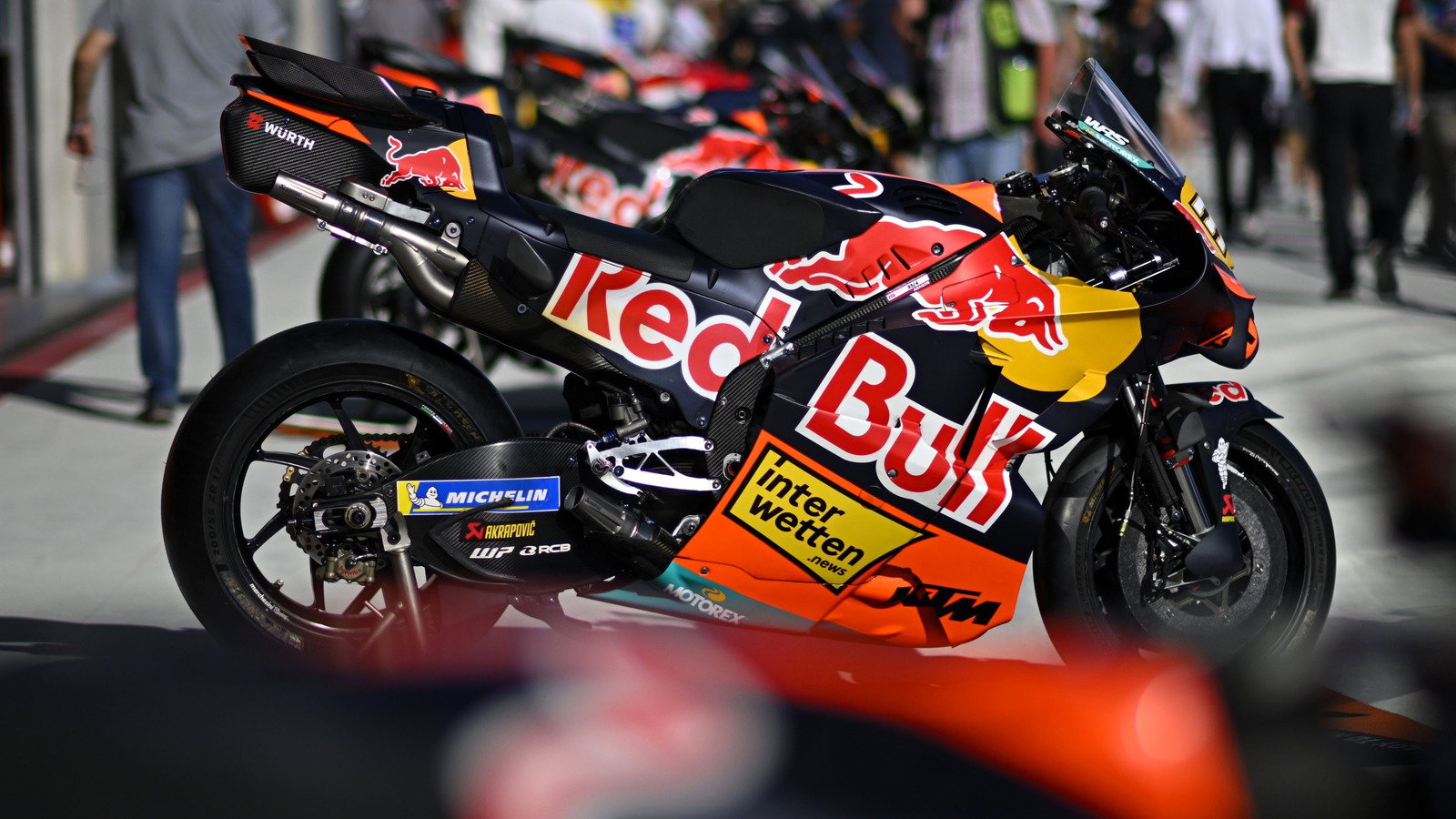
KTM lost seven MotoGP engines during a defined period of the season after a hidden manufacturing problem struck the RC16. Pit Beirer, KTM’s motorsport director, described the episode as the worst period of the company’s entire MotoGP project. It arrived while KTM was also trying to recover from wider company financial problems, placing additional pressure on its racing operation.
The investigation was complicated by the fact that the MotoGP engine specification had been frozen since the start of the previous season. After homologation, KTM was effectively using the same engine specification in both seasons, with no permission to open the sealed units or change their parts. Other unrelated reliability problems were also occurring, so the team could not immediately connect every failure to one common cause.
The pattern emerged at Mugello
The most visible incident had taken place at Catalunya. Pedro Acosta lost power while leading, and Alex Márquez hit him from behind in a major crash. Beirer made clear, however, that this was not an engine failure. A separate ECU fault briefly cut the signal; by the time the bike returned to the paddock, it was running normally again. KTM worked with Magneti Marelli while investigating that electronic problem.
The internal engine problem became clear at Mugello. One engine failed in the morning. KTM replaced it, but two more units failed on the same day. At that point, the team no longer knew which engines it could trust. It returned to older engines with high mileage because those units had already shown that they did not carry the particular fault.
The time to failure offered another clue. According to Beirer, the problem appeared at roughly 50-100 km after an engine was used. He compared the behaviour to something breaking suddenly, like glass or crystal, rather than normal and predictable wear. KTM ultimately counted seven failed engines in the affected period.
The defect and the approval process
KTM eventually traced the problem to an externally supplied, high-stress powertrain component. The company did not identify the component, but described the failure as a quality-control issue. Beirer said there was air where there should have been a connection and a weld. In other words, the issue was not presented as a new KTM design, but as a quality fault in a part already installed in the sealed engines.
KTM could not simply open the engines and replace the faulty part. Once the specification had been homologated, it needed permission from the other MotoGP manufacturers. Before making that request, KTM had to establish exactly what had happened, identify the supplier and specify the affected batches and serial numbers. X-ray images of the parts were also included in the documentation.
The initial caution from the rival manufacturers was understandable. A request to open sealed engines could theoretically conceal a design change or an attempt to improve performance. Approval was eventually granted between the Sachsenring and Silverstone rounds, after the manufacturers accepted that the problem was a quality-control failure, could not be solved simply by reducing performance and raised a safety concern. IRTA observed the work at KTM’s facility.
Beirer said he feared for rider safety. KTM’s reduced performance after Mugello was not mainly the result of simply lowering the rev limit. The team had to use older, higher-mileage engines, which affected its competitiveness. As Beirer explained, reducing rpm alone was not enough to solve the underlying problem.
Although the faulty parts were corrected, managing the remaining engine allocation remained difficult. Some units might have to be used for longer than originally planned, with a possible performance cost. Acosta arrived at Misano after a podium at Aragón and in sixth place in the championship standings. There were also rumours that KTM riders would receive 500 rpm back; that information is not treated here as a confirmed technical change.
THE EVIDENCE BEHIND THE STORY
Sources
Spotted something that needs correcting? Contact the editorial team ↗