
KTM commits to MotoGP and rules out selling the team
A return to profit and a five-year Dorna agreement underpin KTM’s commitment ahead of the 2027 850cc/Pirelli era.

3 min read
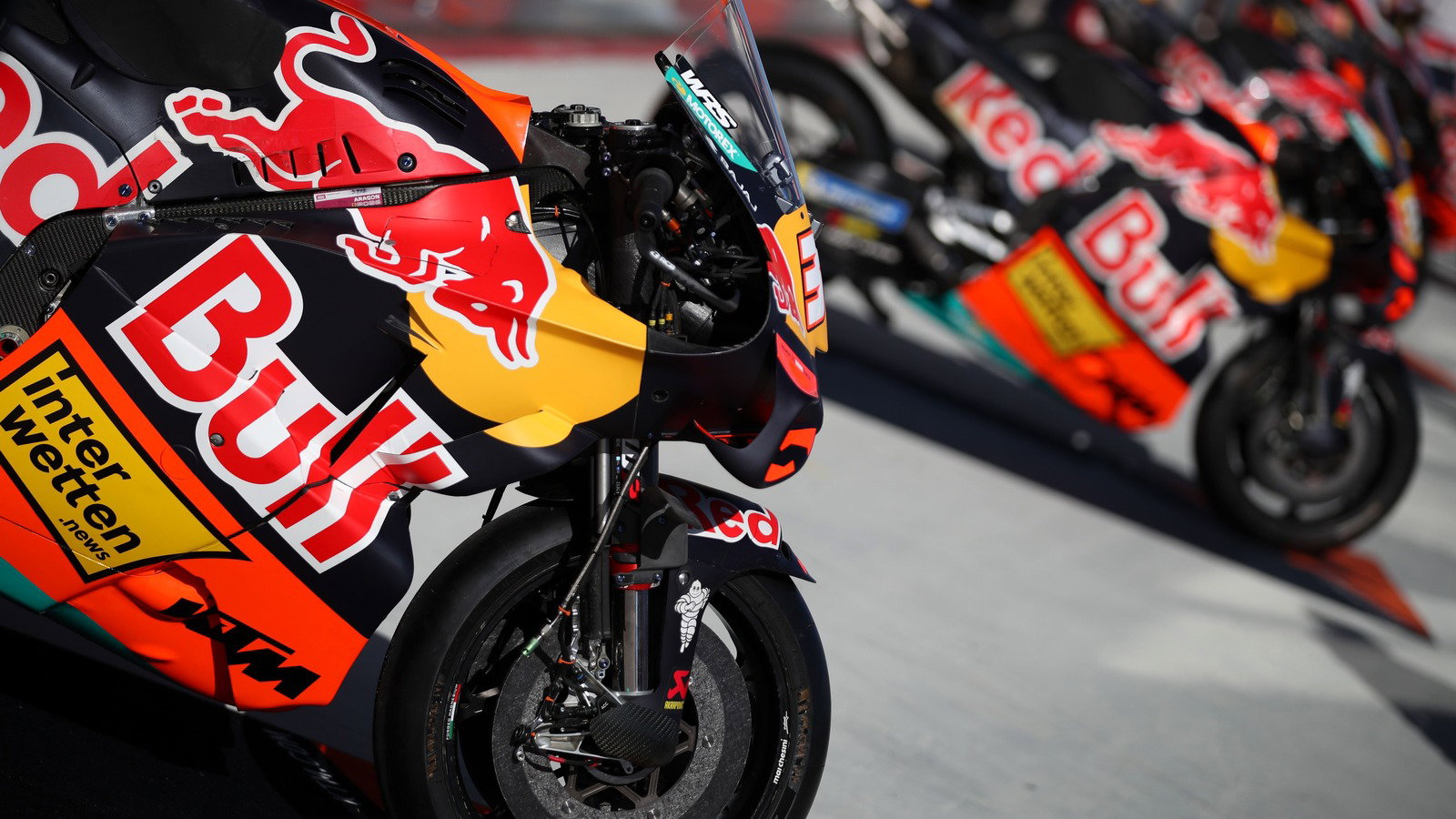
KTM has categorically ruled out selling its MotoGP operation, including any part of the team. CEO Gottfried Neumeister made the position clear at the Red Bull Ring, saying the manufacturer would not bring in an outside investor through a team stake. The announcement follows what KTM describes as a return to a financial position strong enough to support its racing programme fully.
That confidence follows the company’s 2025 financial crisis. KTM was under severe pressure and Neumeister said it had been “burning cash”. At the time, it was reasonable to question whether the manufacturer could keep funding motorsport, while speculation grew around either selling the MotoGP project or adding an external shareholder. As KTM’s most expensive motorsport activity, MotoGP appeared particularly exposed if spending had to be reduced.
The figures cited by KTM now point to a recovery. The company sold almost 100,000 motorcycles during the first half of the year and reached EBIT break-even in the second quarter, the first such result in almost two years. KTM has also signed a five-year agreement with Dorna covering the new 850cc era. For Neumeister, that agreement reinforces the manufacturer’s message: it intends to race as a fully committed team rather than use MotoGP to attract an equity partner.
Why racing remains strategically important
KTM’s case for staying in MotoGP goes beyond exposure. Neumeister described motorsport as part of the company’s DNA and as a development laboratory whose lessons can reach series-production motorcycles. He pointed to KTM’s Dakar victories and six World Championship titles as evidence that the racing programme has continued to deliver even through difficult circumstances. The current season, he noted, is not yet over.
The issue also has a shareholder dimension. Bajaj has taken a controlling 75% stake in KTM, increasing the need for a clear business rationale behind the manufacturer’s racing commitments. KTM says it has demonstrated a connection between winning, motorcycle sales and brand equity. Neumeister’s accompanying argument was that competitive racing cannot be managed through piecemeal cuts: it needs a defined budget, technical freedom and the ability to develop new parts when the engineering programme requires them.
Neumeister also expressed sympathy for KTM’s riders, saying the difficulties of the previous period were not their fault but a problem created by the company itself. The sporting ambition remains clear, although he did not suggest that success could be produced overnight. MotoGP is one of the few major titles KTM has not yet won, and the manufacturer says it wants to pursue that missing championship while continuing to race on its own terms.
The next phase will bring a new line-up. From 2027, as the 850cc and Pirelli era begins, Alex Marquez and Fabio di Giannantonio will ride for the factory team. Luca Marini will join rookie Senna Agius at Tech3. KTM is therefore linking its financial recovery to a long-term racing commitment, not to a plan for selling the MotoGP team or opening it to outside ownership.
THE EVIDENCE BEHIND THE STORY
Sources
Spotted something that needs correcting? Contact the editorial team ↗